Best European River Cruise for Active Travelers (Hiking, Biking & On-Shore Adventure)
Think river cruises are just for people who nap between wine tastings? It's time to retire that myth. The best active European river cruises put you on a bike through the Wachau Valley, on a trail above the Rhine Gorge, and hiking up to a 12th-century castle before lunch, then get you back to a comfortable cabin and a proper dinner by evening. Whether you're a dedicated cyclist, a hiker, or just someone who refuses to sit still for seven days straight, there's a cruise line and a river route built for exactly how you travel. Here's everything you need to know to find yours.
Last updated: June 19, 2026 :: Reviewed by Sue Nelson, Travel Advisor
Quick Answer: The best active European river cruise in 2026 depends on your activity style. AmaWaterways is the top pick for built-in biking and hiking in every port. Avalon Waterways offers the widest active excursion variety, with up to 28 options per itinerary and complimentary e-bikes. Backroads is the best for serious outdoor athletes who want 20-plus miles of cycling per day. Top routes for active travelers: the Danube (world-class cycling through a UNESCO World Heritage Valley), the Rhine (hiking the Philosophers’ Way, e-biking the Black Forest), and the Moselle (vineyard trails and medieval castle climbs). River cruising and staying fit are not mutually exclusive — and the cruise lines that have figured this out have changed the game entirely.
Key Takeaways: Best Active European River Cruise
AmaWaterways includes guided biking and hiking in every port on every European itinerary, making it the most consistently active choice for 2026.
Avalon Waterways’ Active & Discovery program guarantees three excursion types daily, with up to 28 ways to explore per sailing, including complimentary bikes and e-bikes, plus a dedicated Adventure Host.
Backroads runs fully active bike-and-boat river cruises on the Danube, Rhine, Seine, and Douro for travelers who want serious daily mileage and professional outdoor guides.
The Danube’s Wachau Valley is a UNESCO World Heritage Site and one of the finest cycling destinations in Europe — flat, scenic, and completely accessible to recreational cyclists.
Active river cruise travelers skew 50 to 65, and most are in considerably better shape than the “river cruise is for people who shuffle between wine tastings” stereotype suggests.
The difference between an active river cruise and a passive one is entirely in the cruise line and route. From the dock they look identical. The shore experience is completely different.
Booking through a travel advisor gets active travelers better itinerary matching, smarter cabin placement, pre-booked excursions before they fill, and perks that don’t appear anywhere on the cruise line’s website.
Let’s start with a confession: I am a travel advisor who specializes in European river cruises, and I have spent years watching fit, active, thoroughly outdoorsy travelers dismiss river cruising without giving it a second thought.
“Isn’t that for old people?” someone will ask. Yes, if by “old people” you mean someone who is 62, recently finished a half-marathon, still skis black diamonds, and is frankly tired of living out of a suitcase across nine countries in twelve days.
Those people board an active European river cruise, bike through the Wachau Valley, hike up to a 12th-century castle before lunch, eat dinner with a glass of Austrian Grüner Veltliner, wake up docked in a new village, and do it all again. It is, in the best possible way, an extremely sensible adventure.
The stereotype around river cruising belongs in a time capsule next to flip phones and the idea that turning 50 means slowing down. This guide is the corrective.
Thinking about a river cruise? Grab my free River Cruise Guide: the lines actually worth booking, how to pick your river and season, and the questions to ask before you put down a deposit. [Download the free guide →]
Is river cruising good for active travelers? River cruising is genuinely excellent for active travelers, particularly on lines like AmaWaterways and Avalon Waterways, which include guided hiking, cycling, e-biking, and kayaking in every port. The ship handles all logistics while you spend your actual days moving through beautiful places.
What is the most active river cruise line in Europe? AmaWaterways is the most consistently active river cruise line for European itineraries. They include guided biking and hiking in every port, with options for multiple activity levels, and have built active programming into their core product from the start.
Can you really bike on a European river cruise? You can, and many travelers do it daily. AmaWaterways and Avalon Waterways provide bikes and e-bikes onboard, lead guided cycling tours in port cities and along the riverbanks, and design itineraries around routes like the Danube Cycle Path through the Wachau Valley. You will not run out of places to ride.
Which European river is best for hiking and biking? The Danube is the top choice for cyclists, particularly the Wachau Valley section. The Rhine offers excellent hiking including the Philosophers’ Way above Heidelberg and e-biking through the Black Forest. The Moselle combines vineyard trails with medieval castle climbs. Each river has a distinct active character.
Are European river cruises good for active travelers over 50? European river cruises are arguably the best travel format for active adults over 50. You unpack exactly once, move at a sensible pace through spectacular destinations, choose your activity level each day, and sleep in a comfortable cabin with genuinely good food. It is adventure with excellent logistics.
What is the difference between an active river cruise and a regular river cruise? The difference is entirely in what the cruise line provides on shore. On an active river cruise, guided hiking and cycling excursions are included in every port as a standard feature of the itinerary. On a traditional river cruise, shore excursions lean toward guided bus tours and walking tours, with active options limited or available only as paid extras.
Is river cruising good for 60-year-olds? River cruising is one of the best travel formats available for active 60-year-olds. The ships are small and comfortable, excursions are offered at multiple fitness levels so you choose your intensity each day, and the logistics, one unpacking, no transfers, meals included, remove the friction that makes extended active travel exhausting.
The Active River Cruise Myth: Let’s Retire It Already
Why the “River Cruise Equals Slow Travel for Slow People” Assumption Is Wrong
An active European river cruise is a small-ship sailing on a European waterway, typically the Danube, Rhine, Moselle, or Douro, where guided hiking and cycling excursions are built into every port stop rather than offered as optional add-ons.
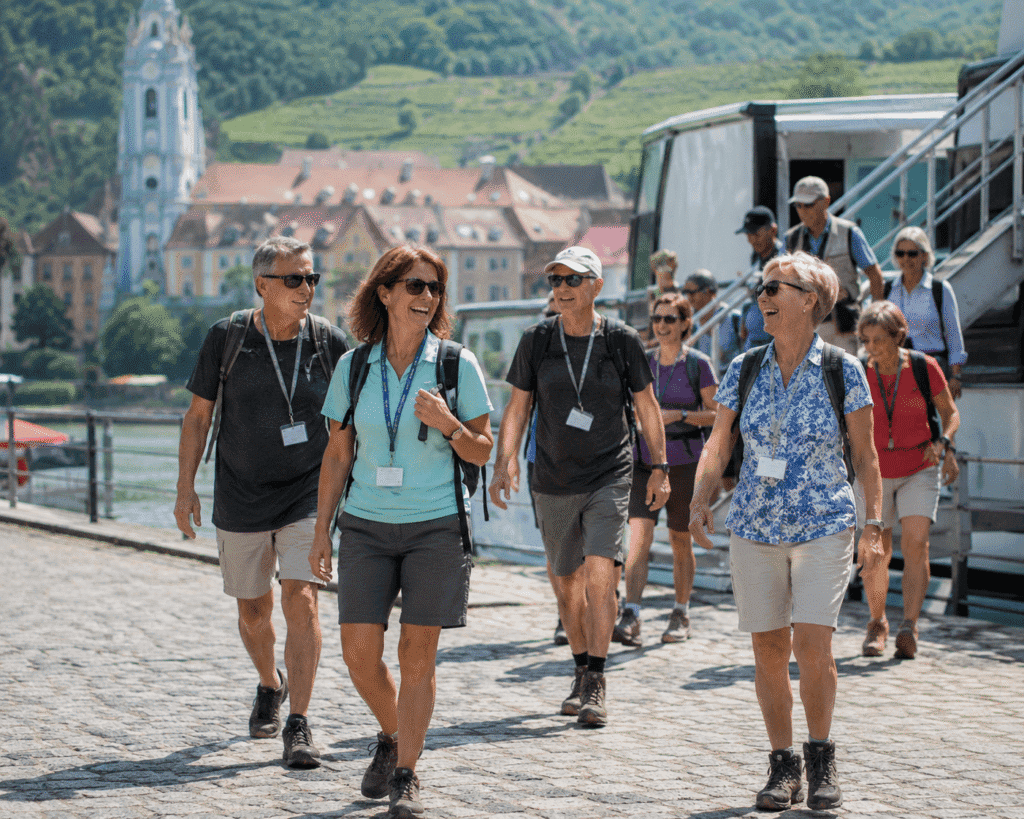
Here is what a typical day looks like on an active European river cruise: you wake up docked in a medieval German village. You eat breakfast while the sun comes up over the river. Then you choose between a guided cycling tour along the Moselle, a moderate hike to a hilltop castle, or a 90-minute guided walk through the old town. By lunch you’ve covered eight miles. By dinner you’re back onboard watching the next village drift into view.
That is not a vacation for people who can’t be bothered to move. That is a vacation for people who want to move efficiently.
The active traveler segment is one of the fastest-growing in European river cruising. According to U.S. News & World Report’s 2026 ranking of the best river cruise lines, active programming has moved from a niche differentiator to a core expectation among the leading lines. The traveler who once had to choose between an adventure trip and a relaxing cruise no longer has to choose. They are, finally, the same thing.
According to a 2024 River Cruise Industry Report cited by Cruise Critic, active excursion programming is now the number-one factor cited by travelers under 65 when selecting a European river cruise line, ahead of cabin quality and dining.
Most active river cruise excursions depart right from the ship’s gangway, no buses, no waiting, no lost time.
Best Active River Cruise Lines for European Itineraries (2026)
If you’re deciding between AmaWaterways vs. Avalon Waterways for an active European river cruise, the short answer is this: AmaWaterways wins on consistency, Avalon wins on variety. Both beat the field. The rest of this section explains exactly why.
AmaWaterways Biking and Hiking Programs: Best Overall for Active Travelers
AmaWaterways is the gold standard for built-in active programming, and it is not particularly close. Their signature approach includes guided biking and hiking excursions in every European port as a standard part of the itinerary, not an upcharge and not an afterthought.
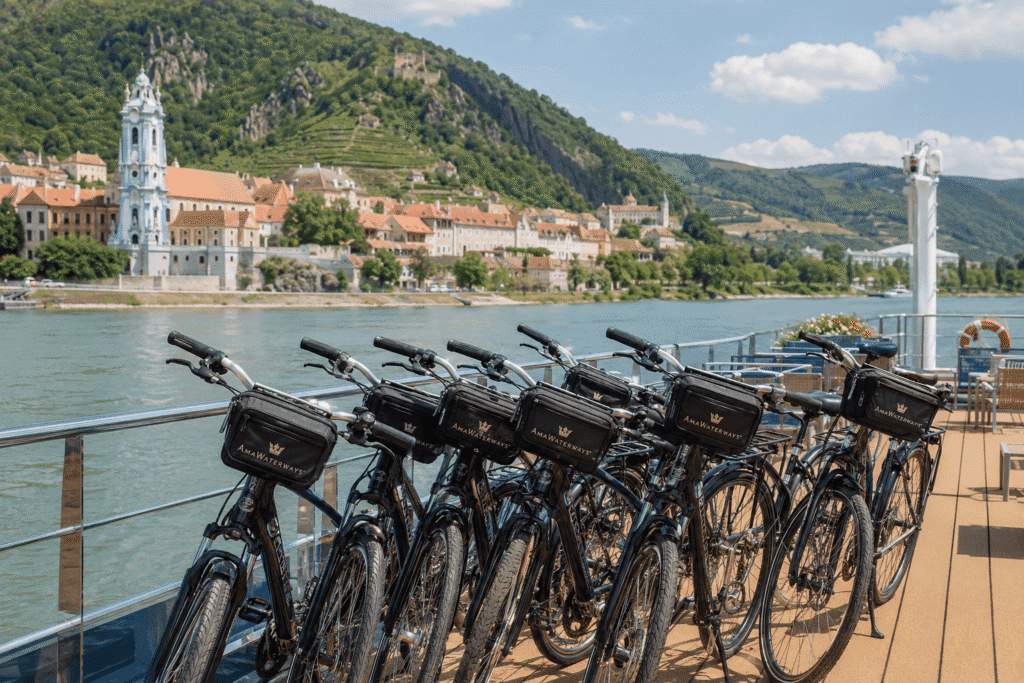
On the Danube, AmaWaterways offers specific hiking and biking routes at each port stop: in Passau, guests can hike up to Veste Oberhaus fortress or cycle along the riverside paths; in the Wachau Valley, the classic bike route between Dürnstein and Melk runs through some of the most beautiful river scenery in Europe. Bikes come standard onboard and the crew knows the routes well enough to answer the questions you haven’t thought to ask yet.
What separates AmaWaterways from the pack is that active programming isn’t bolted on. It’s baked into ship design (they carry bikes as standard equipment on every vessel), into staffing (guides who know the trails), and into scheduling (port arrivals timed to give active excursions maximum daylight). If you want to earn your dinner rather than merely sitting down to it, AmaWaterways is the most reliable vehicle for that goal. See how AmaWaterways stacks up against Viking on the active front in this full comparison.
Best active routes: Danube (Passau or Amsterdam to Budapest), Rhine (Basel to Amsterdam), Moselle wine country.
Price range: Approximately $3,500 to $8,000 per person depending on itinerary and cabin category.
AmaWaterways carries bikes onboard as standard equipment on every European sailing. No reservation required, no extra charge.
Avalon Waterways: Best for Active Excursion Variety
Avalon Waterways has built the most comprehensive active excursion menu in European river cruising. Their “Avalon Choice” framework guarantees three types of excursions in every port: Discovery (cultural and hands-on), Classic (guided sightseeing), and Active, which includes jogging, hiking, biking, e-biking, paddling, and more.
As outlined in Avalon’s own excursion programming, active highlights on the Rhine include a guided e-bike tour through the Black Forest in Breisach, a hike along the Philosophers’ Way above Heidelberg, and an e-bike excursion through the Koblenz vineyards. Per a detailed review of the Avalon Active & Discovery program on Time Travel Turtle, Avalon offers more included excursions than any other major river cruise line, with up to 28 ways to explore on a single itinerary.
The onboard Adventure Host is a thoughtful addition: a dedicated staff member whose entire job description is planning, leading, and debriefing active excursions. That is not a tour guide who also happens to own a bicycle. That is someone whose paycheck depends on keeping active travelers genuinely active and genuinely happy.
Complimentary bikes and e-bikes come standard on all Avalon ships. For travelers who want variety across a single itinerary, some days hiking, some days cycling, the occasional kayak, Avalon offers more options per dollar than any other mainstream line.
Best active routes: Rhine (Amsterdam to Basel), Danube, Rhône through Provence.
Price range: Approximately $3,200 to $7,500 per person.
Backroads: Best for Serious Outdoor Athletes
Backroads is not a traditional river cruise line. They are an adventure travel company that uses river boats as a mobile base camp, and the experience reflects that entirely.
On a Backroads Danube River Cruise Multi-Adventure Tour (2026 departures July and September through October, from $7,479 per person), a typical day involves hiking through Bavarian woodlands in the morning, cycling through the Wachau Valley orchards before lunch, and arriving in a village by bike while your luggage is already waiting on the boat. The guides are trained outdoor professionals, not tour hosts who also happen to own a bicycle.
The Backroads Seine River Cruise (2026 departures May through June and September, from $8,449 per person) covers a significant stretch of Normandy by bicycle, which is a genuinely moving experience in both the physical and historical senses of the phrase. Paris and Giverny serve as exceptional bookends.
Backroads is the right choice if your baseline definition of a good vacation day involves sustained physical effort. It is not for travelers who want one active excursion and then a pleasant afternoon on the sun deck. Those travelers are better served by AmaWaterways or Avalon, and there is absolutely nothing wrong with that.
Best active routes: Danube, Rhine, Seine, Douro (Portugal).
Price range: $7,479 to $12,879 per person.
Roam by Tauck: Best for Active Travelers Who Also Like Nice Things
Tauck’s Roam brand was designed specifically for travelers in their 40s and 50s who want immersive, active experiences delivered with Tauck’s signature polish. Think: guided hiking with expert naturalists, exclusive after-hours access to sites before crowds arrive, and a very good bottle of wine at the end of a legitimately physical day.
The European river cruises from Tauck are fully inclusive, meaning no tipping required, all excursions included, and all meals included, with active programming woven through every port. For travelers who want something closer to Backroads-level activity delivered with considerably more luxury, Roam by Tauck hits that note well.
Best routes: Danube, Rhine, Rhône. Price range: Approximately $5,000 to $10,000+ per person.
Viking River Cruises: Best for the Active-Adjacent Traveler
Viking is the most popular river cruise line in the world for good reason: they do almost everything well. Active programming is not their primary differentiator, but that does not mean you can’t stay active on a Viking sailing. Most ports have excellent cycling and hiking accessible from the dock, and Viking’s excursion menus include active options in most destinations.
The distinction is that on AmaWaterways or Avalon, active programming is a stated design priority. On Viking, you’ll find it available but not front-and-center. If you’re traveling with someone whose activity level differs from yours and you want a line that serves both of you without either person compromising, Viking is worth serious consideration. Here’s a full head-to-head between Viking and AmaWaterways.
2026 Comparison Guide
Best Active European River Cruise Lines
Which line matches your activity style? Compare at a glance.
AmaWaterways
Best Overall Active
✓ Guided biking in every port
✓ Guided hiking in every port
✓ Bikes included onboard
✓ Multiple activity levels daily
✓ Exceptional food and wine
Activity Intensity
Best for: Active travelers who want adventure without sacrificing dinner
From ~$3,500/person
Avalon Waterways
Most Options
✓ Up to 28 excursion options/cruise
✓ Complimentary e-bikes & bikes
✓ Dedicated Adventure Host
✓ Kayaking & paddling available
✓ Ideal for mixed-pace groups
Activity Intensity
Best for: Travelers who want maximum daily choice
From ~$3,200/person
Backroads
Hardcore Athletes
✓ 20+ miles cycling per day
✓ Professional outdoor guides
✓ Multi-adventure daily options
✓ Danube, Rhine, Seine, Douro
✓ Small-group format
Activity Intensity
Best for: Serious cyclists and hikers who mean business
From ~$7,479/person
Roam by Tauck
Active + Luxe
✓ Designed for travelers 40s-50s
✓ Fully inclusive pricing
✓ Expert naturalist guides
✓ Exclusive site access
✓ No tipping required
Activity Intensity
Best for: Affluent active travelers who appreciate polish
From ~$5,000/person
Viking
Active-Adjacent
✓ Active excursions available
✓ Outstanding cultural depth
✓ Best overall cruise quality
✓ World’s most popular line
✓ Great for mixed-pace couples
Activity Intensity
Best for: Active traveler paired with a less-active partner
Best European Rivers for Hiking and Biking River Cruises
The Danube: Top Pick for Cyclists
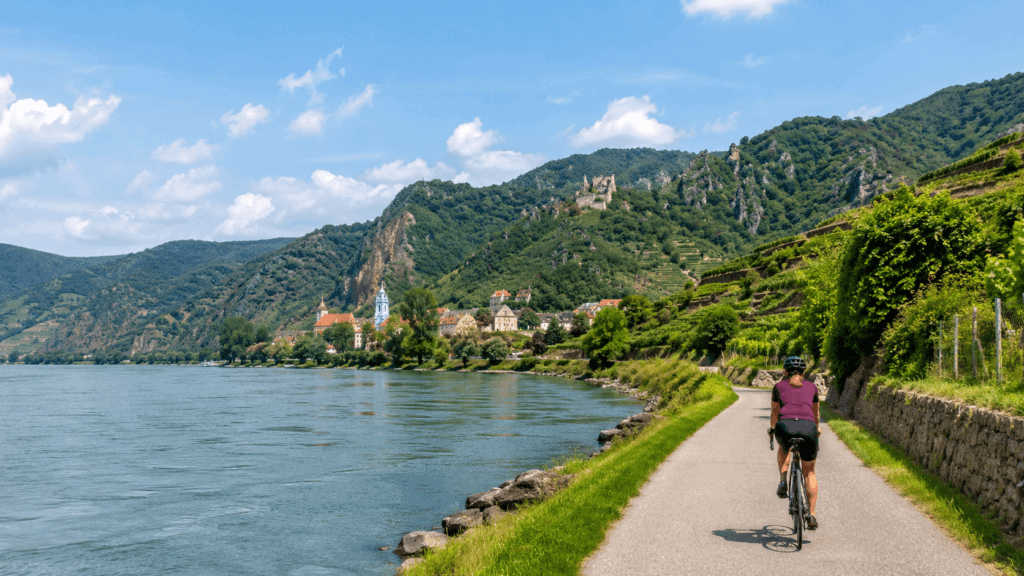
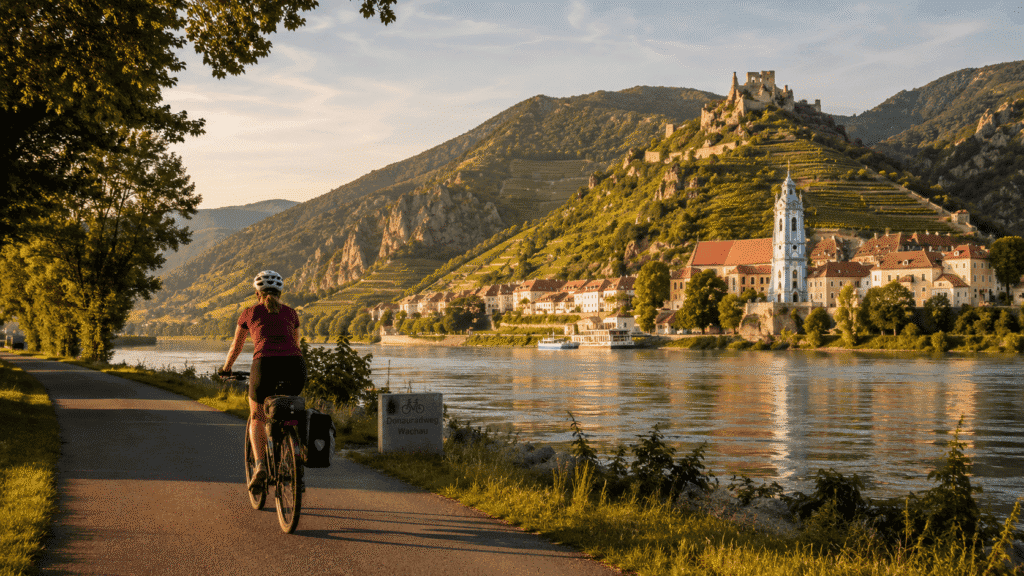
The Danube’s Wachau Valley cycling path between Dürnstein and Melk is 36 kilometers of flat, paved, UNESCO World Heritage riverbank, the finest cycling destination on any European river cruise
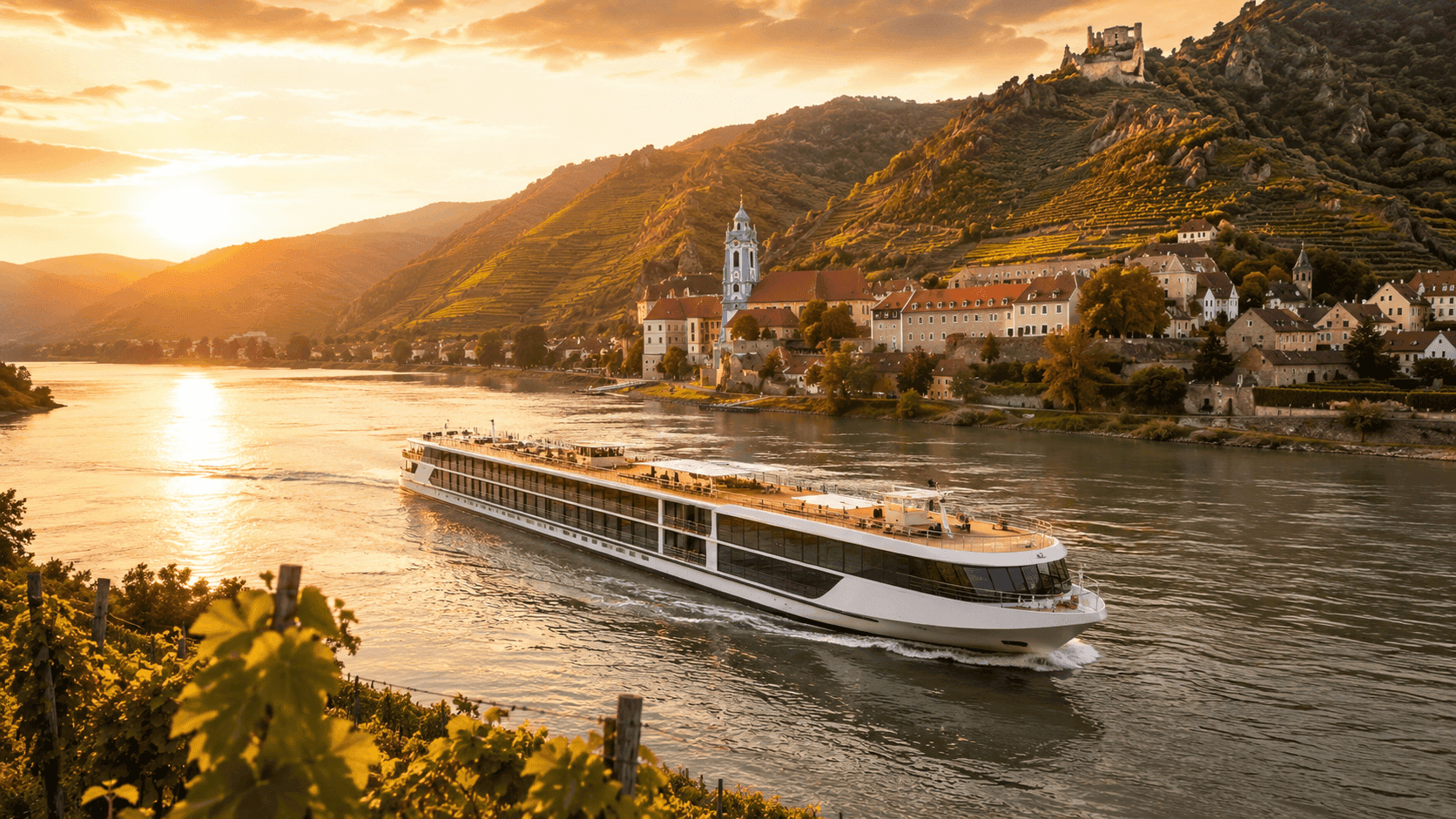
The Danube is the crown jewel of European cycling routes, full stop. The Wachau Valley section, a UNESCO World Heritage Site, runs between Dürnstein and Melk through 36 kilometers of vineyard-covered hillsides, apricot orchards, and medieval abbeys. The dedicated cycling path runs parallel to the river the entire way, is well-maintained, and is essentially flat. Even travelers who wouldn’t describe themselves as cyclists find it doable. Especially at the pace where you stop in Dürnstein for Riesling before lunch.
Beyond the Wachau, Danube itineraries typically include Passau (excellent hike up to Veste Oberhaus fortress), Vienna (cycling the Prater park system and Ring Road), and Budapest (walking bridges and hillside climbs in the Buda Castle district).
Active verdict: Best in class for cycling. Excellent hiking in selected ports. The top choice for first-time active river cruisers who want a manageable, spectacular introduction to the format.
The Wachau Valley section between Durnstein and Melk is flat, fully paved, and runs 36 kilometers through a UNESCO World Heritage landscape.
The Rhine: Best for Mixing Hiking and Cycling
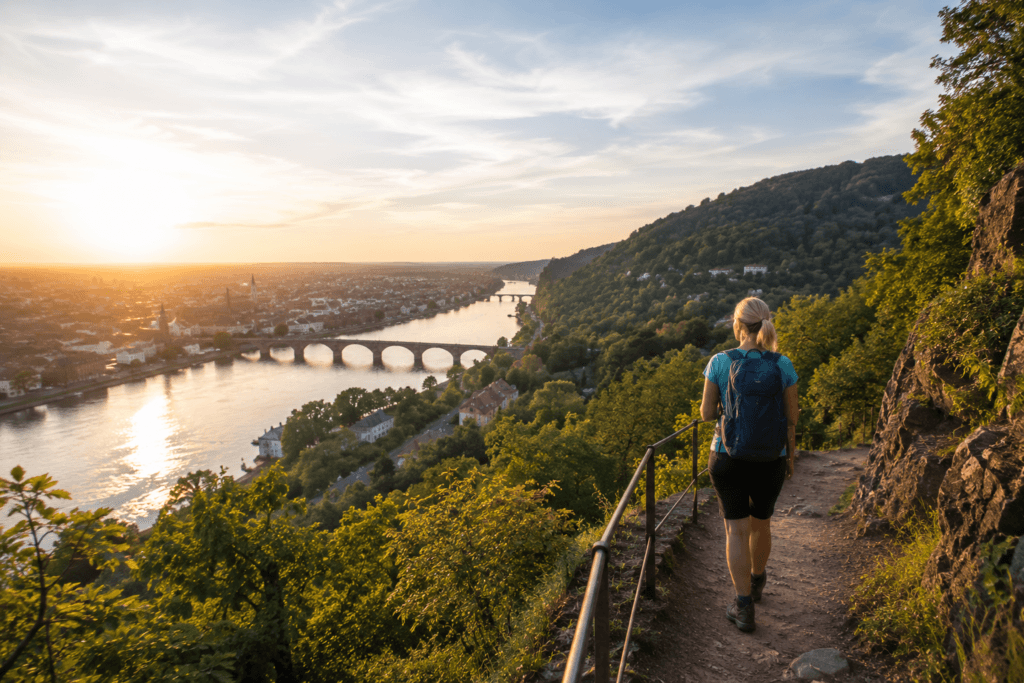
The Rhine delivers a different kind of active experience than the Danube: more vertical, more dramatic, and with some of Europe’s most celebrated hiking. The Philosophers’ Way (Philosophenweg) above Heidelberg is a genuine hike with genuine elevation gain and views that justify every meter of the climb. The Middle Rhine Gorge, another UNESCO World Heritage Site, is castle country, and most castles worth looking at are also worth hiking to.
Avalon’s e-bike excursion through the Black Forest near Breisach is one of the best active options on any European river cruise itinerary. The Black Forest is exactly what it sounds like: dense, atmospheric, deeply German, and spectacular on two wheels.
For travelers who want to mix hiking days with cycling days and have meaningful options at every port, the Rhine is the strongest itinerary available.
Active verdict: Best overall for combining hiking and cycling. The Rhine Gorge section is unmissable, particularly from the water at dusk.
The Philosophers’ Way above Heidelberg gains enough elevation to earn the views, and earns the glass of Riesling you’ll have at the bottom.
The Moselle: Best for Vineyard Walkers
The Moselle doesn’t get the same top billing as the Danube or Rhine, and active travelers should read this as an opportunity rather than a concern. The Moselle Valley is quieter, more intimate, and absolutely spectacular: steeply terraced vineyards, half-timbered villages, and medieval castles at every bend in the river.
Hiking the Moselle wine trails means hillside paths between Riesling vines with views straight down to the river and the boats below. It is deeply pleasant, moderately challenging, and makes the glass of Moselle Riesling you drink at dinner taste approximately 40% better. Cycling along the Moselle is flatter and more leisurely than the Rhine, making it a strong choice for travelers who want active days without sustained climbing.
Active verdict: The most underrated active river cruise itinerary in Europe. Less crowded, more intimate, and the views are exceptional.
The Douro (Portugal): Best for Dramatic Landscapes
Portugal’s Douro Valley is unlike any other river in this guide. The landscape is rugged and dramatic, the light is extraordinary, the wine is port, and the active programming has improved significantly in recent years.
Backroads runs the Douro River Cruise with cycling through rugged natural parks and terraced vineyards. It’s more remote than the Central European routes, more adventurous in feel, and ideal for travelers who want something genuinely off the river cruise beaten path. If the Danube is a greatest-hits album, the Douro is an album you discover and then tell everyone about.
Active verdict: Best for dramatic scenery paired with active days. Ideal for experienced river cruisers looking for something different.
The Seine: Best for Active Culture Seekers
The Seine itinerary includes Paris, Giverny (Monet’s garden, which looks exactly like the paintings and is somehow still surprising), and Normandy. The Backroads version covers a significant portion of it by bicycle, including the D-Day beaches and hedgerow country, which is one of those experiences that stays with you considerably longer than the tan.
For travelers who want cultural depth alongside physical activity, the Seine is the most historically rich active river cruise route in Europe.
Active verdict: Best for travelers who define activity broadly to include emotional and historical engagement. The cycling in Normandy is extraordinary.
Active Travel Guide – 2026
Activity Levels by European River Route
Cycling potential, hiking opportunities & scenic beauty – rated by river
Danube
Passau or Amsterdam to Budapest
Cycling
5/5
Hiking
4/5
Scenery
5/5
Rhine
Amsterdam to Basel (or reverse)
Cycling
4/5
Hiking
5/5
Scenery
5/5
Moselle
Trier to Koblenz
Cycling
4/5
Hiking
4/5
Scenery
5/5
Douro (Portugal)
Porto to Spain border
Cycling
4/5
Hiking
4/5
Scenery
5/5
Seine
Paris to Normandy
Cycling
4/5
Hiking
3/5
Scenery
5/5
Cycling potential
Hiking opportunities
Scenic beauty
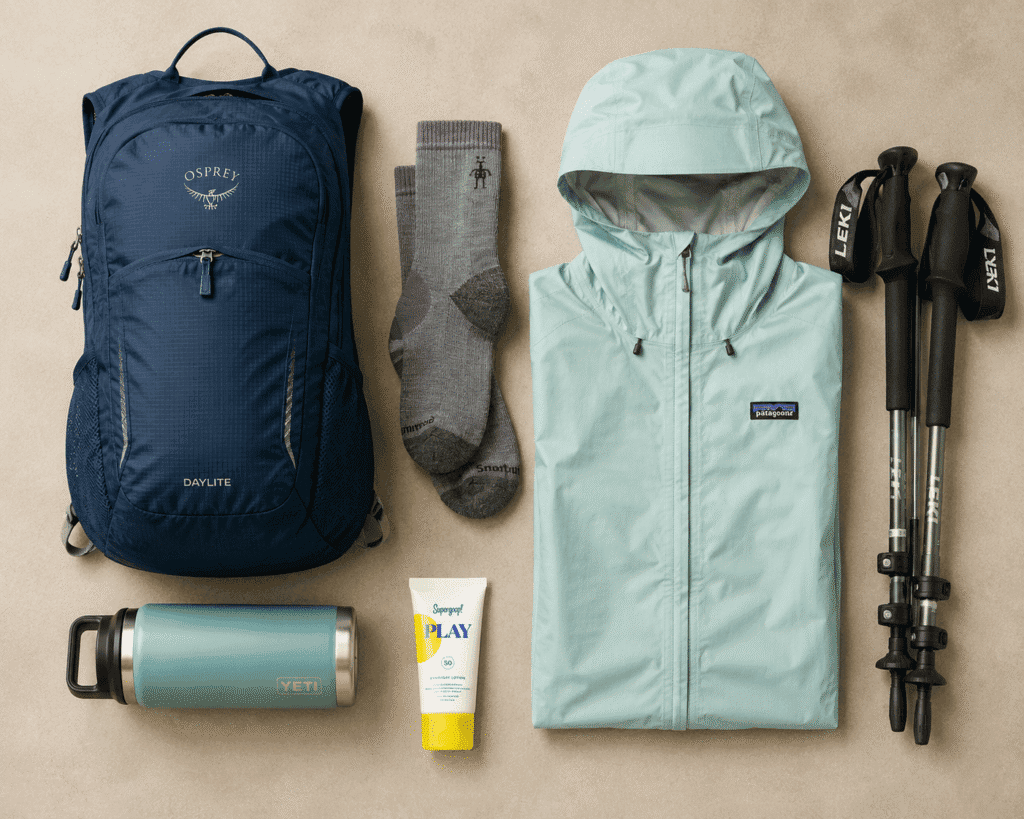
Everything here packs flat or compresses small enough to fit in a single river cruise cabin drawer, which is exactly the standard to hold yourself to.
What to Pack for an Active River Cruise
Packing for an active river cruise requires different thinking than packing for a standard sailing. You need gear that performs on the trail but doesn’t colonize your cabin. River cruise cabins are generally excellent by cruise standards, but “excellent by cruise standards” still means you should pack with intention.
A few things that make a real difference:
A packable day backpack. You need something to carry water, a layer, sunscreen, and a camera on excursions — then compress to nothing when you return to the ship. The Osprey Daylite Packable Daypack is a perennial favorite for exactly this use case and folds flat in a drawer between port days.
Merino wool hiking socks. You will walk more than you expect, sometimes in shoes that are stiffer than your daily trainers. Darn Tough merino hiking socks outlast standard athletic socks, keep your feet considerably more comfortable, and do not need to be washed after every single use, which matters when cabinet space is limited.
Quick-dry, packable hiking pants. Jeans are the enemy of active river cruising. You need something that works on a bike, converts to shorts if needed, and looks presentable enough for the dining room. Columbia Saturday Trail II pants have been the reliable answer to this problem for years and pack to essentially nothing.
A lightweight packable rain jacket. Europe will be beautiful and it will also sometimes be wet, occasionally in the same hour. A jacket that stuffs into its own pocket weighs nothing and saves an entire morning. The Columbia waterproof jacket is the benchmark in this category and has been for good reason.
Sun protection for your neck and face. Cycling and hiking in full European summer sun is genuinely intense, particularly on exposed riverbank paths with no shade. A lightweight UPF 50+ neck gaiter weighs nothing, packs flat, and handles both sun and unexpected morning chill.
Collapsible trekking poles. Not everyone wants them, but if you’re doing any serious hiking, the Philosophers’ Way above Heidelberg, the Passau castle climb, Moselle vineyard trails with elevation, collapsible trekking poles are worth their minimal packed weight. Knees will agree.
For a complete gear breakdown and seasonal packing advice, the European river cruise packing list covers everything else you’ll want onboard and what to leave at home.
Planning Tips from a Travel Advisor
Book Active Excursions Early — Not Onboard
Active excursion slots fill faster than any others, particularly on May through September departures. On AmaWaterways and Avalon, certain cycling tours have limited bike availability and operate on a first-come, first-served basis. If a specific active excursion is on your must-do list, it needs to be confirmed before you board, not after the welcome cocktail.
Match the Route to Your Preferred Activity
The Danube is the best cycling itinerary. The Rhine is the best for mixing hiking and cycling. The Moselle is the best for leisurely walkers and casual cyclists who want stunning vineyard scenery without difficult terrain. The Douro and Seine are for travelers who want active options paired with dramatic scenery or exceptional cultural depth. Choosing the wrong river for your activity preference is the most common active river cruise mistake I encounter, and it is completely avoidable.
Give E-Bikes a Serious Look
If you have not ridden an e-bike before, a European river cruise is an excellent place to start. E-bikes extend the range and terrain accessible to active travelers significantly, particularly on uphills and into headwinds. Lines like Avalon include them. Others offer rentals at very reasonable rates. Don’t dismiss this as “cheating” — it is a genuinely different experience that covers more ground, opens up more terrain, and gets more people actively engaged with the landscapes they came to see.
Think About Your Travel Companion
If you’re traveling with someone whose activity level differs from yours, cruise line selection matters enormously. AmaWaterways and Avalon do the best job of offering genuinely active options alongside excellent lower-pace alternatives, so both travelers can have a great day without either person sitting out. This comes up a lot in the couples context, which I wrote about in more depth here.
Why Active River Cruises Work Exceptionally Well for Travelers Over 50
Active river cruise travelers skew 50 to 65 for good reason. The format solves the core tension of adventure travel at that stage of life: you want real physical engagement with the places you visit, not a bus window. You also want good food, a comfortable bed, and to unpack exactly once. River cruising is the only format that delivers all of it simultaneously, which is why the 50-plus active traveler demographic is the fastest-growing segment in European river cruising.
Use a Travel Advisor Who Knows These Lines
I am slightly biased on this one, but I am also correct. Active river cruise bookings involve more moving parts than standard river cruise bookings: shore excursion pre-booking, cabin selection that accounts for active schedules, route-specific activity expertise, and often waitlist management for peak sailings. A travel advisor who specializes in this doesn’t cost you more (we are paid by the cruise line, not by you) and very frequently prevents expensive mismatches between what travelers expect and what they actually get. Here’s what booking with a travel advisor actually looks like in practice.
FAQs: Active European River Cruises
What is the most active European river cruise line?
AmaWaterways is the most consistently active river cruise line in Europe, with guided biking and hiking built into every itinerary at every port stop. Avalon Waterways runs a strong second with their Active & Discovery program offering up to 28 excursion options per sailing. Backroads is the most active option of all, but functions more like a guided adventure tour that happens to use a boat as accommodation than a traditional river cruise.
Can I bike on a European river cruise every single day?
On AmaWaterways and Avalon, cycling is available in nearly every port. Not every stop has a formal guided ride, but onboard bikes are available for independent cycling most days, and guided tours operate on the majority of port days across both lines. The Danube and Rhine itineraries have the most consistent daily cycling availability.
Do river cruise ships have fitness facilities?
Most river cruise ships have a small fitness area with cardio equipment and basic weights. AmaWaterways ships include a dedicated wellness space with bikes on several vessels, and some offer morning yoga and guided stretching on the sun deck. The primary fitness offering on any active river cruise, however, is what happens on shore, which is precisely the point.
How physically fit do I need to be for an active river cruise?
Active excursions are typically offered at multiple difficulty levels: gentle, moderate, and strenuous. The Danube cycling route through the Wachau Valley is essentially flat and accessible to any recreational cyclist. The Rhine hikes range from leisurely old town walks to genuine climbs with real elevation. You do not need to be a triathlete. You do need to be able to walk comfortably for one to three hours and be willing to be active most mornings.
Is an active river cruise good for solo travelers over 50?
It is an excellent format for active solo travelers. River cruise ships are small and naturally sociable, shared excursions create organic community around a shared interest in actually moving, and the active programming gives solo travelers a built-in way to connect with like-minded people. Here’s a full guide to solo European river cruising if you’re traveling on your own.
How do active river cruises handle different fitness levels within a group?
Top river cruise lines offer tiered excursion options so every fitness level is accommodated on the same sailing. AmaWaterways and Avalon both execute this framework well. It is worth confirming that your chosen itinerary explicitly offers this before you book, particularly for smaller rivers with fewer port options.
What is the best time of year for an active European river cruise?
May through September is the peak active season, with the longest days and best conditions for sustained cycling and hiking. April and October can be genuinely excellent; fewer crowds, cooler temperatures that are actually more comfortable for physical activity than July heat, and notable price reductions. Winter itineraries exist but most active programming is seasonally dependent, so if activity is your priority, stick to the warmer months.
How much should I tip on an active river cruise?
Tipping norms on European river cruises vary by cruise line and are a more nuanced topic than most travelers expect. The river cruise tipping guide covers what’s expected, what’s genuinely optional, and how to navigate the onboard gratuity packages each line handles differently.
One More Thing Before You Go
If you’ve been sitting on the idea of an active river cruise but aren’t sure which line, which river, or which departure actually matches what you’re looking for, that is exactly the kind of question I enjoy sorting out. I’ve sailed with several of these lines personally, I work with active travelers on river cruise bookings regularly, and I’m not going to try to sell you something that isn’t the right fit.
Reach out and let’s figure out whether a river cruise belongs on your 2026 or 2027 calendar. No hard sell, just useful, specific guidance, and it costs you nothing since I’m compensated by the cruise line. You can find me here.
Thinking about a river cruise? Grab my free River Cruise Guide — the lines actually worth booking, how to pick your river and season, and the questions to ask before you put down a deposit. [Download the free guide →]
Final Thoughts
The idea that river cruises are for people who have given up on adventure is one of travel’s most persistent and most wrong assumptions. The best active European river cruise puts you on a bike in the Wachau Valley, on a trail above the Rhine Gorge, on the hillside vine paths of the Moselle, and still gets you back to a comfortable cabin, a proper dinner, and a glass of something excellent by evening.
That is not sedentary. That is just very, very smart logistics.
Affiliate Disclosure: This post may contain affiliate links. If you make a purchase through one of these links, we may earn a commission at no additional cost to you. We only recommend products and services we believe may be helpful to travelers.
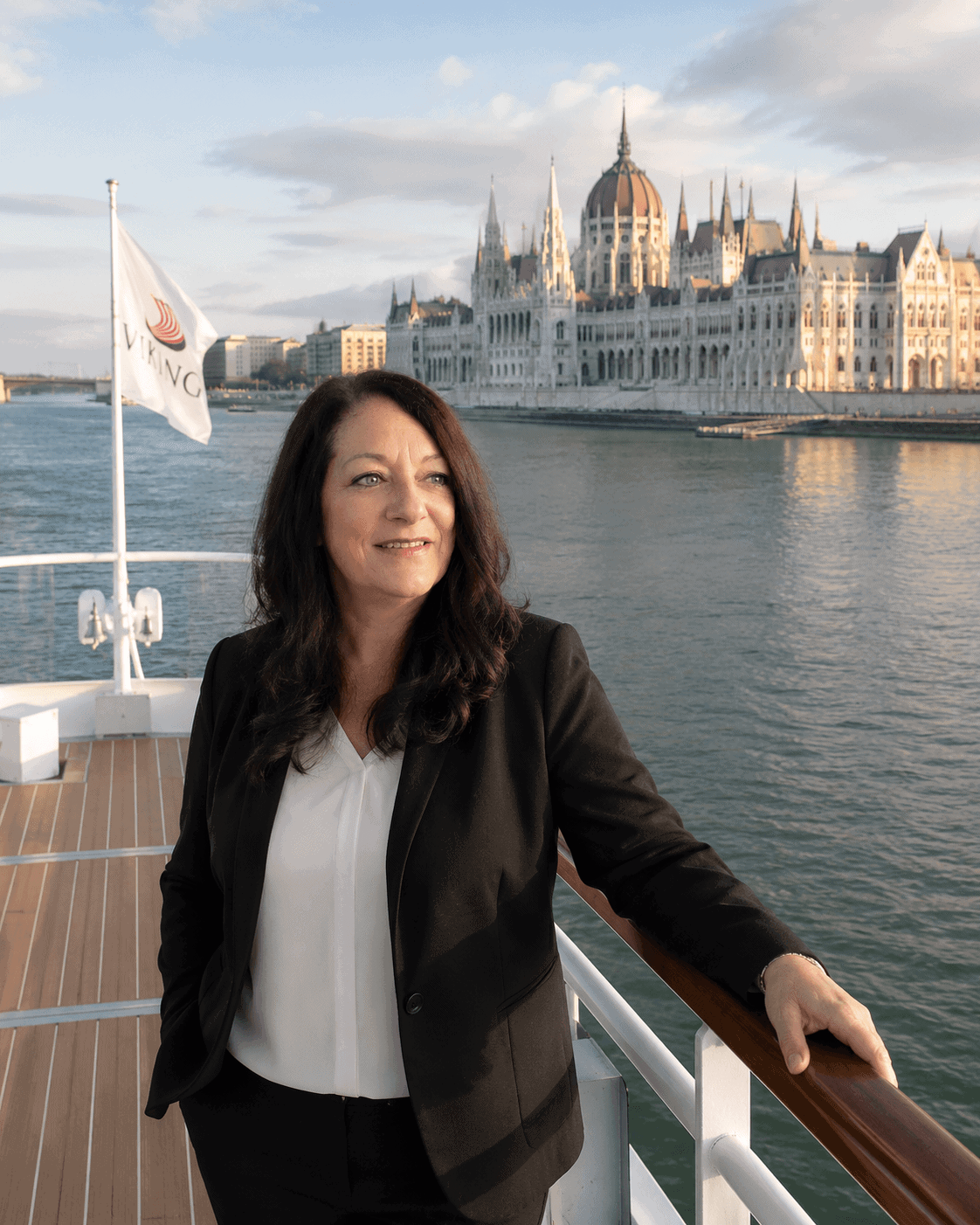
Hi, I'm Sue. I plan cruises, all-inclusive resorts, and slow multi-country trips through Europe, and I'm a member of the Travel Leaders Network. Twenty years in senior HR leadership before this, which mostly taught me how to read what people actually want. I live in Grain Valley, Missouri with my husband and business partner Mike.