What to Pack for a European River Cruise (Season-by-Season Packing List)
Before you open a single suitcase, there are two things every river cruise client needs to hear: you don't need formal wear, and the cobblestones will absolutely win. This season-by-season packing guide covers what to actually bring, what to leave at home, and the dress code reality that surprises almost every first-time river cruiser.
Last updated: October 2, 2026 :: Written by Sue Nelson, Travel Advisor | Adventures by MJ · Reading time: 10 minutes
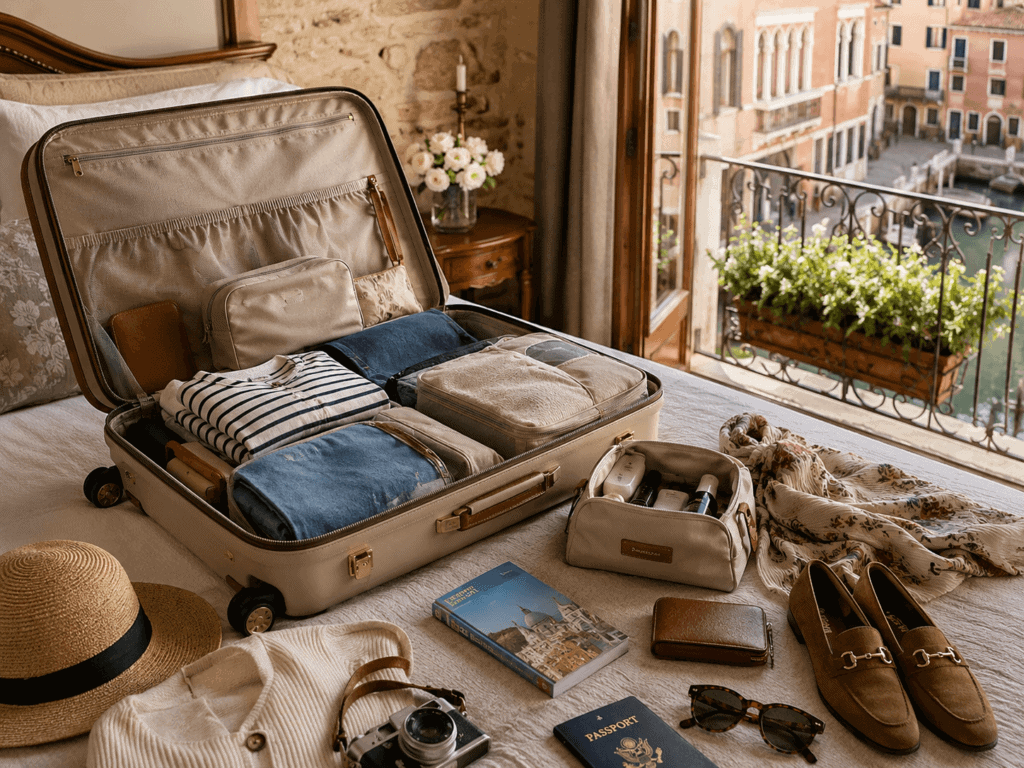
The short answer on what to pack for a European river cruise: think smart casual, think layers, think comfortable walking shoes, and think smaller than you want to. River cruise cabins are cozy by design, storage is limited, and you’re doing excursions on ancient cobblestone streets that will absolutely ruin any heel over two inches. Pack light, pack intentionally, and pack according to the season you’re sailing, because a June cruise on the Rhine and a November cruise on the Danube require almost entirely different wardrobes.
Now let’s build that wardrobe.
Key Takeaways: European River Cruise Packing
Smart casual is the dress code on almost every line. You do not need formal wear.
Comfortable, flat walking shoes are non-negotiable. Cobblestones are everywhere and they show no mercy.
Most ships have laundry service, so you can pack less and re-wear more.
Layer for every season except high summer. European river weather changes fast.
A compact, packable rain jacket earns its weight on every single itinerary.
Power adapters are essential. Europe runs on 220V with Type C or F outlets.
One carry-on and one personal item is realistic. One large suitcase is the max most advisors recommend.
I tell every single river cruise client the same thing before they sail: the number one packing mistake is not the wrong dress. It’s the wrong shoes. And the second biggest mistake is overpacking clothing for a dress code that doesn’t exist.
River cruising is elegant. It’s also extremely casual by cruise standards. You are not going on a formal sea voyage. You are floating through the European countryside, stopping in charming towns, walking on cobblestones older than the United States, and eating extraordinary food in dining rooms where a nice pair of jeans and a blouse is genuinely appropriate for dinner.
This guide will tell you exactly what to bring, broken down by season, by category, and by what to leave at home entirely.
Thinking about a river cruise? Grab my free River Cruise Guide — the lines actually worth booking, how to pick your river and season, and the questions to ask before you put down a deposit. [Download the free guide →]
Quick Voice Search Answers: European River Cruise Packing
What do you wear on a European river cruise?
Smart casual during the day and smart casual at dinner. Most lines have no formal nights. Think nice jeans, blouses, trousers, or dresses. Leave the ball gown at home.
How much luggage can I bring on a European river cruise?
Plan on one suitcase and one carry-on per person, which is what most river lines expect and what a standard cabin holds without a fight. Suitcases usually slide under the bed, so a medium rolling bag beats a giant one. And check your airline’s bag rules too, since you’ll fly in and out.
Do I need formal clothes for a river cruise?
No. Smart casual covers every occasion on every major river cruise line. One “nicer” outfit for a Captain’s Welcome or Farewell dinner is plenty.
Do river cruises have a dress code?
Yes, but it’s relaxed. Smart casual means no ripped jeans, no beachwear in the dining room, and shoes at dinner. Beyond that, you have significant flexibility.
What should I pack for a Christmas market river cruise?
Pack for real cold: a warm waterproof coat, thermal base layers, a hat, gloves, a scarf and insulated waterproof boots. Along the Rhine and Danube in December, temperatures run roughly 28 to 42°F, and the markets are at their best after dark, outdoors.
Do I need travel insurance for a European river cruise?
Yes, I strongly recommend it, because a river cruise is a big prepaid trip and your health coverage may not follow you overseas. Medicare usually doesn’t cover care outside the U.S., and a good policy also protects you if illness cancels the trip or a delayed flight makes you miss the ship.
Why Packing for a River Cruise Is Different
Before the list, a few things that make river cruise packing genuinely unlike packing for any other trip.
Your cabin is small, and that is the whole point.
River cruise ships carry 100 to 200 passengers and are designed for intimacy, not square footage. Your cabin is comfortable and beautifully designed, but it is not a suite at the Four Seasons. Closet space is functional, not generous. Under-bed storage exists and should be used. Two people sharing a cabin with two large suitcases each is a comedy sketch waiting to happen.
If you’re not sure what kind of storage your cabin actually has, our breakdown of river cruise cabin types walks through exactly what to expect in a French balcony, full balcony, and suite, including the storage differences that matter for packing.
You unpack exactly once.
This is one of the greatest gifts of river cruising. Your cabin moves with you from city to city, which means your clothes, your shoes, your chargers, and your toiletries never need to leave the ship until disembarkation day. Pack what you need, put it away, and enjoy the fact that you’re never standing at a hotel check-in at 7am with a headache and a heavy bag.
A set of packing cubes makes the “unpack once” magic work even better — everything has a home in the drawer, nothing gets buried, and you’re off the ship and walking cobblestones while everyone else is still excavating their suitcase.
You’re walking on cobblestones every single day.
Every town. Every city. Every charming European village on your itinerary was built before pavement was invented, and the streets have not been updated since. Comfortable, supportive, flat-soled shoes are not a nice-to-have. They are the difference between loving your trip and limping through the last four ports with blisters and regrets.
If you want a specific rec that has saved more than a few river cruise vacations, HOKA Bondi walking shoes are what I point clients to first — cushioned enough for eight miles of cobblestone, presentable enough for a casual dinner.
Most lines have laundry service.
Viking, AmaWaterways, Scenic, Avalon, and most major river cruise lines offer either self-service laundry or valet laundry service on board. This means you can pack five days of clothing for a fourteen-day cruise and wash as you go. You do not need an outfit for every single day. Repeat after me: you do not need an outfit for every single day.
For river cruising specifically, Rick Steves’ one-bag packing philosophy is worth reading before you open your suitcase; he’s been right about this for thirty years.
If you’re trying to decide between the two most popular lines, our Viking vs. AmaWaterways comparison goes deep on what actually differs, including the things that affect your packing, like cabin size and included amenities.
The ship moves. Your luggage doesn’t. Which is the entire argument for packing light and packing right.
Season-by-Season: What to Pack for a European River Cruise
Spring River Cruise Packing (March through May)
Spring on the European rivers is stunning, particularly on the Rhine where tulip season peaks in April. It is also genuinely unpredictable. You will have warm, sunny days where you’re glad you packed a linen shirt. You will also have cold, rainy afternoons in port where everyone who didn’t bring layers is standing under an awning looking wistful.
Pack for spring:
Lightweight layers are your entire strategy. A base layer, a mid-layer (light sweater or cardigan), and a packable outer layer (waterproof jacket or windbreaker) covers almost every condition. Add one or two slightly warmer pieces for cool evenings, particularly in March and early April when temperatures can drop into the low 40s Fahrenheit after dark. Spring temperatures typically range from the mid-40s to the low 60s Fahrenheit, with higher humidity on the Rhine and Danube corridors.
Spring-specific additions: a compact umbrella or packable rain jacket, waterproof walking shoes, at least two warm layering pieces, and one pair of lightweight pants that work for both walking and dinner.
A compact windproof travel umbrella takes up almost no space and will be your best friend in approximately every port town on the Rhine.
A packable waterproof rain jacket is the one item that earns its space in every single season — fold it into its own pocket and forget it’s there until you need it, which you will.
Summer River Cruise Packing (June through August)
Summer is peak season for a reason. Long days, warm temperatures, vineyard landscapes in full green, and outdoor dining at every port. It is also hot in a way that surprises first-time visitors to Central Europe. The Rhine Valley and Danube corridor can hit the mid-80s to low 90s Fahrenheit in July and August, and air conditioning on older portions of the rivers is inconsistent in port towns.
Pack for summer:
Lightweight, breathable fabrics. Linens, light cottons, and moisture-wicking blends will be your best friends. You can leave the layers at home for the most part, though a light cardigan or wrap is still useful for evenings on deck and over-air-conditioned restaurants.
Sun protection is critical and often forgotten. A sun hat, quality sunscreen, and sunglasses are not optional if you’re spending time on deck or at outdoor markets. The sun on the water is more intense than it seems.
A packable UPF sun hat folds flat in your bag and becomes genuinely essential the moment you step onto a sun-drenched deck somewhere between Strasbourg and Basel.
Summer-specific additions: sun hat (packable), sunscreen (travel-size to start, buy more in port), lightweight breathable tops in multiples, a light cardigan for evenings, and sandals that can handle walking as well as dinner.
What you can leave home in summer: heavy layers, thermal undershirts, waterproof boots. A packable rain jacket is still worth including, summer storms happen, but it doesn’t need to dominate your packing.
Fall on the Rhine is genuinely one of the most beautiful things you’ll ever see. Dress for it accordingly.
Fall River Cruise Packing (September through November)
Many experienced river cruisers will tell you that fall is the best season, and they are not wrong. September and October bring golden light, harvest season in the wine regions, fewer crowds, and temperatures that make walking actually pleasant rather than sweaty. The foliage along the Rhine and Danube in October is genuinely jaw-dropping.
November gets colder and wetter and begins to feel like a preview of winter. Pack accordingly.
Pack for fall:
This is the most layering-intensive season. Temperatures range from the low 40s to the low 60s Fahrenheit across September through November, with significant variability between morning excursions and midday warmth. A light-to-medium weight jacket works for September and early October; a genuine mid-weight coat is more appropriate for late October and November.
Fall-specific additions: a versatile scarf (which doubles as warmth on deck, style at dinner, and an extra layer on chilly excursion mornings), waterproof walking shoes, at least one pair of long pants suitable for both touring and dining, and a medium-weight jacket or coat depending on your departure month.
If you’re sailing with a specific line, it’s worth checking their own guidance as well. AmaWaterways’ recommended packing guidelines and Viking’s equivalent are both straightforward and occasionally more specific about what their dining rooms actually expect.
Christmas Market River Cruise Packing (Late November through December)
This is a category of its own because Christmas market cruises have become enormously popular and the packing requirements are genuinely different from any other time of year. Cold. Festive. Often grey and rainy, occasionally magical with snow. And full of outdoor markets where you’ll be standing still for stretches of time, which makes “feels colder than it is” a real phenomenon.
Pack for Christmas markets:
This is your warmest packing scenario. Temperatures typically range from the high 20s to the low 40s Fahrenheit, with wind chill on the river. A proper winter coat is not optional. Thermal base layers, warm socks, a good hat, gloves, and a scarf are all functional necessities.
Waterproof boots rated for cold weather are worth the packing space. You will be walking on wet cobblestones in low temperatures and you will want your feet to be warm and dry.
Christmas market-specific additions: heavy winter coat, thermal underlayers, wool or fleece mid-layer, hat and gloves, warm scarf, waterproof insulated boots, hand warmers (find them in port if you forget), and one festive outfit for the ship’s holiday dinner if you’re inclined.
If you’re still on the fence about whether the cruise format is the right way to do Christmas markets, our honest look at Christmas market river cruise vs. DIY trip settles that debate pretty thoroughly.
The Dress Code: What Smart Casual Actually Means
Let’s address the thing that creates the most anxiety in my clients’ inboxes: the dress code.
Smart casual means this:
Daytime (excursions and onboard):
Comfortable walking clothes. Jeans, trousers, leggings under layers, casual dresses, shorts in summer. Sneakers or walking shoes. No one is judging your outfit at the 9am Viking lecture about Austrian history.
Evenings (dinner onboard):
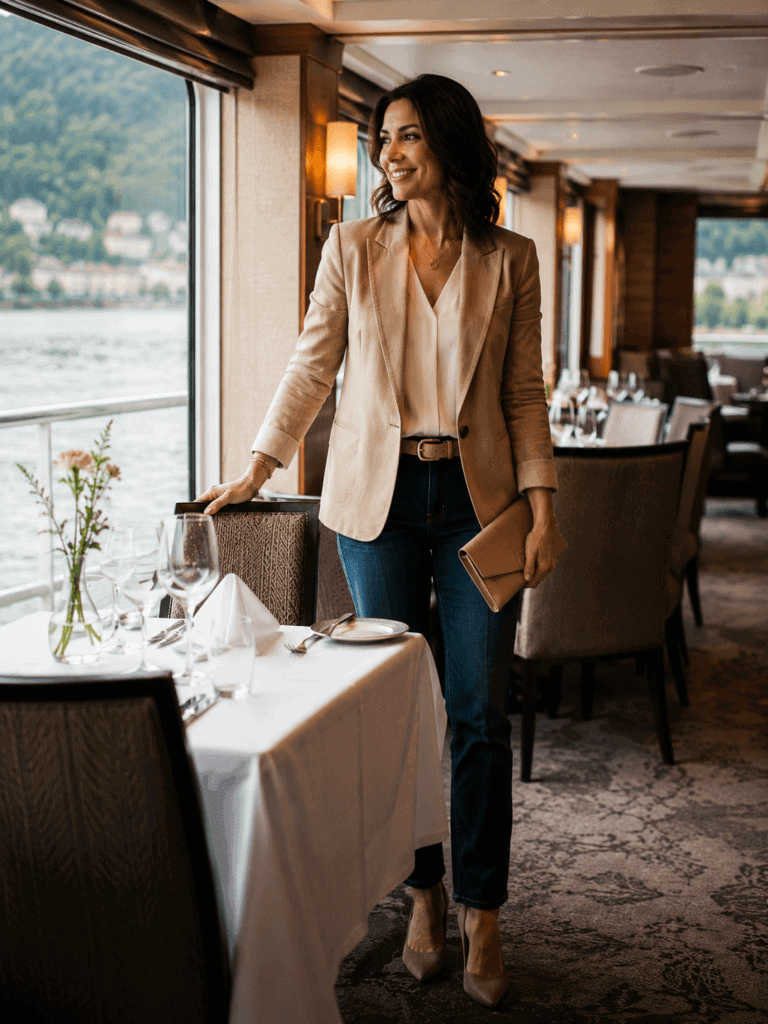
Elevated casual. Nice jeans with a blouse or sweater, a casual dress or skirt, chinos or trousers with a button-down, a blazer if you feel like it. You do not need a suit. You do not need a formal gown. You do not need heels, though flats that look presentable are always appropriate.
Special nights (Captain’s Welcome Dinner, Farewell Dinner):
Slightly dressier than your everyday dinner outfit. One step up from “nice jeans.” A cocktail dress, a blazer over trousers, a pressed button-down with dress pants. Still not black tie.
The number of people who arrive on river cruises with formal gowns and tuxedos packed “just in case” is higher than you’d expect. Those items will never leave the bag. Pack that space with an extra comfortable outfit you’ll actually use every day.
This. This is what smart casual looks like on a river cruise. The tuxedo stays home.
Packing’s the last decision. If the river and the month aren’t settled yet, start here instead.
Grab Our First-Time River Cruiser’s Guide:
What to Know Before You Go
Thank you!
Check your inbox for your River Cruise Guide
The Complete River Cruise Packing List
Clothing (7 to 10 days of outfits, rewear the rest)
3 to 4 pairs of comfortable pants or jeans (mix of casual and slightly dressier)
4 to 6 tops (mix of casual and smart casual)
1 to 2 dresses or skirts (optional but versatile)
1 lightweight sweater or cardigan
1 packable waterproof jacket or windbreaker
Season-appropriate outer layer (see above)
Sleepwear
Underwear and socks for the full trip (these are small, pack enough)
1 “nicer” dinner outfit for special evenings
Swimsuit (some ships have small pools or hot tubs; worth including)
Shoes (Three Pairs Maximum)
This is the rule and it is non-negotiable: three pairs of shoes maximum.
Walking shoes for excursions. Supportive, flat-soled, comfortable enough for 8 to 10 miles of cobblestone. Sneakers work. A low walking shoe with ankle support works even better. Whatever you choose: worn in before you leave, flat, and something you’d be comfortable standing in for three hours.
Casual shoes for evenings onboard. Can be the same as your walking shoes if they’re clean and presentable, or a pair of loafers, ballet flats, or low-heeled sandals.
Season-specific wildcard. Sandals in summer. Waterproof boots in fall/Christmas. A lightweight trainer for the gym if that’s your thing.
Accessories and Extras
Compact umbrella or packable rain poncho
Sunglasses and sun hat (summer and shoulder seasons)
Scarf (works year-round for warmth, style, and air-conditioned dining rooms)
Day bag or small backpack for excursions
Binoculars for scenery (genuinely worth it on river cruises) – A pair of compact travel binoculars genuinely changes the river cruise experience; castles on the Rhine, wildlife on the Danube, and vineyards you’d otherwise squint at from the sun deck.
Power adapter (Type C and Type F for most of Europe) – Not sure which adapter you need? REI’s world electricity guide lists voltage and plug types by country.
Portable phone charger
Reusable water bottle
Documents and Essentials
Passport (valid for at least six months past your return date)
Travel insurance documents (printed and digital)
Cruise confirmation and e-tickets
Any required visas (check requirements for each country on your itinerary)
Emergency contacts and copies of key documents stored separately from originals
Any prescription medications in their original containers, with extra supply
If you haven’t sorted your travel insurance yet, our honest breakdown of whether travel insurance is worth it will help you decide what level of coverage actually makes sense for your trip before you sail.
The Anker PowerCore slim portable charger is the one we recommend to every traveler — thin enough to slip in a daypack pocket and reliable enough that you’ll use it on every trip after this one too.
High heels over two inches (the cobblestones will win)
Full-size toiletries (ships provide basics; buy anything else in port)
A hair dryer (ships have them; confirm with your line but it’s almost universal)
More than three pairs of shoes (see above)
Valuables you’d be devastated to lose (leave the family heirloom jewelry at home)
Multiple large umbrellas (one compact one is plenty)
Your entire home medicine cabinet (TSA-friendly travel sizes only)
European River Cruise Packing by Season
What to bring, what to skip, and how to dress — month by month.
Season
Avg Temp (°F)
Rain Risk
Pack These
Leave These Home
🌷
Spring
March – May
45 – 65°F
Evenings cooler
Moderate
Packable rain jacket
Light layers (3+)
Waterproof walking shoes
Warm scarf
Light sweater or fleece
Compact umbrella
Heavy winter coat
Sandals as primary shoe
Summer-only fabrics
Formal gowns
☀️
Summer
June – August
65 – 88°F
Can exceed 90°F in July
Low
Lightweight breathable tops
Sun hat (packable)
Sunscreen + sunglasses
Light cardigan for evenings
Sandals (+ walking shoes)
Swimsuit
Heavy layers or coats
Thermal underlayers
Waterproof boots
Multiple heavy sweaters
🍂
Fall
September – November
40 – 63°F
Nov. dips to 30s
Moderate–High
Medium-weight jacket
Warm layers (4+)
Versatile scarf
Waterproof walking shoes
Rain jacket or poncho
Smart casual dinner outfit
Sandals as main shoe
Summer fabrics only
Light windbreaker (Nov.)
High heels
🎄
Christmas Markets
Late Nov. – December
28 – 42°F
Snow possible
Moderate
Heavy winter coat
Thermal base layers
Hat, gloves, warm scarf
Waterproof insulated boots
Wool or fleece mid-layer
Festive dinner outfit
Sandals or thin shoes
Summer/spring fabrics
Light jacket only
Formal gowns
Temperatures reflect Rhine and Danube corridors (Germany, Austria, Hungary). Douro (Portugal) and Seine (France) run slightly warmer in shoulder seasons. Always check 10-day forecasts before you sail.
Pack right, and this is what you get to focus on instead of worrying about your suitcase.
Packing for a Rhine river cruise specifically? Spring and fall require the most layering. Tulip season in April brings unpredictable showers, and October harvest season means cool mornings and warm afternoons.
If you’re still deciding which river to sail, our guide to Rhine vs. Danube vs. Douro river cruise routes breaks down the differences in scenery, ports, and experience so you can choose with confidence.
Adventures by MJ • River Cruise Expert
European River Cruise Packing List
What to bring, what to skip, and the shoe rule that will save your trip.
🎒 Pack light — laundry is on board
👟 3 pairs of shoes max
🧥 Always pack a rain jacket
🔌 Bring a power adapter
⚠️
The Shoe Rule: Three Pairs. That’s It.
Walking shoes for cobblestones (flat, broken in, supportive). Casual shoes for evenings. One season-specific pair — sandals in summer, waterproof boots in fall. Heels over two inches will be worn exactly zero times. The cobblestones win every time.
👕Clothing (7–10 Days)
✓ 3–4 pairs of pants or jeans
✓ 4–6 tops (casual + smart)
✓ 1–2 dresses or skirts
✓ Light sweater or cardigan
✓ Packable rain jacket
✓ Season outer layer
✓ 1 nicer dinner outfit
✓ Swimsuit
👟Shoes (3 Pairs Max)
✓Walking shoes — flat, supportive, broken in
✓Evening shoes — loafers, flats, or clean sneakers
✓Season pair — sandals (summer) or waterproof boots (fall/winter)
✕ High heels over 2 inches
✕ New shoes, unworn
✕ More than 3 pairs
🧣Accessories
✓ Versatile scarf (year-round)
✓ Compact umbrella
✓ Sun hat (packable)
✓ Sunglasses
✓ Day bag / small backpack
✓ Binoculars (scenery!)
✓ Reusable water bottle
🔌Tech & Documents
✓Power adapter (Type C/F)
✓ Portable phone charger
✓ Passport (6 mo. validity)
✓ Travel insurance docs
✓ Cruise confirmation
✓ Prescriptions + extra supply
✕ Hair dryer (ship has one)
🚫Leave These at Home — No Exceptions
✕ Formal gowns / tuxedos
✕ Full-size toiletries
✕ Heels over 2 inches
✕ Hair dryer (ships have one)
✕ More than 3 pairs of shoes
✕ Irreplaceable valuables
✕ New, unworn shoes
✕ Multiple large umbrellas
The Dress Code Reality: Smart Casual at Every Meal
Daytime
🚶
Comfortable walking clothes. Jeans, casual tops, leggings with layers. Sneakers are fine.
Dinner
🍷
Smart casual. Nice jeans + blouse, casual dress, or trousers + sweater. No suits required.
Special Nights
🥂
One step up. A blazer, cocktail dress, or pressed button-down. Still not black tie.
Frequently Asked Questions
How many suitcases can I bring on a European river cruise?
Most river cruise lines allow two pieces of luggage per person, but your cabin storage will tell you what’s actually practical. One carry-on-sized rolling bag plus a small tote or daypack is what most experienced river cruisers recommend, especially because laundry service is available on board and you genuinely don’t need as much as you think.
Do I need a power adapter for a European river cruise?
Yes, absolutely. Europe uses 220-volt electricity with Type C or Type F outlets, which are incompatible with standard North American plugs. Pack a universal travel adapter before you leave home rather than hunting for one in port. Your phone, laptop, and hair tools won’t work without one, and the ship’s gift shop is unlikely to have exactly what you need.
What shoes should I pack for a European river cruise?
Pack three pairs maximum: walking shoes for cobblestones, casual evening shoes, and one season-specific pair. The single most common complaint from first-time river cruisers is blisters from inappropriate footwear, and it is entirely avoidable.
Is there a dress code on Viking River Cruises?
Viking’s dress code is smart casual, consistent with most river cruise lines. During the day, comfortable casual clothing is completely appropriate. For dinner, smart casual means no ripped jeans or shorts, but there are no formal nights and no black-tie requirements. One slightly dressier outfit for the Captain’s Welcome or Farewell dinner is all you need.
Do river cruise ships have hair dryers?
Yes. Almost every major river cruise line provides hair dryers in the cabins, including Viking, AmaWaterways, Scenic, Avalon, and Tauck. Confirm with your specific ship before you sail, but it’s almost universal. Leave yours at home and use that packing space for something you’ll actually need.
Can I do laundry on a European river cruise?
Yes, and this is one of the best-kept packing secrets. Most river cruise lines offer either self-service laundry facilities or valet laundry service onboard, usually at a reasonable per-piece cost. This means a 14-day cruise realistically requires 7 to 8 days of clothing, not 14. Pack accordingly and enjoy the extra suitcase space you’ve now given yourself.
What should I not pack for a European river cruise?
High heels, formal gowns, full-size toiletries, and a hair dryer are the top four things to leave at home. Beyond that: skip any valuables you’d be devastated to lose, limit yourself to three pairs of shoes no matter how tempting it is to bring more, and resist the impulse to pack for weather conditions that won’t occur. A summer Rhine cruise does not require a heavy winter coat.
If you’re flying into your embarkation port, brush up on the TSA’s 3-1-1 liquids rule before you pack your toiletry bag. The river cruise ship itself will have basics on board, so you rarely need to bring full-size anything.
What is the luggage size limit for Viking River Cruises?
Viking does not publish a strict luggage size limit, but their cabin storage is designed to comfortably fit one medium-sized rolling suitcase per person. Two large checked bags per person will technically fit but will feel cramped in the cabin. The practical recommendation from most Viking travelers is one carry-on rolling bag or one medium suitcase plus a small bag for personal items.
What should I pack for a Viking River Cruise specifically?
Viking’s packing requirements are identical to most river cruise lines: smart casual throughout, no formal nights, and comfortable walking shoes for every port. The one Viking-specific note is that their ships are slightly larger than some competitors, so storage is a bit more generous, but the three-pair shoe rule and light-packing philosophy still applies. Their dining rooms expect smart casual for dinner, and the Welcome and Farewell dinners are a small step up from that.
Final Thoughts
Packing for a European river cruise is genuinely simpler than most people expect once you let go of the formal cruise mentality. You’re not boarding the Queen Mary 2. You’re boarding a beautifully designed floating hotel that will take you through some of the most gorgeous countryside in the world, stopping in charming towns where you’ll walk, explore, eat extraordinary things, and come home with the kind of memories that don’t require a ball gown to make.
Pack light. Pack layers appropriate to your season. Bring the right shoes. And trust that almost everything else you might have forgotten is either available on the ship, available in port, or genuinely not needed.
While you’re getting ready to sail, our river cruise tipping guide is the other thing every first-timer wishes they’d read before embarkation day. Bookmark it for the week before you leave.
Thinking about a river cruise? Grab my free River Cruise Guide — the lines actually worth booking, how to pick your river and season, and the questions to ask before you put down a deposit. [Download the free guide →]
Getting ready to sail and still have questions? Tell me when you’re going, which itinerary you’re on, and what’s keeping you up at night about packing — I’ll tell you exactly what you need and what you’re overthinking.
Sue is a travel advisor specializing in river cruises, all-inclusive resorts, and trips that people have been putting off for entirely too long. She will tell you to pack fewer shoes. She means it.
Written by Sue Nelson, Travel Advisor | Adventures by MJ | Updated for 2027
Affiliate Disclosure: This post may contain affiliate links. If you make a purchase through one of these links, we may earn a commission at no additional cost to you. We only recommend products and services we believe may be helpful to travelers.
Hi, I'm Sue. I plan cruises, all-inclusive resorts, and slow multi-country trips through Europe, and I'm a member of the Travel Leaders Network. Twenty years in senior HR leadership before this, which mostly taught me how to read what people actually want. I live in Grain Valley, Missouri with my husband and business partner Mike.