Best Time to Visit Italy, France, and Spain (By Season + Best Months to Go)
Planning a trip to southern Europe? Here's the best time to visit Italy, France and Spain by season and by month, with the best months for weather, crowds, harvest season and lower prices, plus the month I'd skip.
Last updated: October 1, 2026 :: Written by Sue Nelson, Travel Advisor | Adventures by MJ
If you’re planning a trip to Europe’s most beloved trio, Italy, France, and Spain, you’re probably wondering the same thing almost every traveler asks:
When is the best time to visit Italy, France, and Spain?
The short answer? It depends on what you want your trip to feel like.
If you’re planning a European vacation, understanding the best time to visit Italy France Spain can make the difference between an unforgettable trip and one spent battling heat, crowds, and long lines.
The best time to visit Italy, France, and Spain is usually late spring and early fall, especially May, June, September, and early October, when weather is comfortable and crowds are more manageable.
Some travelers dream of long café lunches in Paris, quiet vineyards in Tuscany, and warm evenings wandering Spanish plazas. Others imagine beach days along the Mediterranean, lively festivals, and bustling city energy.
The truth is that Italy, France, and Spain change dramatically by season. The same destination that feels magical in May might feel crowded and sweltering in August. And the quiet village that feels sleepy in February could come alive in October harvest season.
After helping travelers plan trips across Europe for years, one pattern becomes very clear: timing can completely change how a destination feels. The same city can feel relaxed and magical in May, or crowded and exhausting in August.
Quick Answer: Best Time to Visit Italy, France, and Spain
The best time to visit Italy, France, and Spain is late spring (April–June) and early fall (September–October). These months offer mild weather, manageable crowds, and vibrant local culture.
Summer brings festivals and beach weather but also heat and heavy crowds, while winter offers lower prices and fewer tourists.
Key Takeaways: Best Time to Visit Italy, France and Spain
May, June, September and early October are the sweet spot for most trips. The weather is mild and the crowds are ones you can live with.
August is the month I’d skip. Rome and Seville regularly top 90°F, and plenty of local shops and restaurants close around Ferragosto on August 15.
Food and wine lovers should aim for September and October. That’s harvest season in the vineyards, and Alba’s White Truffle Fair runs through October and November.
Beach trips work best between June and early September. Book early, because that’s when Europeans head to the coast too.
January through March is the cheapest stretch for city trips outside the holidays, and the easiest time to see the big museums without long lines.
Spain runs hotter than France in summer, so save Seville and Madrid for spring or fall if the heat wears you down.
In this guide, we’ll break down the best time to visit Italy, France, and Spain by season, so you can choose the timing that fits your travel style, energy level, and tolerance for crowds (and heat).
By the end, you’ll know:
The best overall season to visit Italy, France, and Spain
When crowds are lowest
When weather is ideal
When festivals and cultural experiences peak
And when you might want to avoid traveling entirely (looking at you, August).
Let’s dig in.
If you’re planning a multi-country trip, timing matters across the continent, which is why understanding the best time to travel to Europe can help you plan smarter.
When visiting multiple countries in one trip, many travelers use packing cubes for travel to keep clothing organized and make unpacking between hotels much easier.
If you’re visiting multiple countries like Italy, France, and Spain, a European travel power adapter makes it easy to charge your phone, camera, and other devices without hunting for the right outlet.
The Short Answer
The best time to visit Italy, France, and Spain is typically late spring (April–June) and early fall (September–October).
For most travelers, the best time to visit Italy, France, and Spain is May, June, September, or early October. These months typically offer the best balance of pleasant weather, manageable crowds, and vibrant local culture across southern Europe.
During these months, you’ll find:
Comfortable weather
Fewer crowds than peak summer
Vibrant local life
Beautiful scenery
Easier access to popular attractions
Summer is lively but crowded. Winter can be charming but quieter. Spring and fall strike the perfect balance.
If you want a broader look at timing across the continent, this guide to the best time to travel to Europe breaks down how seasons affect different regions.
Quick Voice Search Answers: Best Time to Visit Italy, France and Spain
What is shoulder season in Europe?
Shoulder season is the stretch on either side of summer, roughly April through early June and September through October, when crowds thin out but the weather still cooperates. Prices ease a little and lines get shorter, but you can still eat dinner outside.
What month should I go to Italy and Spain?
Go in May or September if you can. Both months are warm enough for long lunches outdoors, and the summer crowds either haven’t arrived yet or have already gone home. June works too, but Seville is already hot by then.
Is Spain too hot to visit in July?
For a lot of people, yes. Seville regularly tops 95°F in July and Madrid isn’t far behind, so plan sightseeing for mornings and evenings, or spend that part of the trip on the northern coast around San Sebastián, where summers stay much milder.
When does the lavender bloom in Provence?
Mid-June through July is the safest window. According to the Provence-Alpes-Côte d’Azur tourism board, the Valensole plateau usually starts blooming in mid-June and lasts about a month, while the fields around Sault bloom later and run into August.
Do I need anything new to visit Europe in 2027?
Two things are new. The EU’s Entry/Exit System now takes your fingerprints and photo the first time you cross the border, and ETIAS, an online travel authorization for Americans, is scheduled to start in the last quarter of 2026. Check the EU’s official ETIAS page before you book, because you’ll apply online before you fly once it’s running.
Best Time to Visit Italy, France, and Spain at a Glance
Best overall months: May, June, September, early October
Best for fewer crowds: April, May, late September, October
Best for beaches: June through early September
Best for food and wine travel: September and October
Best for lowest prices: January through March
Best for festivals and high energy: June and July
Worst time for crowds and heat: Late July and especially August
Quick Comparison: Best Time to Visit Italy, France, and Spain
March: Good for lower prices and early spring city trips, but weather can still be unpredictable.
April: Great for spring blooms, walking cities, and moderate crowds.
May: One of the best months overall for weather, scenery, and manageable tourism.
June: Excellent for long days, beach starts, and lively city energy before peak summer chaos.
July: Best for beach lovers and festivals, but expect heat and high crowds.
August: Often the most difficult month due to heat, crowds, and holiday closures.
September: One of the best months overall for food, wine, weather, and fewer tourists.
October: Excellent for harvest season, milder temperatures, and slower travel.
November: Good for lower prices and cultural city travel, but less ideal for countryside or beach experiences.
December: Best for holiday atmosphere, city breaks, and winter charm.
January: Best for lowest prices and quiet museums, but cooler weather and shorter days.
February: A solid off-season month for city travel, especially if you value lower costs over warm weather.
Italy, France, and Spain: Best Months at a Glance
If you prefer a quick visual guide, this table shows the best months to visit Italy, France, and Spain based on weather, crowds, and overall travel experience.
Month
Weather
Crowds
Travel Experience
January
Cool
Low
Great for museums, cities, and lower prices
February
Cool
Low
Quiet travel season with fewer tourists
March
Mild
Low–Moderate
Early spring travel begins in southern regions
April
Pleasant
Moderate
Spring blooms and great city walking weather
May
Excellent
Moderate
One of the best months overall for sightseeing
June
Warm
Moderate–High
Long days and lively cities before peak summer
July
Hot
High
Festivals, beaches, and vibrant nightlife
August
Very hot
Very high
Peak crowds and holiday closures in parts of Europe
September
Warm
Moderate
Harvest season and excellent overall travel conditions
For most travelers, May, June, September, and early October offer the best balance of weather, crowds, and overall travel experience across Italy, France, and Spain.
Right months, wrong towns is a real way to waste a good trip. Ten places worth the detour, free.
European Hidden Gems
Top 10 Hidden Gems to Add to Your Europe Trip
Thank you!
Check your inbox for your guide to the Top 10 Hidden Gems to Add to Your Europe Trip
When should you avoid visiting Italy, France, and Spain?
Many travelers try to avoid mid-July through August, when heat and crowds peak across southern Europe. Cities like Rome, Madrid, and Florence can exceed 95°F (35°C), and popular attractions often experience their longest lines.
In addition, August is a major vacation month for Europeans. In parts of Italy and France, local businesses close for holiday breaks such as Ferragosto, which can make cities feel unusually quiet despite heavy tourist crowds.
Is spring the best time to visit Italy, France, and Spain?
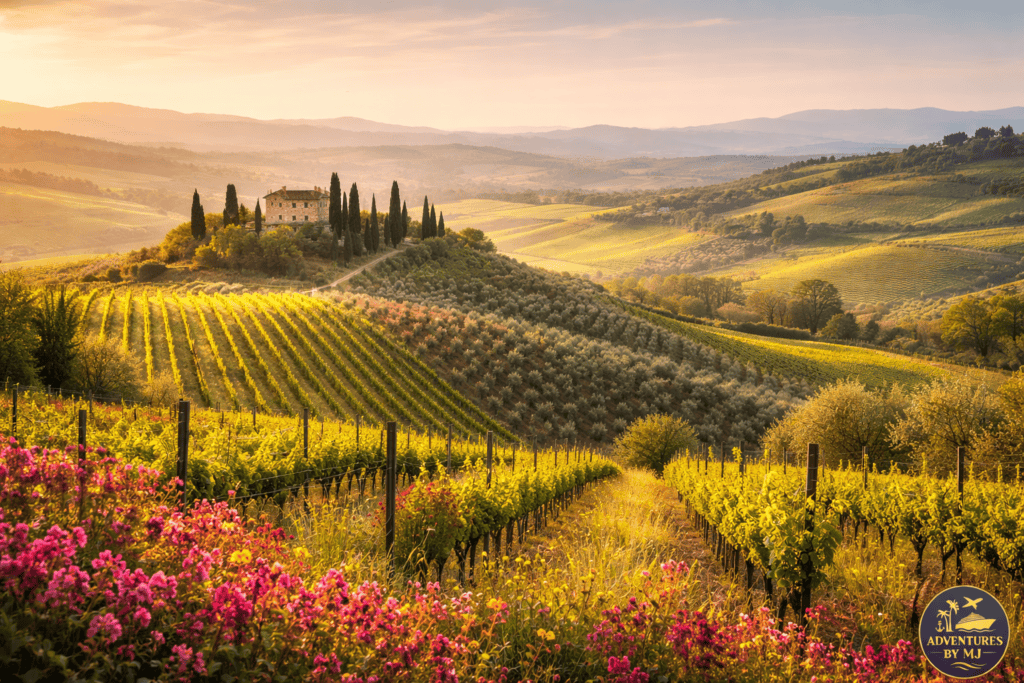
Rolling vineyards and golden light across the Tuscan countryside; a timeless landscape where wine, history, and breathtaking views come together in one unforgettable place.
Spring is one of the best times to visit Italy, France, and Spain, especially if you enjoy pleasant weather and manageable crowds.
After winter, Europe wakes up. Gardens bloom, outdoor cafés reopen, and locals return to plazas and markets.
Temperatures typically range from:
60–75°F (15–24°C)
Warm enough for exploring. Cool enough that you won’t melt while walking uphill in Florence.
Not sure when to go or how to structure your Europe trip? My free Europe Trip Planner covers timing, routes, and the big decisions up front — [grab it here →].
Spring is also when vineyards begin turning green again, and countryside landscapes become spectacular.
Cities like Rome, Paris, and Barcelona are best explored on foot, which is why many travelers bring lightweight walking shoes for travel that stay comfortable during long days on cobblestone streets.
If you enjoy slow, immersive travel, spring might be your ideal season.
If you love the idea of traveling in spring or fall, our European Hidden Gems guide can help you find beautiful places that feel less crowded and more personal.
Summer is the most popular time to visit these countries, and for good reason.
Days are long. Cities buzz with activity. Beaches come alive. Festivals happen constantly.
For travelers considering Mediterranean cruises during this season, timing can also affect itinerary experiences and port crowds.
But there’s a catch.
Summer also brings:
Heavy crowds
High prices
Serious heat
Especially in southern Europe.
In crowded cities and popular attractions, many travelers carry an anti-theft crossbody travel bagto keep passports, phones, and wallets secure while exploring.
Summer Weather Reality
Average temperatures can reach:
Rome: 90°F (32°C)
Madrid: 95°F (35°C)
Seville: 100°F (38°C)
You may spend afternoons searching desperately for shade and gelato.
(Which is fun for about two days.)
According to climate averages across southern Europe, cities like Rome, Madrid, and Seville regularly experience temperatures above 90°F (32°C) during peak summer months.
Because southern Europe can get extremely hot in summer, many travelers pack a collapsible water bottle for travel so they can stay hydrated without carrying bulky bottles all day.
The August Phenomenon
Something unique happens in Europe every August.
Locals go on vacation.
In Italy and France especially, entire neighborhoods close for Ferragosto holidays. Shops shut down. Restaurants close. Cities empty out.
Tourists remain, but locals disappear.
Summer Travel Highlights
Despite the heat and crowds, summer still has magic.
Italy
Coastal escapes like Cinque Terre
Outdoor opera in Verona
Long Mediterranean evenings
France
Lavender fields in Provence
Riviera beach culture
Bastille Day celebrations
Spain
Late-night dining culture
San Fermín festival in Pamplona
Lively beach towns
Who Summer Is Best For
Summer travel works best for people who:
Don’t mind crowds
Love nightlife and energy
Want beach time
Travel during school holidays
But if your goal is calm exploration, summer can feel overwhelming.
Why is fall the best season for food and wine travel?
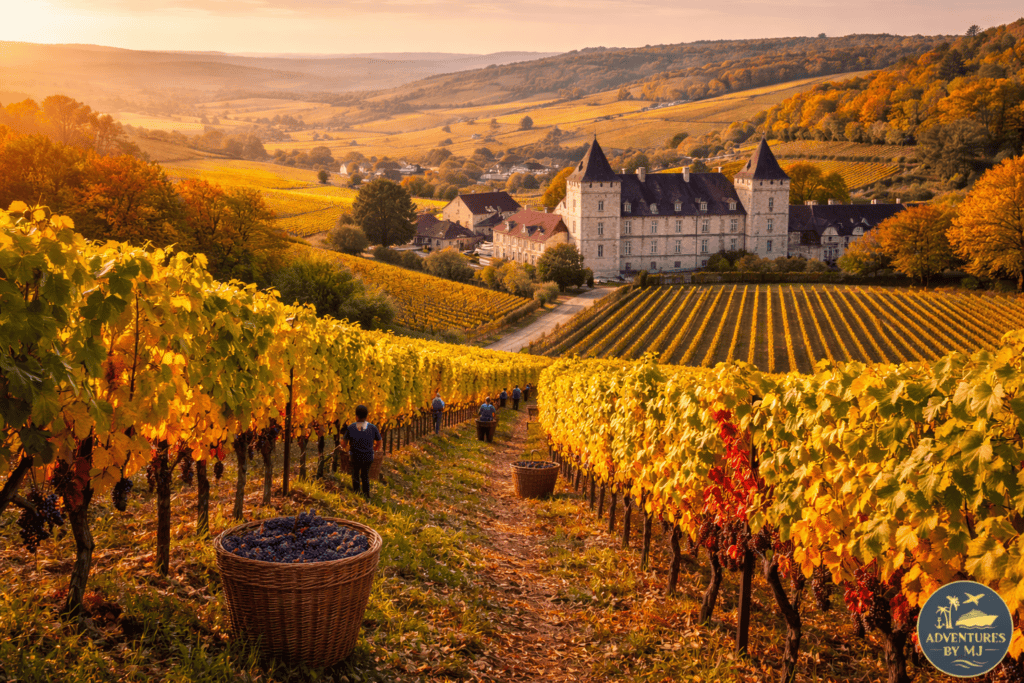
Golden autumn light over the vineyards of Burgundy, France; where centuries-old châteaux, rolling hills, and world-famous wine estates create one of Europe’s most beautiful wine regions.
If travel insiders had to pick one season as the best time to visit Italy, France, and Spain, fall would win.
The weather is still beautiful. Crowds begin to thin. And something wonderful happens across southern Europe.
Harvest season.
For vineyard visits, countryside walks, or city day trips, a lightweight travel daypack makes it easy to carry water, a camera, and small purchases.
But if your dream includes beaches or countryside landscapes, other seasons are better.
Planning a Trip to Italy, France, or Spain?
If you’re trying to decide which season fits your travel style best, or how to combine these destinations into one itinerary, we’re always happy to helptravelers sort through the options.
No pressure, just helpful travel advice.
The Biggest Timing Mistake Travelers Make
The most common mistake travelers make is assuming the “best time” is the same for everyone.
It isn’t.
Many travelers book Italy, France, and Spain in late July or August because that’s when work or school schedules allow — and then end up dealing with extreme heat, crowded attractions, higher prices, and closed local businesses, especially in parts of France and Italy.
The real question is not just “When is the best time to visit Italy, France, and Spain?” It’s “What kind of experience do I want to have when I get there?”
If you want:
lower prices and fewer tourists → choose winter
comfortable walking weather → choose spring or fall
beaches and nightlife → choose summer
Best Time to Visit Italy, France, and Spain by Travel Style
Different travelers want different things.
Here’s a quick guide.
If You Want…
Best Time to Go
Why
Beautiful weather + moderate crowds
April–June
Mild temperatures, blooming landscapes, and lively cities without peak summer crowds
Food and wine culture
September–October
Harvest season across Italy, France, and Spain with wine festivals, truffles, and seasonal cuisine
Beach vacations
June–September
Warm Mediterranean water, sunny days, and vibrant coastal towns
Festivals and cultural events
June–July
Major festivals, long daylight hours, and energetic city life
Lower prices
January–March
Off-season airfare and hotel deals, especially for city trips
Fewer tourists
November–March
Quieter museums, easier reservations, and more local atmosphere
There is no universal best time.
Only the best time for you.
Best time to visit Italy, France, and Spain for first-time travelers
For first-time visitors, May, June, and September are usually best because weather is pleasant, major attractions are fully open, and the experience feels lively without peak summer intensity.
Best time to visit Italy, France, and Spain for couples
For couples, May, June, late September, and October tend to feel the most romantic thanks to mild weather, beautiful scenery, and fewer crowds than midsummer.
Best time to visit Italy, France, and Spain for food and wine lovers
For food and wine travel, September and October are hard to beat because of harvest season, truffle season in parts of Italy, wine festivals in France and Spain, and more seasonal local menus.
Best time to visit Italy, France, and Spain for budget travelers
For lower prices, January through March is often the cheapest time to visit, especially for city trips. Just expect cooler weather and a quieter overall atmosphere.
Italy vs France vs Spain: Best Time by Country
Country
Best Overall Time
Best for Beaches
Best for Food & Wine
Best for Lower Prices
Italy
May, June, September, October
June–September
September–October
January–March
France
May, June, September
June–September
September–October
January–March
Spain
May, June, September, October
June–September
September–October
January–March
Cruise vs Resort Travel in Southern Europe
Some travelers explore these countries through cruises, while others prefer land-based trips.
Ocean cruises tend to focus on Mediterranean ports.
If you’re comparing different styles of vacation, especially if you want something more relaxed, some travelers also explore options like the best all-inclusive resorts for a completely different pace of travel.
Each travel style offers a different rhythm.
Wine tasting in Tuscany as the sun sets over rolling vineyards, where every glass comes with a view, and every sip feels like a small Italian masterpiece.
So… When Is the Best Time to Visit Italy, France, and Spain?
For most travelers, the sweet spots are:
Late April to early June September to mid-October
These months offer the best combination of:
Comfortable weather
Manageable crowds
Active local culture
Beautiful scenery
If you want vibrant energy and beaches, summer works.
If you want calm and affordability, winter can surprise you.
But if you want the best overall balance, spring and fall win.
Many travelers search for the best time to visit Italy, France, and Spain because weather, crowd levels, and cultural experiences change dramatically throughout the year.
FAQs
What is the best month to visit Italy, France, and Spain?
May and September are widely considered the best months. Weather is pleasant, crowds are manageable, and most attractions operate at full capacity.
Is summer too hot for southern Europe?
In many cities, yes. Temperatures in July and August can exceed 95°F (35°C), particularly in Spain and southern Italy.
Is winter a good time to visit Italy, France, and Spain?
Winter can be excellent for city travel, museums, and cultural experiences. However, some coastal destinations feel quiet or partially closed.
What is the cheapest time to visit Italy, France, and Spain?
January through March usually offers the lowest airfare and hotel prices, except during holidays.
When should I avoid visiting southern Europe?
Mid-August can be challenging because many local businesses close for holidays, particularly in France and Italy.
Is spring or fall better for visiting Italy, France, and Spain?
Both are excellent. Spring offers blooming landscapes, while fall offers harvest season and fewer crowds.
What is the absolute best time to visit Italy, France, and Spain?
For most travelers, the absolute best time to visit Italy, France, and Spain is May, June, September, or early October because these months offer the best mix of weather, crowd levels, and overall experience.
What is the worst month to visit Italy, France, and Spain?
For many travelers, August is the hardest month because of high heat, heavy crowds, and local holiday closures, especially in France and Italy.
Is September better than May for visiting Italy, France, and Spain?
Both are excellent, but September is often better for food, wine, and slightly calmer travel, while May is better for spring scenery and fresh landscapes.
How many days do you need for Italy, France, and Spain?
Most travelers need at least 10–14 days to combine Italy, France, and Spain comfortably. Anything shorter usually feels rushed unless you focus on only one or two regions.
Still Deciding When to Visit Italy, France, and Spain? Here’s the Simple Version
Choose May or June if you want beautiful weather and lively cities without peak summer intensity.
Choose September or October if you love food, wine, and a slower, more local feel.
Choose July or August if beaches and festivals matter more than heat and crowds.
Choose winter if your priority is lower prices, city culture, and fewer tourists.
Final Thoughts
The best time to visit Italy, France, and Spain isn’t just about the weather.
It’s about how you want your trip to feel.
Do you want:
Quiet piazzas and vineyard walks? Bustling festivals and beach towns? Museum hopping and cozy cafés?
Each season delivers a different version of Europe.
The trick is choosing the one that matches your energy, travel style, and expectations.
Because the right timing doesn’t just improve a trip.
It transforms it.
Some travelers also bring a compact travel journal for trips to capture favorite cafés, unexpected discoveries, and moments they want to remember long after the trip ends.
Quick Recap: Best Time to Visit Italy, France, and Spain
• Best overall months: May, June, September • Best for beaches: June–September • Best for food and wine: September–October • Best for fewer crowds: April, May, October • Best for lower prices: January–March
For most travelers, late spring and early fall offer the best overall experience.
Right months, wrong towns is a real way to waste a good trip. Ten places worth the detour, free.
European Hidden Gems
Top 10 Hidden Gems to Add to Your Europe Trip
Thank you!
Check your inbox for your guide to the Top 10 Hidden Gems to Add to Your Europe Trip
Planning a trip to Italy, France, or Spain?
If you’re trying to decide when to go, how to combine destinations, or whether a land trip or river cruise makes more sense, we’re always happy to help you sort through the options.
No pressure, just helpful travel advice.
We help travelers plan European trips every year, from river cruises and rail journeys to slow-paced countryside itineraries.
Once you have your month, the shape of the trip matters more than the map does. Here is how Sue builds one.
Written by Sue Nelson, Travel Advisor | Adventures by MJ | Updated for 2027
Affiliate Disclosure: This post may contain affiliate links. If you make a purchase through one of these links, we may earn a commission at no additional cost to you. We only recommend products and services we believe may be helpful to travelers.
Hi, I'm Sue. I plan cruises, all-inclusive resorts, and slow multi-country trips through Europe, and I'm a member of the Travel Leaders Network. Twenty years in senior HR leadership before this, which mostly taught me how to read what people actually want. I live in Grain Valley, Missouri with my husband and business partner Mike.