Tuscany vs. Amalfi Coast: Which Italy Trip Is Actually Right for You?
You've got the Pinterest board, the spreadsheet, and a draft email to your most well-traveled friend that ends in three question marks. Tuscany or the Amalfi Coast? A travel advisor breaks down exactly which Italy trip is right for you, by travel style, budget, logistics, and how much you enjoy driving on roads that were designed for donkeys.
Whether you end up in Tuscany or on the Amalfi Coast, the food will be the part you talk about longest. Budget accordingly and have no regrets.
Last updated: July 3, 2026 :: Reviewed by Sue Nelson, Travel Advisor
Quick Answer: Tuscany is the better choice for first-time Italy visitors who want Renaissance art, rolling vineyards, hill towns, and the freedom of a car-based itinerary. The Amalfi Coast is for travelers who want dramatic coastal scenery, a slower beach pace, and a UNESCO World Heritage landscape where the views are the itinerary. Both are spectacular. Neither is wrong. But one is almost certainly more right for you, and this post will tell you which.
Key Takeaways: Tuscany vs. Amalfi Coast Italy Trip
Tuscany is the better first-timer destination for art, culture, and flexibility; the Amalfi Coast rewards travelers who want one dramatic setting and are happy to stay in it
The Amalfi Coast has been a UNESCO World Heritage Site since 1997; Tuscany contains multiple UNESCO-designated cities including Florence, Siena, and San Gimignano
Guided Italy tours in Tuscany start around $2,696 per person (9 days, Insight Vacations); Amalfi Coast guided packages start around $3,600 per person and reach $7,890+ for premium operators like Tauck
You need a car in Tuscany; the Amalfi Coast is better explored without one (the roads are comically narrow and the parking is a form of punishment)
Both destinations are best visited in May or September through October; peak summer on the Amalfi Coast borders on genuinely unpleasant due to crowds
You can do both on one trip if you have 10 to 14 days; most good guided Italy itineraries combine them
Tuscany vs. Amalfi Coast: At a Glance
Tuscany
Amalfi Coast
Best For
First-timers, culture lovers
Repeat visitors, honeymooners
Transport
Rental car
Ferry and taxi
Tour Cost (from)
$2,696/person
$3,600/person
Ideal Length
7 to 10 days
4 to 6 days
Best Time to Visit
April–June, Sept–Oct
May, Sept–Oct
Crowd Level (Peak)
Manageable
Intense
There is a moment in Italy trip planning that every traveler knows. You have the Pinterest board. You have the spreadsheet. You have the email draft to your most well-traveled friend that says something like “Tuscany or Amalfi Coast???” with too many question marks and an embarrassing number of prayer hands.
Welcome. This is the Tuscany vs. Amalfi Coast Italy trip question, and it is a genuinely good one, because the two destinations are spectacular in completely different ways and attract the same traveler for completely different reasons. Getting this choice right means getting a trip you will talk about for years. Getting it wrong means spending a week feeling vaguely like you chose the wrong entrée and cannot swap.
As a travel advisor and member of the Travel Leaders Network who books Italy trips regularly, here is what I actually tell my clients.
Grab my free Europe Trip Planner — it walks you through how to choose your route, when to go, and how to avoid decision overload before you book anything. [Download the free planner →]
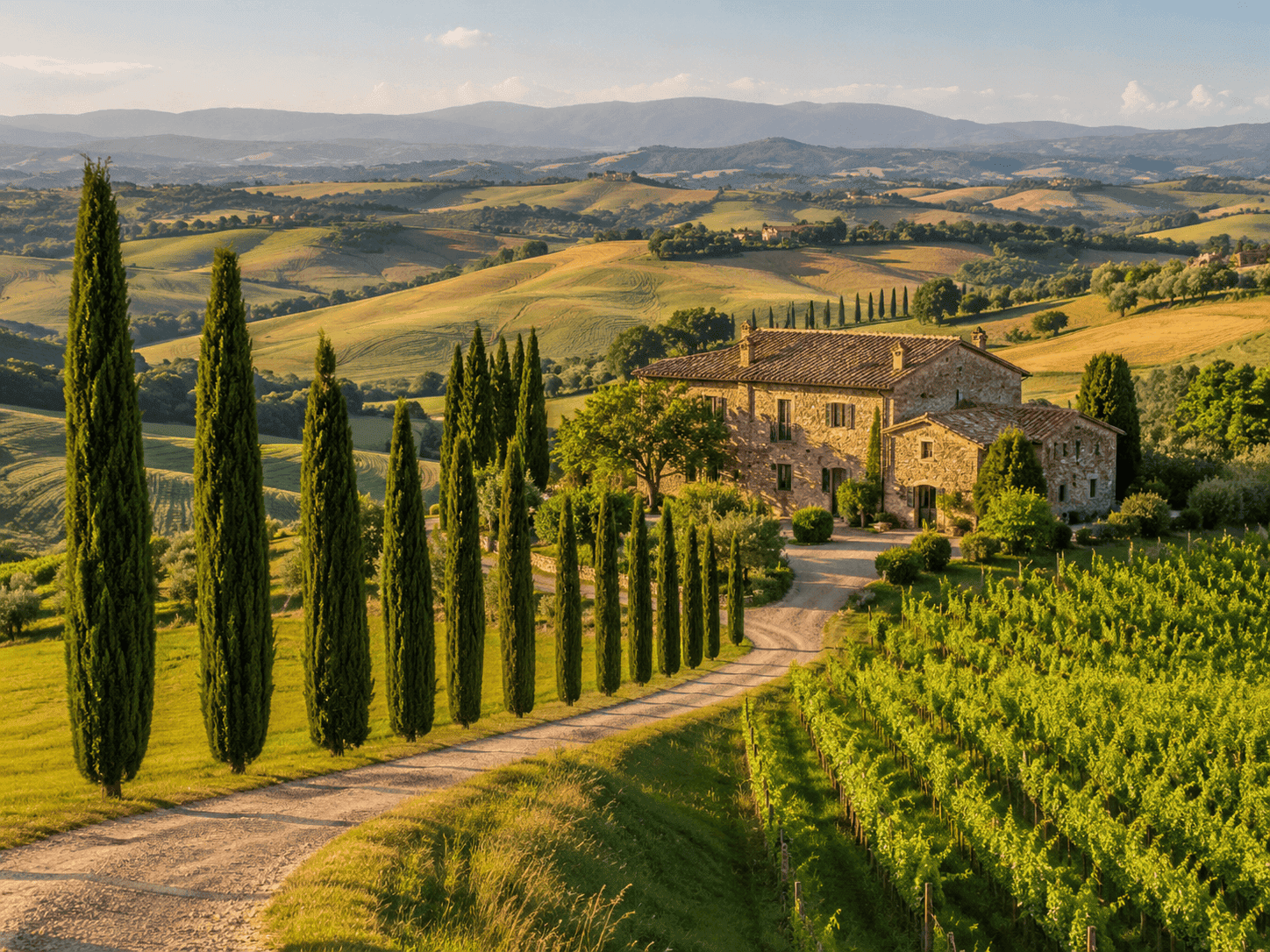
The Val d’Orcia valley is a UNESCO World Heritage landscape in Tuscany. It looks exactly like the desktop wallpaper you’ve been using since 2019. It’s real. You can eat inside it.
Is Tuscany or the Amalfi Coast better for first-time Italy visitors? Tuscany is generally better for first-time Italy visitors because it covers more variety in one region: art, food, wine, history, and flexible logistics. The Amalfi Coast is more of a specialized experience centered on coastal scenery and a slow pace, which suits repeat visitors or travelers with specific priorities.
How much does a guided Italy tour cost for Tuscany vs. the Amalfi Coast? Guided Tuscany tours start around $2,696 per person for a nine-day itinerary with Insight Vacations, with premium options like Tauck reaching $5,990 for eight days. Amalfi Coast guided tours run higher, starting around $3,600 per person and reaching $7,890 or more for premium packages. Expect to pay a 20 to 30 percent premium for the Amalfi Coast across the board.
What is the best time of year to visit the Amalfi Coast? May and September through mid-October are the best times to visit the Amalfi Coast. July and August bring intense heat, gridlocked traffic, and a tourist-to-local ratio that starts to feel disrespectful to both parties. Shoulder season gives you the same scenery with actual room to breathe.
Can you do Tuscany and the Amalfi Coast on the same Italy trip? Yes, and many guided Italy itineraries do exactly this. A 10 to 14-day trip can comfortably include both. Most organized tours pair Tuscany with Rome and then head south to the Amalfi Coast, giving you the cultural north and the dramatic south in one sweep. If you are considering adding a Mediterranean cruise before or after your land tour, that combination is worth exploring too.
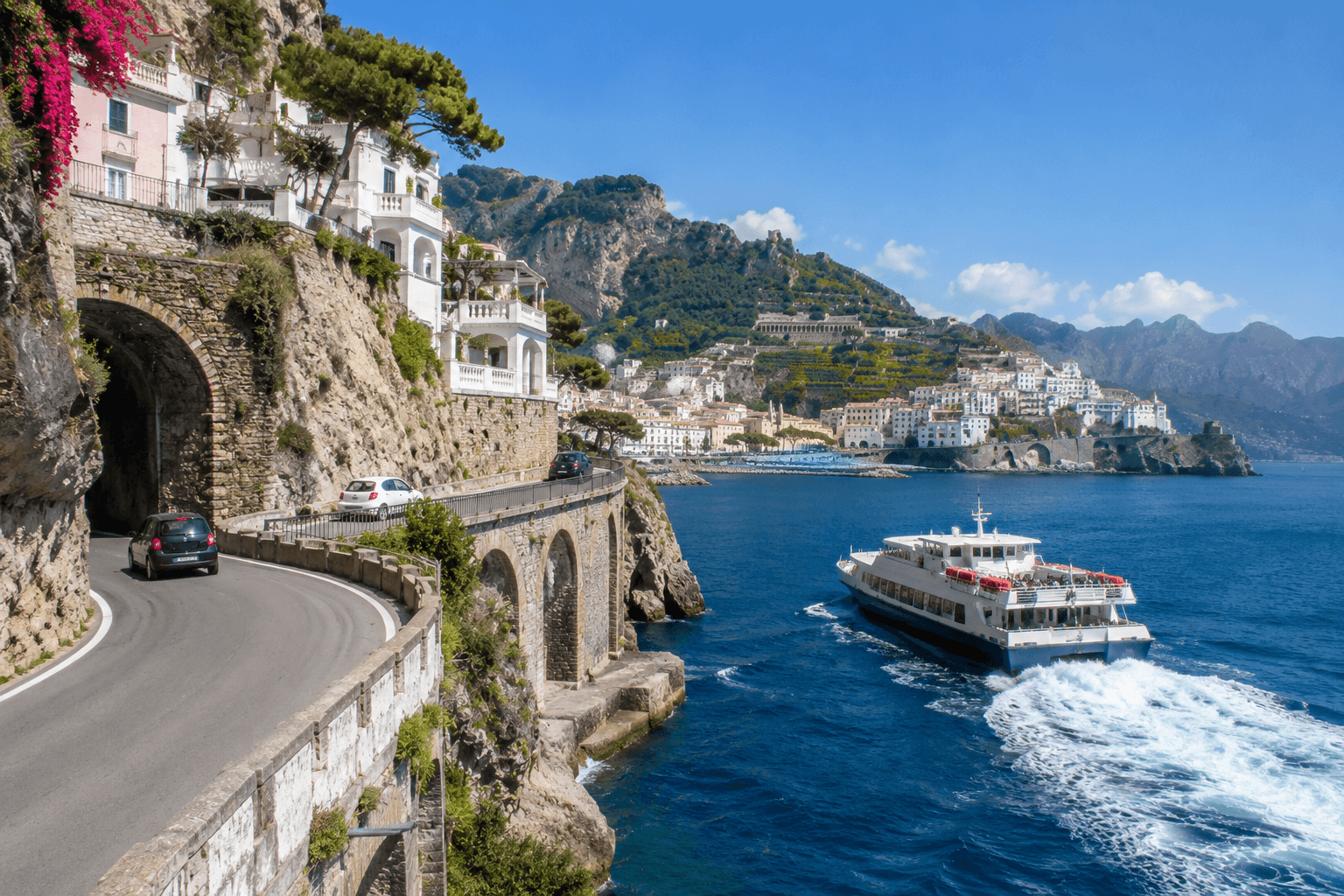
Do you need a car on the Amalfi Coast? Emphatically no. The SS163 coastal road is famous for a reason, and that reason involves a two-lane cliff road with zero guardrails, buses going both directions, and a turning radius that will make you question your choices. Ferries, local buses, and taxis are the correct way to move around the coast.
What should I book first for an Italy trip in 2027? Book your flights and guided tour package first, ideally by October 2026 for May 2027 departures. Shoulder-season Italy tours fill quickly and premium operators like Tauck and Rick Steves Europe sell out popular departure dates six to nine months in advance.
Two Italys, One Impossible Choice
Before comparing them logistically, it helps to understand what you are actually choosing between.
Tuscany is the Italy of your imagination: the cypress-lined roads, the golden hilltop towns, the Chianti vineyards stretching to the horizon at magic hour, the museums that contain a genuinely alarming percentage of the world’s most important art. Florence alone could occupy a week. Throw in Siena, San Gimignano, Montepulciano, the Val d’Orcia valley, and a wine-soaked afternoon at an agriturismo, and Tuscany starts to feel less like a destination and more like a lifestyle upgrade you are not sure you can afford to come home from.
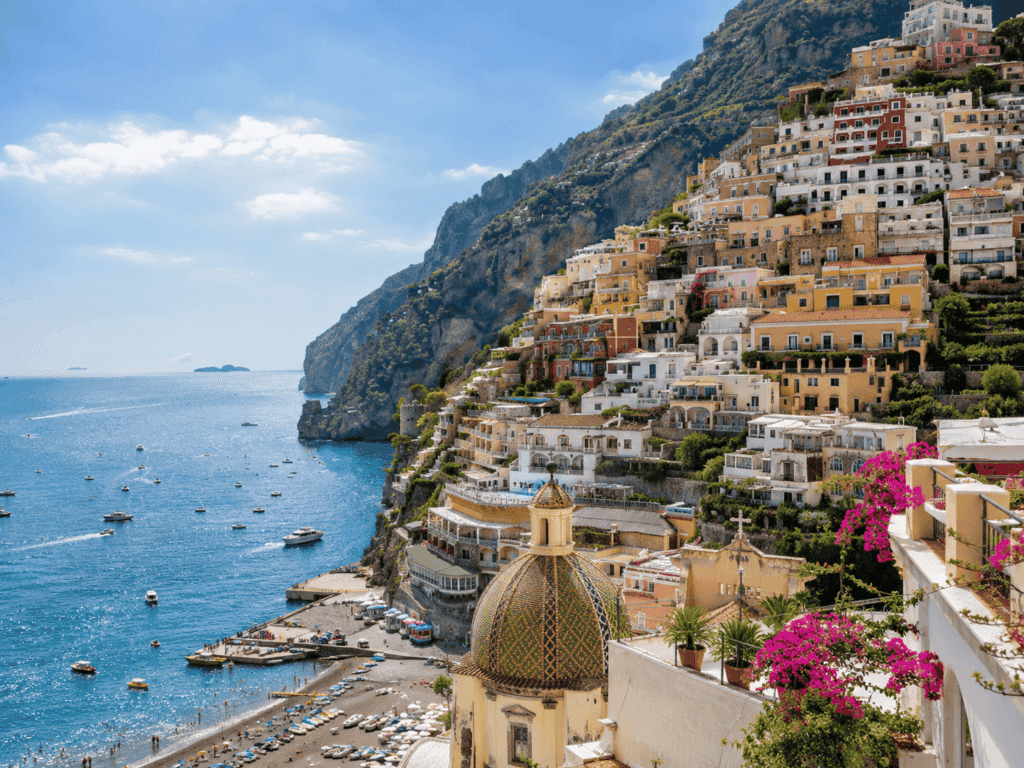
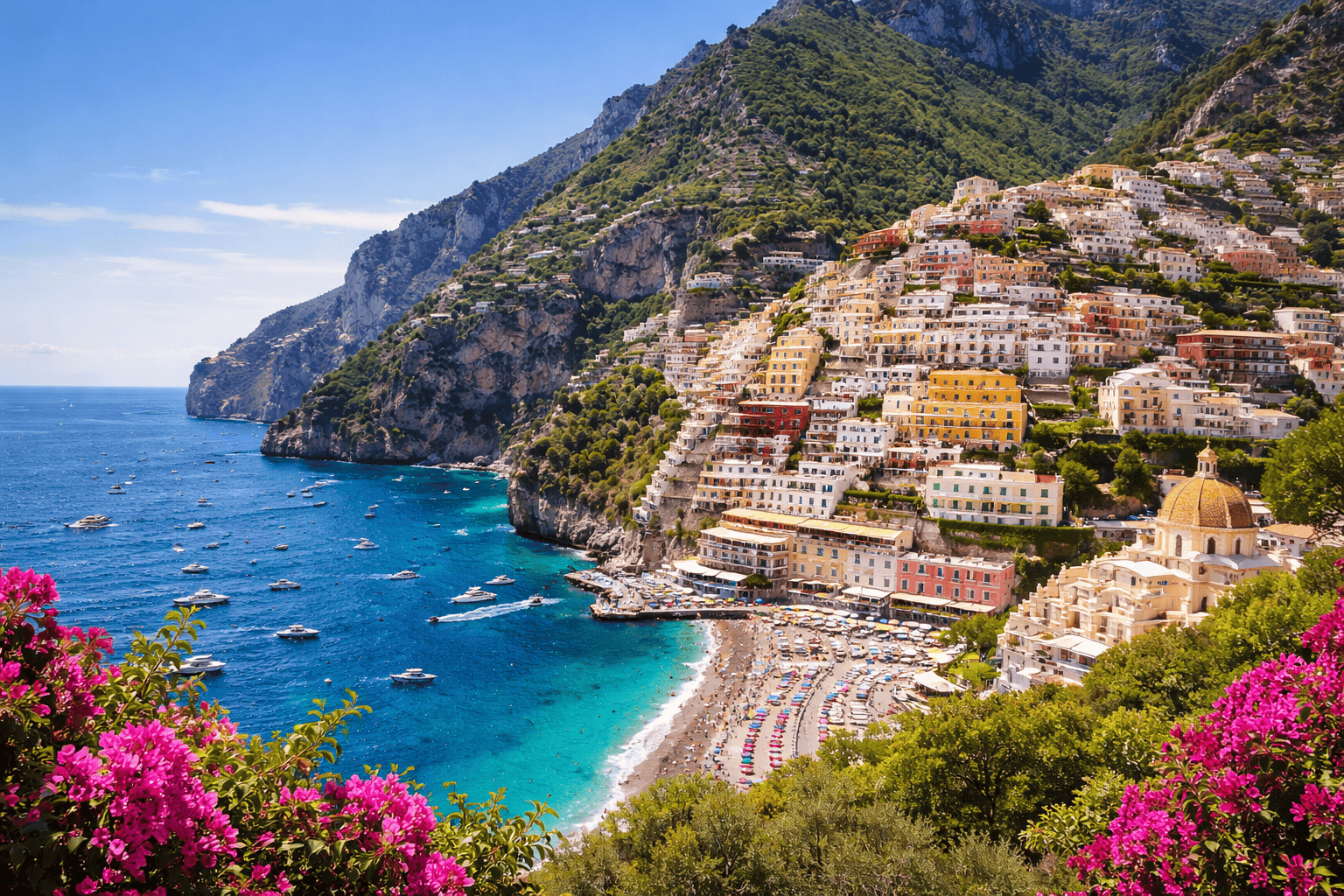
The Amalfi Coast is something else entirely. The Costiera Amalfitana, designated a UNESCO World Heritage Site in 1997, is a 50-kilometer stretch of cliff-hung coastline encompassing 15 municipalities, lemon groves so steep they seem to defy physics, villages that appear to have been placed purely for the enjoyment of painters and travel photographers, and water so blue it looks like someone paid for it. There is less to “do” on the Amalfi Coast in the checklist sense, and that is precisely the point. The experience is the view. The experience is the boat ride to Positano. The experience is the limoncello on a terrace at 7pm when the light goes sideways and you genuinely cannot believe this place is real.
They are both spectacular. They are spectacular in completely different directions. Knowing which kind of spectacular you want is most of the decision.
Best Italy Trip for First Timers: Tuscany vs. Amalfi Coast
Choose Tuscany If You Are a First-Timer
Tuscany is the stronger first-time Italy choice, full stop. Here is why.
It covers more ground emotionally and practically. Florence gives you Michelangelo’s David, the Uffizi Gallery, the Duomo, and enough art history to intimidate you pleasantly for years. Siena’s Piazza del Campo is one of the most beautiful public squares in the world, and Siena has not been quite as thoroughly overrun as Florence, which is a mercy. The Val d’Orcia valley, a UNESCO World Heritage landscape of rolling hills and medieval villages, looks exactly like the desktop wallpaper you have been using since 2019 except it is real and you can eat inside it.
Tuscany also gives you flexibility. You can rent a car, base yourself in a farmhouse outside of Greve in Chianti, and design your days around whatever feels right. Hill towns, wineries, hidden trattorias, markets, museums, a thermal spa in Saturnia, a seaside afternoon in Castiglione della Pescaia. The region is forgiving in a way that the Amalfi Coast, with its single coastal road and limited transport options, is not.
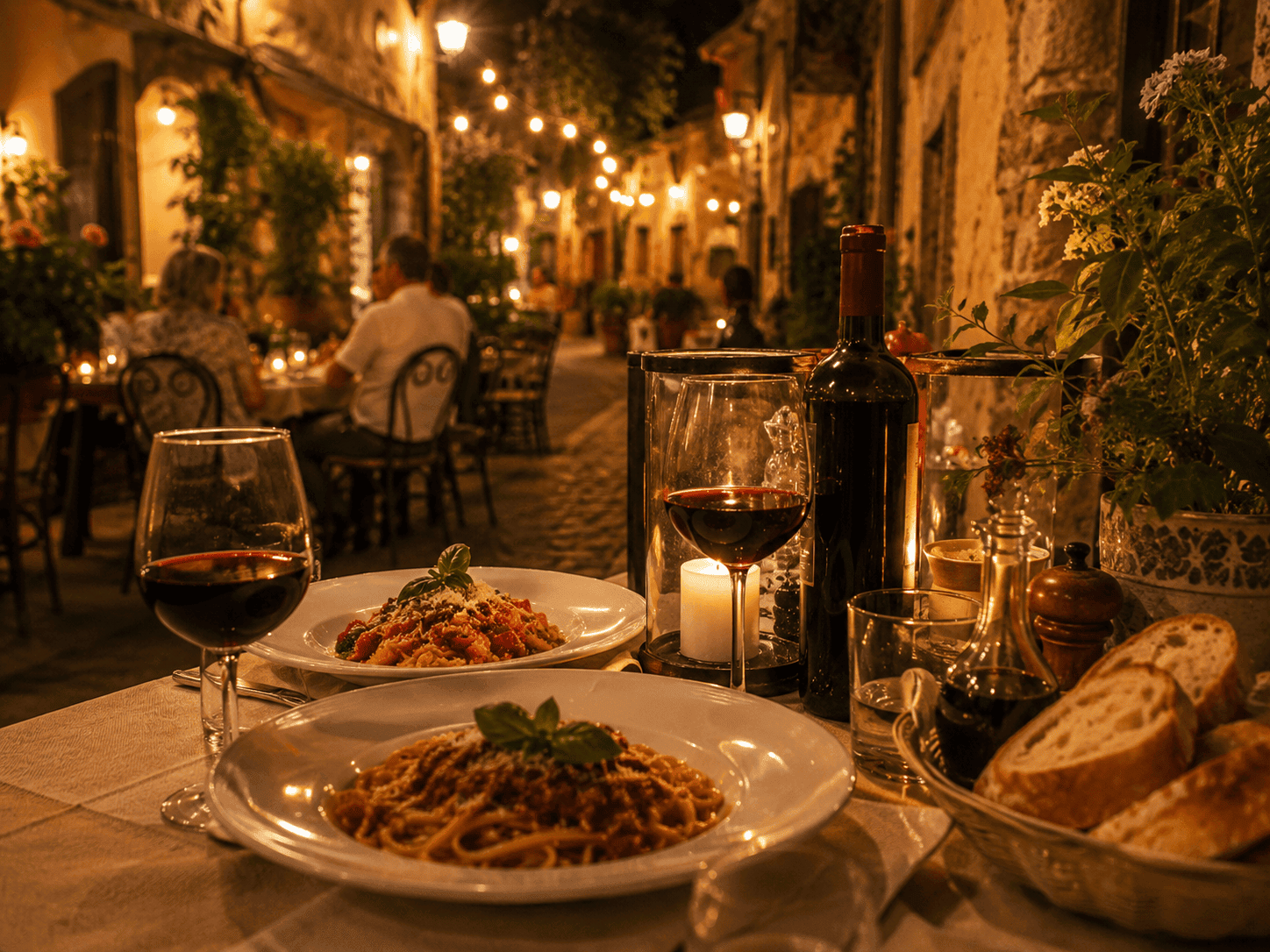
And the food. Bistecca alla fiorentina, hand-rolled pici pasta, ribollita, schiacciata, pecorino that tastes like it was made by someone’s grandmother because it probably was. The wine is obviously excellent. The aperitivo culture, where an €8 drink also gets you a small buffet of snacks, is one of the great civilizational achievements of northern Italy.
If this is your first time in Italy and you have one to two weeks, Tuscany will not fail you.
Where to Base Yourself in Tuscany
Florence is the logical hub for first-timers, but consider splitting your time with a three-to-four night stay in a farmhouse or agriturismo in the Chianti countryside between Florence and Siena. The small town of Greve in Chianti is a particularly good base: central, charming, and surrounded by wineries you can walk to.
Choose the Amalfi Coast If You Have Already Done the Obvious
The Amalfi Coast was designated a UNESCO World Heritage Site in 1997 for its dramatic coastal landscape and Arab-Byzantine architectural heritage spanning 15 municipalities.
The Amalfi Coast rewards travelers who have already crossed the major Italian cultural sites off their list, or who simply know that they prefer scenery and slow afternoons to museum lines. If your version of a good trip is not “how many things can I see” but “how deeply can I feel one place,” the Amalfi Coast is the answer.
It is also the right call if you are celebrating something. Honeymoons, major birthdays, anniversaries, retirements: the Amalfi Coast has an innate sense of occasion that Tuscany, wonderful as it is, cannot fully match. The dramatic cliffs, the terraced gardens, the seafood so fresh it barely had time to consider its fate, the lemon-scented air that makes you feel vaguely like you have wandered into a perfume advertisement. It is romantic in a way that requires no effort from you.
The coast also has Ravello, Positano, and Praiano, which are legitimately among the most beautiful places in Italy. According to UNESCO’s designation, the Amalfi Coast is valued not just for its scenic beauty but for its historical role as a Mediterranean commercial hub, with visible Arab and Byzantine architectural influences across the region. This is a place with depth, not just good lighting.
Where to Stay on the Amalfi Coast
Positano is the most photographed and most expensive option. Praiano, the next town west, is quieter, more affordable, and has nearly identical access to the ferry network. Ravello, perched high above the coast, is the best choice if you want dramatic views and peace over beach access.
Still torn? These seven questions decide it faster than another comparison will.
The morning question, which predicts more about your trip than your destination does
“What would ruin it for you?” and why the answer matters more than your wish list
The pace question, asked honestly, without judgment
How to use your answers, including how to use them without me
Send me the seven questions
The Thoughtfully Curated Europe Planner
Most people plan Europe trips backward. These 7 questions fix that.
Thank you!
Check your inbox for your Slow Europe Planner.
Getting Around: The Part Nobody Puts in the Brochure
Tuscany: Rent the Car
Tuscany is designed for road trips in a way that feels almost unfair. The roads are scenic, the towns are well-signposted, and the distances between destinations are short. The downside is that Florence itself, and most walled medieval towns, are not designed for modern vehicles. Park outside the walls and walk in. Your car will thank you. Your blood pressure will thank you. The locals will definitely thank you.
A guided Italy tour through Tuscany handles all of this for you, which is worth considering if you want to drink the wine without worrying about who is driving back to the hotel.
Amalfi Coast: Leave the Car at Home
The ferry network connecting Positano, Amalfi, and Ravello is not just more relaxing than driving the SS163. It gives you the coastal views you came for without the white-knuckle grip on the steering wheel.
The SS163, the coastal road that connects the Amalfi Coast towns, is beautiful and genuinely terrifying. It is two lanes, technically. Local buses treat it as one lane going in whichever direction they feel like. The ferries between Positano, Amalfi, and Ravello are not just more relaxing; they are the right way to experience the coast, because you get the panoramic views you came for without the white-knuckle grip on the wheel.
The practical upshot: fly into Naples, take a private transfer or train to Sorrento, and use the ferry network from there. If you are doing a guided land tour of Italy that includes the coast, your tour operator handles all of this and you just show up with your hat.
The Cost Comparison You Actually Need
Here is what a comparable guided seven- to eight-day trip actually costs for two people. These figures use 2026 pricing from major operators and represent double occupancy, with meals and most activities included.
Tuscany vs. Amalfi Coast: Guided Tour Cost Comparison (Per Couple, 2026-2027)
The short version: the Amalfi Coast runs 20 to 35 percent more expensive than Tuscany for comparable experiences. Accommodation sees the biggest gap. Positano is one of the most expensive small towns in Italy, and it knows it. That does not make it less worth it, but it belongs in your planning.
Tuscany vs. Amalfi Coast: Guided Tour Cost Comparison (Per Couple, 2026-2027)
If you are planning an Italy vacation for 2027, guided tours deserve serious consideration for both destinations, and for different reasons.
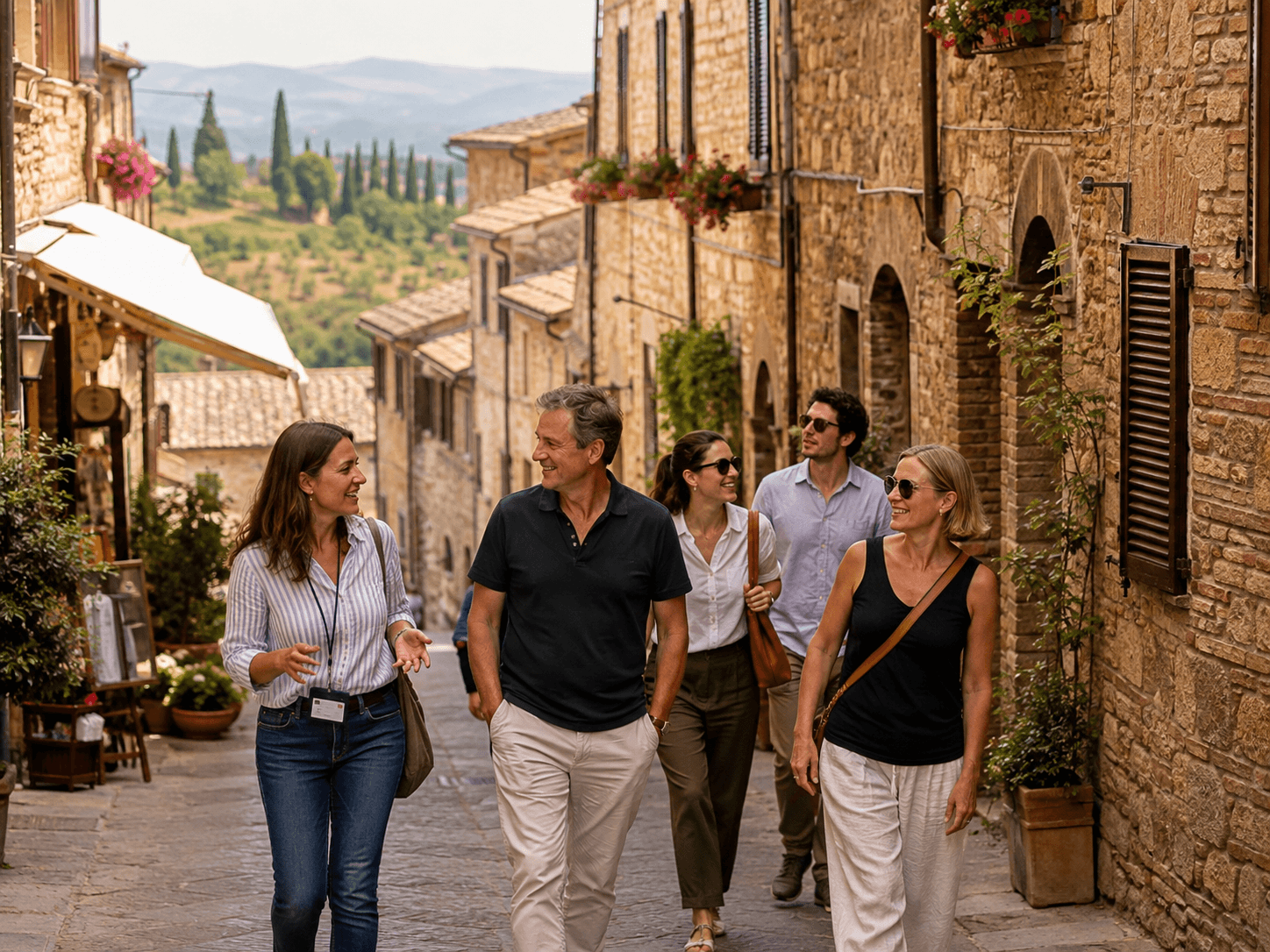
In Tuscany, a guided tour takes the driving off your plate and adds expert context to what you are seeing. Michelangelo’s David is impressive whether you understand anything about it or not. It is roughly 100 times more impressive when someone who knows what they are talking about explains the political and artistic climate that produced it. Rick Steves offers well-regarded Tuscany tours for 2027 that balance cultural depth with unhurried pacing, which is the right balance for most travelers.
On the Amalfi Coast, a guided tour is even more valuable because the logistics are genuinely complicated. Getting between coastal towns without your own vehicle requires planning, ferry schedule awareness, and a high tolerance for uncertainty. A good guided tour removes all of that friction and replaces it with a local guide who knows which boat to take, which restaurant does not have a tourist menu, and exactly when to arrive at Ravello for the view that stops you mid-sentence.
For first-time visitors, a combined guided tour that takes you through Tuscany, Rome, and the Amalfi Coast in 10 to 14 days is often the smartest structure. You see the headline destinations, you have expert logistics support, and you leave knowing which regions you want to come back to for a deeper dive. Many of my clients do exactly this, and it is how they end up booking their second Italy trip before they have even unpacked from the first.
Timing: When to Go (And When to Really, Truly Not)
Fall in Tuscany means the grape harvest is underway in Chianti, olive pressings are open to visitors, and restaurant reservations no longer require the determination of someone applying to medical school.
Both destinations share the same advice: go in May or from mid-September through October. April works too if you do not mind slightly unpredictable weather. July and August on the Amalfi Coast are a different experience from what the brochures suggest.
Italy’s tourism statistics tell the story clearly: Italy welcomed more than 185 million visitors in 2025, a 7.1 percent increase over the prior year. The Amalfi Coast, which receives an estimated 5 million visitors annually across just 15 small municipalities on a 50-kilometer stretch of coast, concentrates a significant portion of those arrivals into a three-month summer window. The result is traffic that is not metaphorical, queues for ferry tickets that require time management skills, and restaurant reservations that need to be made from your own continent.
Tuscany in peak summer is crowded but more manageable due to sheer size: the region records roughly 45 million overnight stays per year, which sounds alarming until you account for how much countryside exists to absorb those visitors. Florence in August is still Florence. It is just more humid and louder.
The honest timing recommendation: book your Italy vacation 2027 dates in May or September. You get the same scenery, dramatically shorter queues, and the genuine pleasure of traveling through places that feel like they are still primarily for the people who live there.
Whether you end up in Tuscany, on the Amalfi Coast, or doing both, packing smart matters. Tuscany involves a lot of walking on ancient cobblestones; the Amalfi Coast adds coastal heat, boat transfers, and staircases that are genuinely ambitious.
A few things worth having: a good travel guidebook (the Rick Steves Italy guide is the one I recommend to clients who want honest, practical, non-hyperbolic advice), a day pack that closes securely (Italian crowds are friendly but pickpocketing exists), a lightweight linen layer for evenings, and a universal travel adapter because Italy uses two-pin round plugs that will not cooperate with your three-prong charger.
For the Amalfi Coast specifically, add reef-safe sunscreen (both for the coast’s marine environment and because the sun there is serious), comfortable water shoes for rocky beach access, and a small dry bag if you plan to do boat excursions. For Tuscany, add a compact rain layer for spring visits and comfortable walking shoes that can handle seven hours of cobblestones without staging a protest.
Also strongly recommend a basic Italian phrasebook or language app if you are spending any time outside the major tourist centers. Your effort will be rewarded with warmth, better service, and the occasional free limoncello from a restaurateur who cannot believe you tried.
The Infographic: Which Italy Trip Fits Your Travel Style?
[See infographic HTML file: tuscany-vs-amalfi-coast-decision-infographic.html. Paste the HTML code from that file into a custom HTML block in WordPress.]
Tuscany vs. Amalfi Coast: Which Italy Trip Is Right for You?
A side-by-side breakdown for Italy vacation 2026/2027 planning
Tuscany
Best For
First-time Italy visitors, art lovers, wine enthusiasts, road-trippers
Vibe
Culture, history, countryside, vineyards, medieval hill towns
Getting Around
Rental car recommended Car needed for countryside
Guided Tour Cost
From $2,696/person (entry-level) More budget-friendly
Best Season
April-June, Sept-Oct Fall = grape harvest season
Don’t Miss
Uffizi Gallery, Val d’Orcia valley, Chianti wine country, Siena’s Piazza del Campo
Dramatic cliffs, cerulean sea, lemon groves, coastal villages, UNESCO landscape
Getting Around
Ferries, buses, taxis Leave the car at home
Guided Tour Cost
From $3,600/person (entry-level) Runs 20-35% higher than Tuscany
Best Season
May, Sept-Oct Avoid July-August crowds
Don’t Miss
Positano, Ravello gardens, ferry to Capri, Pompeii day trip, sunset from any terrace
Crowd Level (Peak)
Intense in summer
Ideal Trip Length
4 to 6 days
The verdict: First Italy trip? Go Tuscany. Repeat visitor, honeymoon, or coastal obsession? Go Amalfi. Have 10-14 days? Do both.
Whether you end up in Tuscany or on the Amalfi Coast, the food will be the part you talk about longest. Budget accordingly and have no regrets.
Frequently Asked Questions
Is Tuscany or the Amalfi Coast better for a first time visit to Italy?
Tuscany is the stronger first-time choice because it offers more variety in a single region than anywhere else in Italy. The Amalfi Coast is stunning but narrow in scope, which makes it better suited to repeat visitors or travelers who specifically want a coastal, slow-paced trip over a cultural one.
How many days do you need for Tuscany?
Seven to ten days is the sweet spot for Tuscany. That gives you two to three days in Florence, time to visit Siena and San Gimignano, at least one full day in the Val d’Orcia countryside, and a couple of leisurely afternoons doing nothing in particular at an agriturismo, which is genuinely the best use of any afternoon in the region.
How many days do you need on the Amalfi Coast?
Four to six days is ideal for the Amalfi Coast. Positano, Amalfi town, Ravello, and a day trip to Capri or Pompeii cover the highlights without overstaying the magic. The coast is beautiful, but it is small, and stretching a visit beyond a week can start to feel repetitive unless you are specifically there to do nothing and are excellent at doing nothing.
What is the cheapest way to do a guided Italy tour?
Entry-level small-group tours through G Adventures or Intrepid Travel can bring costs down to $2,000 to $2,500 per person for a week. These tours use more affordable accommodation and keep group sizes manageable. Mid-range operators like Insight Vacations and Rick Steves’ Europe hit the sweet spot of value and quality, with nine-day Tuscany tours starting around $2,696 per person.
Can you visit Tuscany and the Amalfi Coast on the same Italy trip?
Yes, and it is a great combination. Most guided Italy itineraries that do both follow a north-to-south logic: Tuscany and Florence, then Rome, then south to the Amalfi Coast. Two weeks is the comfortable timeframe. Ten days is doable if you are willing to move quickly.
Is the Amalfi Coast worth the extra cost?
For the right traveler, absolutely. The scenery is unlike anything else in Italy, the food is exceptional, and staying in Positano or Ravello is an experience that holds up over time. That said, if you are on a tighter budget or this is your first Italy trip, Tuscany gives you more for your money and a more complete Italian experience. The Amalfi Coast is best enjoyed when you can afford to slow down, splurge a little, and not feel rushed by a tight budget.
Is it safe to drive on the Amalfi Coast?
Technically yes, practically inadvisable for most visitors. The coastal road is narrow, heavily trafficked by tour buses and locals who know every inch of it, and parking in the main towns is either nonexistent or outrageously priced. You will have a better trip using ferries, local buses, or private transfers. If you absolutely must drive, do it early morning before the buses start their runs, and make peace with your choices.
What is the best guided Italy tour for 2027?
For Tuscany, Rick Steves’ Best of Tuscany in 11 Days and Insight Vacations’ Country Roads of Tuscany are both excellent for different travel styles. Rick Steves skews cultural and independent-minded; Insight Vacations is slightly more polished and coach-based. For the Amalfi Coast, Tauck’s Amalfi, Capri, and Rome itinerary is the gold standard for premium travel, while G Adventures offers a solid budget-friendly version that covers the highlights without the luxury markup.
Sue’s Travel Advisor Bottom Line
First Italy trip with 7 to 14 days? Book Tuscany. Add Rome. If you have the budget and extra days, continue south to the Amalfi Coast. Honeymoon or milestone anniversary? Go straight to the Amalfi Coast and do not look back. Repeat Italy visitor who has done the main cities? The Amalfi Coast will reset your baseline for what “beautiful” means.
Final Thoughts
Here is the truth about the Tuscany vs. Amalfi Coast Italy trip question: both options are going to make you happy. This is not a decision with a wrong answer, which is both the comfort and the frustration of it.
What matters is matching the destination to the trip you actually want to take rather than the trip you think you should want. If you want to feel culturally enriched, intellectually stimulated, and slightly overwhelmed by how much beautiful art one region can produce, go to Tuscany. If you want to sit on a terrace above the Tyrrhenian Sea with a glass of something cold, watching the ferries move between cliff-hung villages, and feel like you have arrived at the specific place your soul has been trying to get to, go to the Amalfi Coast.
And if you cannot choose, do both. You have my full professional support.
Grab my free Europe Trip Planner — it walks you through how to choose your route, when to go, and how to avoid decision overload before you book anything. [Download the free planner →]
Ready to Start Planning Your Italy Trip?
If you are seriously looking at Italy for 2027, now is the right time to start mapping out your options. Guided tour spaces on the most popular Tuscany and Amalfi Coast itineraries fill up well in advance, especially for shoulder-season departures in May and September. If you have questions about which tour operator fits your travel style, your budget, or the specific mix of destinations you are considering, I would love to help you sort through it. [Reach out here] and we can figure out your perfect Italy trip together, without the spreadsheet spiral.
Affiliate Disclosure: This post may contain affiliate links. If you make a purchase through one of these links, we may earn a commission at no additional cost to you. We only recommend products and services we believe may be helpful to travelers.
Hi, I'm Sue. I plan cruises, all-inclusive resorts, and slow multi-country trips through Europe, and I'm a member of the Travel Leaders Network. Twenty years in senior HR leadership before this, which mostly taught me how to read what people actually want. I live in Grain Valley, Missouri with my husband and business partner Mike.