How to Plan a Trip to Italy for the First Time: A 2027 First-Timer’s Guide
A travel advisor's honest guide to planning your first trip to Italy: how many days you actually need, which three cities to pick, what it costs for two, and the 2027 entry rules almost nobody has caught up on yet.
Last updated: August 18, 2026 :: Written by Sue Nelson | Adventures by MJ
To plan a trip to Italy for the first time, give yourself 10 to 12 days, pick three cities at most, and build the trip around Rome, Florence, and Venice connected by high-speed train. Budget roughly $240 per day for two people on the ground, not counting airfare, and book 9 to 12 months ahead if you want shoulder season. Two rules changed recently: the EU’s Entry/Exit System replaced passport stamps with biometrics in April 2026, and ETIAS, the new travel authorization, is now expected in 2027. Everything else is just deciding how much gelato is structurally sound in one afternoon.
Key Takeaways: Planning Your First Trip to Italy
Ten to twelve days is the sweet spot for a first trip. Seven days works, but only if you cut to two cities and accept it
Rome to Florence is 1 hour 29 minutes by high-speed train and Florence to Venice is about 2 hours 5 minutes, according to ItaliaRail, which is why the classic route works so well
Budget Your Trip’s traveler-reported data puts Italy at $119.31 per person per day, or about $1,670 for two people for a week on the ground (accessed August 18, 2026)
The EU’s Entry/Exit System became fully operational on April 10, 2026, replacing passport stamps with facial images and fingerprints, per the European Commission
ETIAS, the €20 travel authorization Americans will eventually need, has slipped to 2027 and is valid three years or until your passport expires, whichever comes first
Venice’s day-tripper access fee ran April 3 through July 26, 2026 and then expired. As of this writing there is no 2027 decision, per the city’s official access fee site
ZTL camera fines run about €100 per pass and can take up to a year and a half to find you through a rental car company, according to the European Consumer Centre
The US State Department currently lists Italy at Level 2, Exercise Increased Caution, which is the same level as France and Spain and is not a reason to cancel anything
Every January my inbox fills with some version of the same message. Someone has finally decided this is the year, they have three browser tabs open and a Pinterest board with 200 pins, and they want to know how to plan a trip to Italy for the first time without accidentally booking eleven cities in nine days.
I understand the impulse. Italy is not one destination, it is about six of them wearing a trench coat, and the internet is very enthusiastic about all six. So let me give you what I give my clients: the actual sequence, the honest numbers, and the two or three things that will genuinely ruin your week if you get them wrong.
How many days do you need in Italy for a first trip?
Ten to twelve days is ideal for a first trip to Italy. That gives you three cities without rushing, plus a buffer day for jet lag.
Where should I go in Italy for the first time?
For a first trip to Italy, go to Rome, Florence, and Venice. They are connected by fast trains and cover ruins, Renaissance art, and canals in one route.
How much does a trip to Italy cost for two people?
Plan on roughly $240 per day for two people on the ground, per Budget Your Trip’s 2026 traveler data, plus airfare. Ten days lands near $2,400 before flights.
Do I need a visa to visit Italy as a US citizen?
US citizens do not need a visa to visit Italy for stays of up to 90 days in any 180-day period. ETIAS authorization is coming, but not yet required.
Is Italy expensive for American tourists?
Italy is mid-priced for Western Europe. Food and trains are genuinely affordable, hotels in Venice and Florence are not, and the gap between those two facts surprises people.
When is the best time to visit Italy to avoid crowds?
Late April, early May, and October. July and August bring heat and crowds together, which is a combination nobody enjoys twice.
How Many Days in Italy Is Enough for a First Trip
This is the question I get most, and it is the one people most want a different answer to.
Here is the math nobody enjoys. Every city change costs you roughly half a day. Not because the train is slow, but because you check out, you haul luggage, you find the new place, you drop bags, you get oriented, and suddenly it is 4pm and you have seen a train station. Three cities means two of those half days gone. Four cities means three.
Seven days: two cities, and I mean it
A week in Italy is a real trip, but it is a two-city trip. Rome and Florence, or Rome and Venice. If someone tells you they did Rome, Florence, Venice, and the Amalfi Coast in seven days, what they actually did was tour Italy’s regional rail network with brief pauses for photographs.
Ten days: the classic first-timer trip
This is the one I book most. Four nights Rome, three nights Florence, two nights Venice, plus your arrival day. You see the Colosseum, the Vatican, the Uffizi, the Duomo, and the Grand Canal without ever setting an alarm out of panic.
Fourteen days: when you can add the south
Two weeks lets you add the Amalfi Coast or a few days in Tuscan hill towns without pulling nights from the big three. If you have the vacation days and the budget, this is the version of the trip people talk about for years.
The mistake almost every first-timer makes
They plan for the map instead of for the body. Italy looks compact on a screen, and the trains really are that fast, so the itinerary reads as reasonable right up until day four when everyone is quietly furious at each other in a train station in Bologna. Cut one city. You will never regret it.
Where to Go in Italy for First Timers
There is no wrong answer here, only answers that fit you better. But there is a reason the classic route is the classic route.
Rome, and why it goes first
Rome absorbs jet lag better than anywhere else in Italy. The city is chaotic in a way that keeps you awake, the sights are stacked close together, and if you lose an afternoon to a nap you have not lost much. Give it three to four nights. Two is a tease.
Florence and the Tuscany question
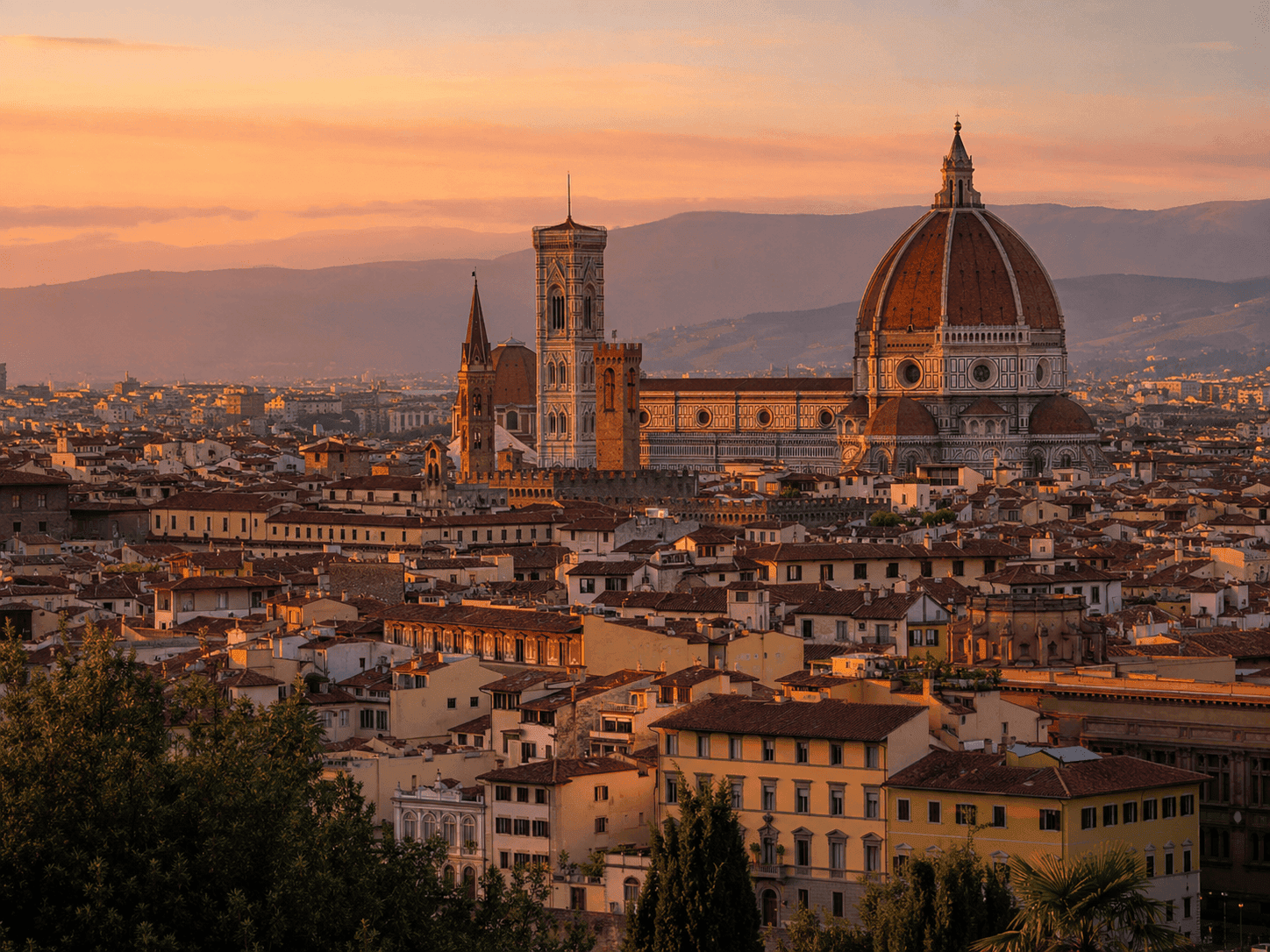
Florence is small, walkable, and dense with the art you have seen in textbooks since you were twelve. Three nights is right. It also makes the easiest base for a day trip into Tuscan wine country, which is the single most requested add-on I book for first-timers.
Venice, honestly assessed
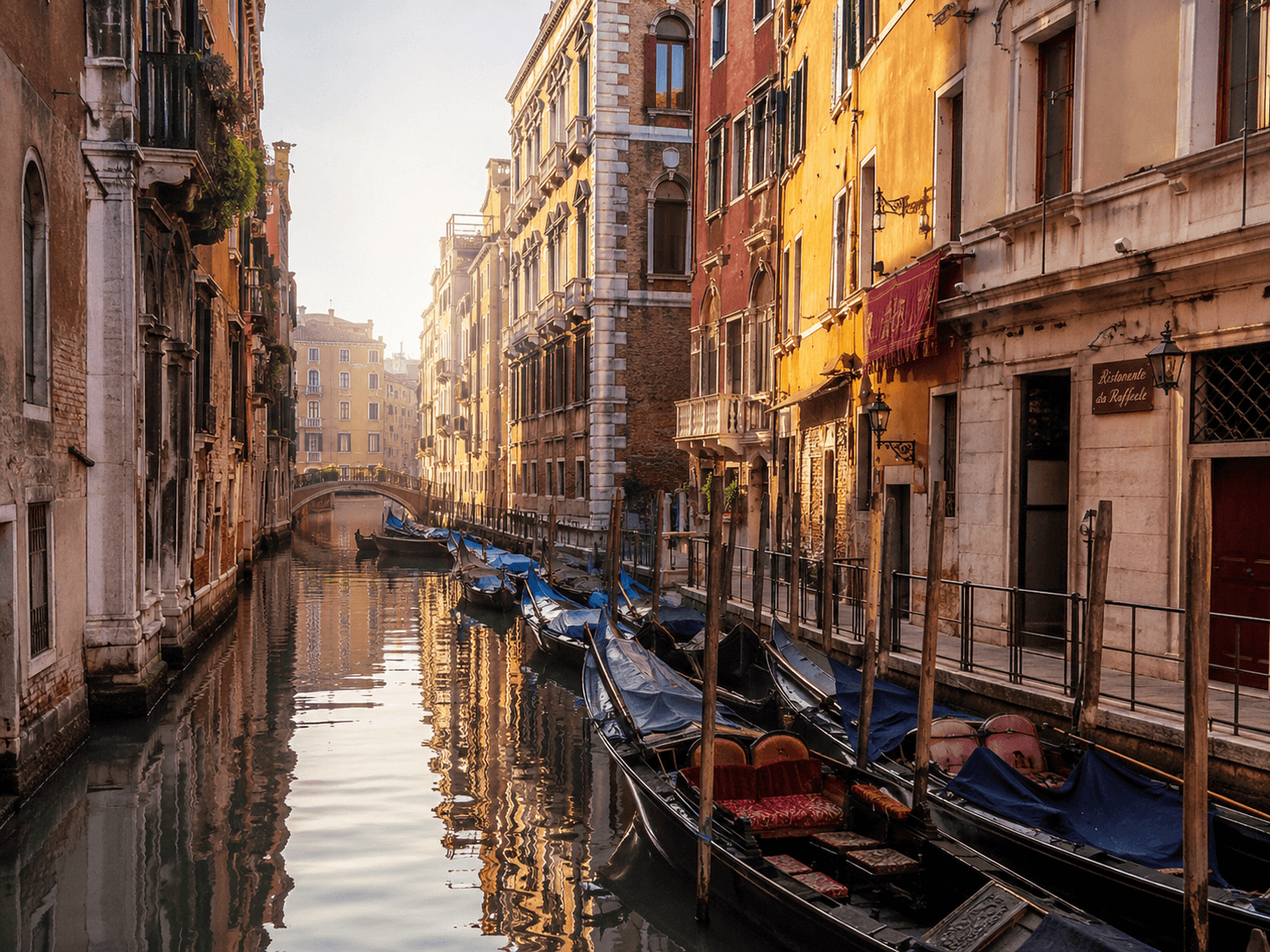
Venice is either the best day of your trip or the one you were talked into. It is beautiful in a way photographs genuinely do not manage, and it is also crowded, expensive, and confusing to walk. Two nights is plenty. Stay overnight rather than day-tripping, because Venice at 7am belongs to a different and much better city.
What to leave for your second trip
The Amalfi Coast, Cinque Terre, Sicily, Puglia, and the Dolomites are all spectacular and all wrong for a first ten-day trip. They are the reason you come back, which is a nicer problem than trying to see everything once and badly.
The First-Timer Italy Itinerary, Three Ways
The trains do the heavy lifting here. According to ItaliaRail, the fastest high-speed service covers Rome to Florence in 1 hour 29 minutes, and Florence to Venice runs about 2 hours 5 minutes. That is city center to city center, no airport, no security line, no shoes off.
One week Italy itinerary for first timers
A one-week Italy itinerary for first timers should cover two cities: four nights in Rome and three in Florence.
Days 1 to 4 in Rome, days 5 to 7 in Florence. One train, no stress, and you leave wanting more, which beats leaving exhausted.
10 day Italy itinerary first time
The best 10 day Italy itinerary for a first time visit is four nights in Rome, three in Florence, and two in Venice.
Days 1 to 4 Rome, days 5 to 7 Florence with a Tuscany day trip, days 8 to 10 Venice. Two trains total. This is the itinerary I recommend more than any other.
14 day Italy itinerary for first timers
A 14 day Italy itinerary for first timers adds four nights on the Amalfi Coast to the front of the classic three-city route.
The 10-day route plus four nights on the Amalfi Coast at the front, before Rome, so you land, decompress by the water, and then hit the cities with energy instead of ending on a beach you are too tired to enjoy.
Rome Florence Venice itinerary: how to sequence it
Fly into Rome and out of Venice. An open-jaw ticket costs about the same and saves you an entire backtracking day.
Fly into Rome and out of Venice. Do not fly round-trip into Rome and then spend a travel day backtracking. Open-jaw tickets usually cost about the same, and the day you save is worth more than the fare difference nine times out of ten.
In practice that means flying into Rome Fiumicino (FCO) and home out of Venice Marco Polo (VCE). If your routing is better through Milan Malpensa (MXP), reverse the whole thing and run Venice to Florence to Rome instead. The trains work equally well in either direction, and Milan makes the Last Supper an easy add.
Adventures by MJ :: First Trip to Italy
7 vs. 10 vs. 14 Days in Italy: What Each Trip Length Actually Buys You
Land costs below are calculated from Budget Your Trip’s traveler-reported average of $238.62 per day for two people in Italy, accessed August 18, 2026. Airfare is a separate estimate and is not included in the land figure.
Trip length
Cities
Nights split
Train legs
Est. land cost, 2 people
Pace
Best for
7 daysThe tight one
2
Rome 4 / Florence 3
1
$1,670
Comfortable if you cut to two cities. Frantic if you do not.
Limited vacation days, or a first Europe trip you want to keep simple
10 daysThe classicAdvisor pick
3
Rome 4 / Florence 3 / Venice 2
2
$2,386
Full but unhurried. One unscheduled afternoon per city.
Nearly every first-timer. Covers ruins, Renaissance art, and canals in one trip.
14 daysThe full one
3 plus a region
Amalfi 4 / Rome 4 / Florence 3 / Venice 2
3
$3,341
Genuinely relaxed. Room for a rain day and a long lunch.
Travelers with the days and budget who would rather not come back for the coast
Add airfare on top
Round-trip, per person, US Midwest departure to Rome or Milan. Advisor estimate based on typical booked fares as of August 2026, not a quoted price.
Off season
$600 to $950
November through March, excluding holidays
Shoulder season
$900 to $1,300
Late April to May, and October
Peak season
$1,300 to $1,900
June through August
Land cost sourced from Budget Your Trip traveler-reported averages for Italy, accessed August 18, 2026. Train leg counts assume Frecciarossa or Italo high-speed service. Airfare ranges are estimates for planning purposes and will vary by departure city, booking window, and season. Questions about your own dates? Ask Adventures by MJ.
Seven questions I ask every client before I plan a single night. Free, and you can take your answers anywhere.
The morning question, which predicts more about your trip than your destination does
“What would ruin it for you?” and why the answer matters more than your wish list
The pace question, asked honestly, without judgment
How to use your answers, including how to use them without me
Send me the seven questions
The Thoughtfully Curated Europe Planner
Most people plan Europe trips backward. These 7 questions fix that.
Thank you!
Check your inbox for your Slow Europe Planner.
One email, and you can unsubscribe whenever. First conversation is always free, and always no-pressure.Three itineraries, and the right one depends on things no itinerary asks you. Seven questions, free.
What You Must Book in Advance in Italy (and Exactly How Far Ahead)
Here is the thing that catches almost every first-timer. Italy’s big sights all require reservations now, but their booking windows are wildly different, and two of them work in opposite directions. You cannot sit down one Saturday and reserve your whole trip.
The 30-day Colosseum rule
The Colosseum does not sell tickets more than 30 days before your visit date. Per the Parco archeologico del Colosseo official site, sales with a compulsory timed entry slot open exactly 30 days out. This is the single most common reason people conclude the Colosseum is sold out when it is not. They tried in month five, saw nothing, and panicked. Set a calendar reminder for 30 days before your Rome date and book that morning.
Florence needs the longest lead time
The Galleria dell’Accademia wants you booked two months ahead. Rick Steves recommends reserving the Accademia at least two months out if possible, and the Uffizi at least a month out if you want your pick of times. So Florence gets booked first, Rome gets booked last, and that feels backwards right up until you understand why.
The Last Supper is its own booking system entirely
Last Supper tickets release in quarterly blocks, on Wednesdays at noon Italian time. Your viewing slot is 15 minutes with up to 40 other people, and peak-season quarters can disappear within 48 hours of release. If Milan and Leonardo are on your list, this is the reservation you plan the trip around rather than fit into it.
Adventures by MJ :: First Trip to Italy
Italy Reservation Timing Chart: What to Book, and Exactly How Far Ahead
Booking windows differ by sight, and two of them work in opposite directions. Print this, or screenshot it, before you start reserving anything.
The trap nobody warns you about: the Colosseum does not sell tickets more than 30 days out, but the Accademia wants you booked two months ahead. You cannot reserve your Italy sights in one sitting. Book Florence and Milan early, then set a calendar reminder for exactly 30 days before your Rome date.
Sight
Reservation
Book this far ahead
What first-timers get wrong
RomeColosseum, Roman Forum & Palatine Hill
Required
Exactly 30 days
Sales open 30 days before your visit date and not a day earlier. Trying in month five is why people think it is sold out.
RomeGalleria Borghese
Required
As soon as dates are firm
Entry is a fixed two-hour shift capped at 180 people. There is no walk-up line to stand in.
RomeVatican Museums & Sistine Chapel
Strongly advised
1 to 2 months
Booking online skips the queue that wraps the wall. Early-entry slots go first.
The longest lead time on this chart. Rick Steves says two months if possible, and he is not being dramatic.
FlorenceUffizi Gallery
Strongly advised
At least 1 month
You can get in later than that. You just cannot pick your time, which matters in July.
FlorenceBrunelleschi’s Dome (Duomo climb)
Required
3 to 4 weeks
The climb needs a timed slot and comes bundled in the Brunelleschi Pass. The cathedral floor does not.
FlorenceBrancacci Chapel
Required
A few days to a week
Short lead time, but genuinely required. Skipped by most itineraries and worth the detour.
MilanThe Last Supper (Cenacolo Vinciano)
Required
About 3 months
Tickets drop in quarterly blocks on Wednesdays at noon Italian time. Peak months can vanish inside 48 hours. Your slot is 15 minutes with up to 40 people.
VeniceDoge’s Palace & St. Mark’s Basilica
Strongly advised
2 to 3 weeks
Timed entry keeps the queue moving. Check the official sites, since Venice adjusts access rules more often than most cities.
FlorenceBargello, Medici Chapels, San Marco, Pitti Palace
Not needed
Walk up
Reservations exist but are generally unnecessary. These are your rain-day and jet-lag backups.
Colosseum ticket window per the Parco archeologico del Colosseo official site. Florence lead times per Rick Steves’ museum reservation guidance. Borghese capacity and Last Supper release schedule per current published visitor information. All verified August 18, 2026, and worth re-checking before you book, because Italian museums adjust these rules without much warning. Want someone to handle the reservation calendar for you? Ask Adventures by MJ.
A quick word of reassurance: you do not need to book everything. Florence’s Bargello, Medici Chapels, Museum of San Marco, and Pitti Palace all take walk-ups, and they are excellent rain-day and jet-lag insurance.
When to Visit Italy, and When Not To
The best time to visit Italy to avoid crowds
Late April through mid-May and the first three weeks of October. Weather is warm, the light is gorgeous, the lines are survivable, and restaurants still have a table at 8pm.
Shoulder season is not the secret it used to be
It got out. Foreign overnight stays in Italy exceeded 250 million in 2024, up 6.8 percent over the prior year, according to ISTAT and Bank of Italy data compiled by Rome Business School. Those extra travelers did not distribute themselves evenly across the calendar. They went to May and October, same as you.
The practical consequence is not that shoulder season stopped working. It is that shoulder season now requires the same booking discipline that July used to. If your dates are fixed, book earlier than feels necessary.
Per-person daily figures from Budget Your Trip’s traveler-reported averages for Italy, accessed August 18, 2026. Airfare is an advisor estimate for a US Midwest departure and is not a quoted price.
Budget Your Trip’s traveler-reported averages put Italy at $119.31 per person per day, which works out to $238.62 for two and about $1,670.34 for a week on the ground (accessed August 18, 2026). That number covers lodging, food, local transport, and activities. It does not cover airfare, and it does not cover the trip you take when you decide the €400 cooking class in Florence is, in fact, the point of the whole thing.
For a ten-day trip, two people, plan on roughly $2,400 on the ground plus flights. Round-trip airfare from the Midwest to Rome typically runs $850 to $1,400 depending on season and how early you book.
Is Italy expensive for Americans right now
Less than you would guess in some places and more than you would guess in others. A very good pasta lunch runs €12 to €18. A high-speed train between major cities booked in advance can be €25. A hotel room in Venice in June can cost more than the flight to get there.
The costs nobody puts in the brochure
Tourist tax. Rome charges €3 to €10 per person per night depending on hotel category, capped at 10 nights, and Florence charges €3.50 to €8 per person per night capped at 7 nights, according to idealista’s February 2026 rate roundup. It is collected at checkout, in cash more often than you would expect, and it surprises people every single time.
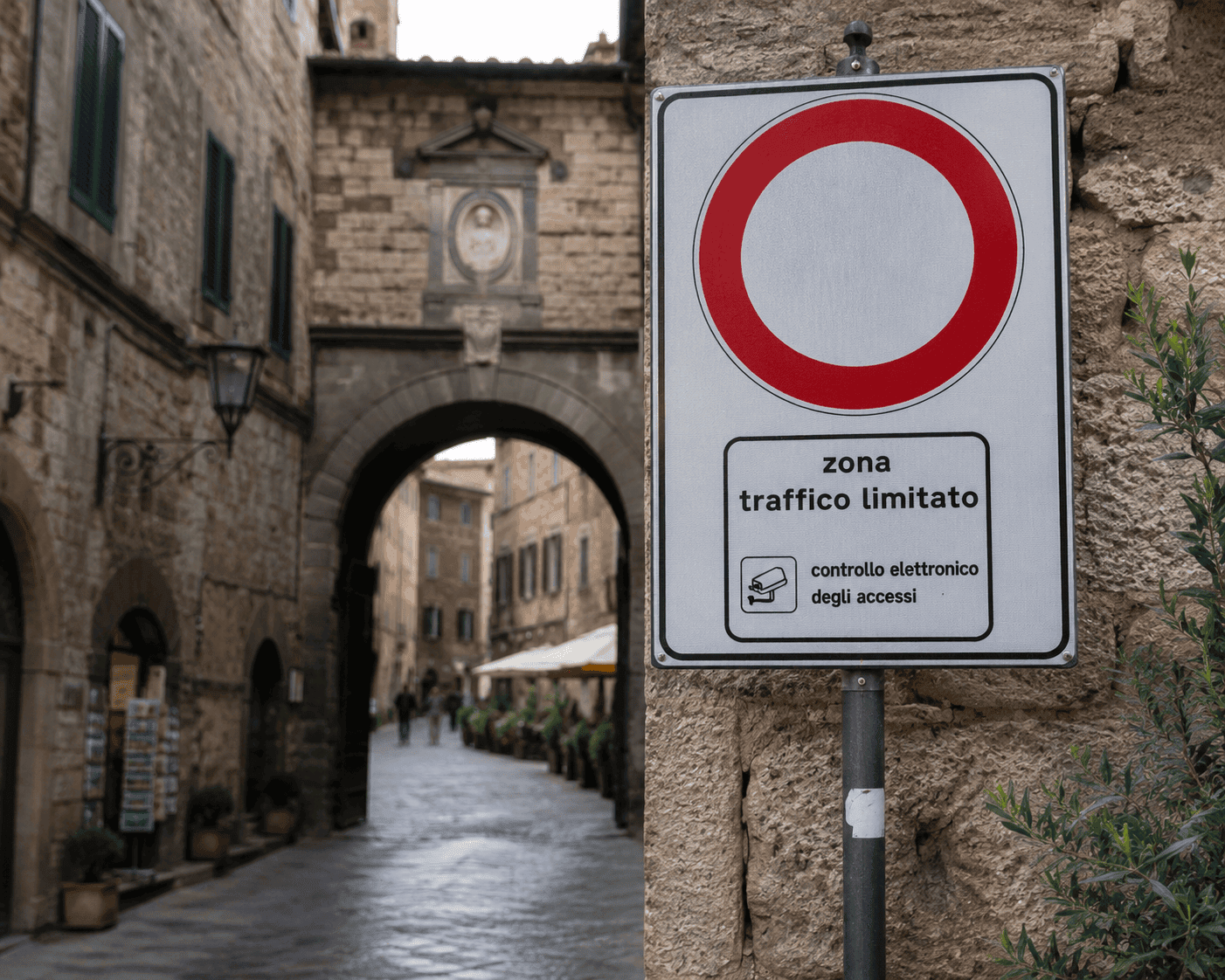
ZTL fines. Italy’s limited traffic zones are camera-enforced, the fine runs about €100 per pass, and each entry counts separately. Worse, the European Consumer Centre notes it can take up to a year and a half for the charge to reach you through a rental company. People get home, forget the whole thing, and then get a debt collection letter the following spring.
Venice’s access fee. More on this in a moment, because the 2027 status is genuinely unresolved.
Do You Need a Visa for Italy in 2027?
No. US citizens do not need a visa for Italy for tourist stays of up to 90 days within any 180-day period. You need a valid passport, and that is currently it.
What is changing is not a visa, it is an authorization. ETIAS is a pre-travel screening step closer to what Canada and Australia already require of Americans, and it costs €20 rather than the several hundred a real visa runs. It has been delayed repeatedly and is now expected in 2027, so a 2027 Italy trip may be the first one that needs it.
One passport note worth checking now rather than in March. Your passport should be valid for at least three months beyond your planned departure from the Schengen area, and most advisors, me included, tell clients to keep six months of validity as a buffer. If yours expires in 2027, renew it before the spring rush rather than during it.
What Changes for a 2027 Italy Trip
This is the part most first-timer guides have not caught up on yet, and it matters more than the usual “pack a scarf for churches” advice.
The Entry/Exit System is already live
The EU’s Entry/Exit System replaced passport stamps with fingerprints and facial images on April 10, 2026.
The EU’s Entry/Exit System became fully operational on April 10, 2026. Per the European Commission’s Migration and Home Affairs office, it replaces passport stamping with digitally recorded entries and exits, collecting facial images and fingerprints from non-EU travelers.
What this means in practice: your first arrival takes a few minutes longer while they capture biometrics, and you will not get the passport stamp souvenir. Budget an extra 20 to 30 minutes at passport control on arrival and stop worrying about it.
ETIAS and what Americans will need
ETIAS is the travel authorization Americans will need for Italy and 29 other European countries. It is not a visa, it is closer to what Canada and Australia already require.
The launch has moved more than once. As of AFAR’s July 13, 2026 reporting, it has been postponed to 2027, and the EU agency overseeing it acknowledged the end of 2026 was no longer feasible. When it does arrive, the fee is €20, it is valid for three years or until your passport expires, whichever comes first, and it covers stays of up to 90 days in any 180-day period. There is also a transitional grace period after launch, so nobody gets turned around at the border on day one.
Apply only through the official EU ETIAS site. There is an entire cottage industry of lookalike sites charging four times the real fee for the privilege of filling out the same form.
Venice’s access fee, currently in limbo
Venice’s day-tripper access fee expired on July 27, 2026, and no 2027 decision has been announced.
Venice charged day-trippers on 60 peak days in 2026, running April 3 through July 26, at €5 per person if you registered at least four days ahead and €10 if you registered closer in. Overnight guests, children under 14, and travelers with disabilities were exempt but still had to register.
Then it stopped. The city’s official Contributo di Accesso site now states that the 2026 trial period has ended and the fee is no longer in effect as of July 27, 2026, with any future application left to Venice’s governing bodies.
So for 2027: unknown. My advice is to plan to stay overnight in Venice regardless, which exempts you from the fee if it returns and gives you the empty-canals morning either way.
Why 2027 departures are filling earlier
Tours and small-group departures are selling out further ahead than they used to. Rick Steves has published full 2027 Italy pricing running $2,745 for the 7-day Rome tour up to $6,795 for Best of Italy in 17 Days, plus airfare, and shoulder season dates on those go first. If a specific week matters to you, nine to twelve months out is the realistic window.
Getting Around Italy Without Losing Your Mind
Trains beat driving almost everywhere
For the Rome, Florence, Venice route, the train is not just easier, it is faster door to door than driving and dramatically cheaper than flying. Book on Trenitalia or Italo directly. Fares are dynamic, so buying two to three months out saves real money, and the cheap tickets are non-refundable, which is the trade.
Tuscan hill towns, Umbria, Puglia, and parts of Sicily. Anywhere you are chasing vineyards and villages rather than cities. Pick the car up on your way out of a city, never on your way in.
The ZTL problem
Italy’s historic city centers are ringed with camera-enforced restricted zones. Your GPS will route you straight through one, cheerfully, because it does not care. The rule that keeps you safe: if you are driving toward a city center and you see a white circle with a red border, stop and reroute. Ask your hotel for their specific ZTL instructions before you arrive, not after.
9 Things Not to Do in Italy as an American
A short list, offered with affection.
Do not order a cappuccino after lunch
Nobody will arrest you. But you will get a look, and the look is worse.
Do not tip 20 percent
Service is generally included. Rounding up or leaving a few euros for genuinely good service is normal and appreciated. Twenty percent marks you instantly and quietly annoys everyone.
Do not skip validating regional train tickets
High-speed tickets are tied to a specific train and seat, so they need no validation. Regional tickets do, and the fine for an unvalidated one is real.
Do not wear a tank top into a major church
Shoulders and knees covered at St. Peter’s, the Duomo, and most significant churches. A light scarf in your bag solves this permanently.
Do not plan dinner for 6pm
Kitchens in most of Italy open around 7:30 or 8 pm. Showing up at 6 gets you a tourist menu and an empty room.
Do not carry your passport around all day
Leave it in the hotel safe with a photo on your phone. Pickpocketing in crowded tourist areas is the single most common thing that goes wrong for American travelers in Italy, and it is entirely preventable.
Do not assume your credit card taps everywhere
Contactless works in most cities, but small trattorias, rural agriturismos, and market stalls are still cash-friendly and occasionally cash-only. Carry €50 in small bills and stop worrying about it.
Do not book a hotel outside the historic center to save money
The savings evaporate the moment you are paying for taxis twice a day and losing 40 minutes each way. In Florence and Venice especially, central is worth the premium.
Do not put Rome, Florence, and Venice in the wrong order
Rome first, while you have energy and jet lag needs somewhere chaotic to hide. Venice last, because ending on canals at sunrise is a better final memory than ending in a bus queue at the Vatican.
Is Italy Safe for a First-Time American Traveler
The US State Department currently lists Italy at Level 2, Exercise Increased Caution, citing terrorism risk. That is the same level assigned to France, Spain, and much of Western Europe, and it is not a reason to change plans. Check the current status on the State Department’s travel advisory page before you go, because levels get updated.
The realistic risk in Italy is not violence, it is theft. Crowded train stations, the area around the Colosseum, Venice’s main routes, and any packed bus are where wallets disappear. A crossbody bag worn in front and a little situational awareness handle almost all of it.
Guided Tour or Independent for a First Trip
The honest answer depends on whether logistics energize you or drain you.
Independent works well in Italy specifically because the trains are excellent and English is widely spoken in tourist-facing businesses. If you enjoy planning, you will have a great time and save money.
A guided tour earns its cost when you want the driving handled, the skip-the-line access arranged, and someone else absorbing the moment the Uffizi changes its reservation system three weeks before you arrive. It also solves the solo traveler problem elegantly.
There is a middle path I recommend more than either extreme: travel independently, then book two or three expert-led half-day tours at the sites where context actually changes the experience. The Vatican and the Roman Forum are both dramatically better with a good guide and fairly dull without one.
How Far in Advance Should You Book an Italy Trip
For a 2027 trip in April, May, September, or October, start nine to twelve months out. That is the window where you still have hotel choice in Florence and Venice, where flight prices have not begun their upward march, and where small-group tour departures still have space.
For July and August, six to nine months is usually fine, because demand for peak-summer Italy is slightly less frantic than for shoulder season now.
Book flights before hotels. Flights set your dates, and hotel cancellation policies in Italy are generally more forgiving than airline change fees.
What to Pack for a First Trip to Italy
Italy is a walking country with cobblestones and a lot of stairs. Pack accordingly.
Packing cubes :: You are changing hotels two or three times and hauling luggage up narrow stairs. Living out of an organized bag is the difference between a smooth morning and a bad one.
Lightweight scarf or wrap :: Church shoulder coverage, air-conditioned trains, and evening chill in October, all solved by one item.
Portable phone charger :: Your phone is your map, your train ticket, your translator, and your camera. It will not survive the day alone.
Start with the number of days you can actually take off. Everything else in an Italy itinerary follows from that one number, and most first-timer regret comes from ignoring it.
Count your days on the ground, not your days off work
▼
7 days or fewer
Two cities. Stop there.
Rome 4 nights, Florence 3
One train leg, 1h29
Fly in and out of Rome
Skip Venice this time
Leave wanting more, not exhausted
10 to 12 days
The classic three.
Rome 4, Florence 3, Venice 2
Two train legs, no driving
Fly into Rome, out of Venice
Add one Tuscany day trip
The itinerary I book most often
13 days or more
Add the coast up front.
Amalfi 4, then the classic three
Three train legs
Decompress before the cities
Room for one wasted rain day
The version people talk about for years
Four rules that hold at every trip length
Rule 01
Every city change costs about half a day. Two changes is the practical limit for a first trip.
Rule 02
Book the flights first. Flights set your dates, and Italian hotels cancel more easily than airlines do.
Rule 03
Sleep in Venice, do not day-trip it. Overnight guests were exempt from the 2026 access fee, and mornings there are the whole point.
Rule 04
No rental car in the city trio. Camera-enforced ZTL zones fine about 100 euros per pass, per the European Consumer Centre.
Train times per ItaliaRail, August 2026. Venice access fee status per the City of Venice Contributo di Accesso office, which confirmed the 2026 trial ended July 27, 2026 with no 2027 decision announced. Planning your own dates? Talk it through with Adventures by MJ.
Before You Open Twenty More Browser Tabs
Here is the thing about planning a first trip to Italy. The information is all out there, and most of it is even accurate. What is hard is the sequencing, the trade-offs, and knowing which of the forty things you read actually applies to your dates, your budget, and your tolerance for a 6am train.
That part is most of what I do. If you want a second set of eyes on an itinerary you have already built, or you would rather hand the whole thing to someone who books Italy regularly and knows which Florence hotels are actually a five-minute walk from the Duomo and which ones are lying, I am happy to take a look. No pressure, no package you have to buy, and no hard feelings if you decide you would rather build it yourself. Some people love that part, and they should get to keep it.
If you are still deciding whether Italy is even the right first Europe trip, my broader guide to how to plan a trip to Europe is a better starting point.
Frequently Asked Questions About Planning Your First Trip to Italy
How do you plan a trip to Italy for the first time if you have never been to Europe?
Start with your dates and flights, then pick a maximum of three cities and book hotels before anything else. Rome, Florence, and Venice connected by high-speed train is the route that works for nearly everyone, and it requires no driving at all. Add tours and restaurant reservations last, once the structure is locked. The most common first-timer error is booking activities before deciding how many nights go where.
Is 7 days enough for a first trip to Italy?
Seven days is enough for two cities, not three. Rome and Florence, or Rome and Venice, both work beautifully in a week and leave you rested. Trying to fit a third city into seven days means roughly a third of your trip becomes logistics. If a week is what you have, protect it by cutting rather than cramming.
What is the best Italy itinerary for first timers?
Four nights in Rome, three in Florence, and two in Venice, flying into Rome and out of Venice. That sequence puts your most demanding city first while you have energy, uses only two train legs, and eliminates any backtracking. Add a Tuscany day trip from Florence if you want countryside without changing hotels. It is the itinerary I book most often, and for good reason.
Do you need to speak Italian to travel in Italy?
No, but a handful of phrases changes how you are treated. English is widely spoken in hotels, restaurants, and museums in the major cities. Learning buongiorno, per favore, grazie, and scusi takes ten minutes and consistently earns warmer service. Outside the big cities English gets patchier, and a translation app covers the gap.
Is Italy safe for American tourists right now?
Yes, with normal urban caution. The US State Department lists Italy at Level 2, Exercise Increased Caution, the same tier as France and Spain. Violent crime against tourists is rare. Pickpocketing in crowded areas is the actual risk, and a front-worn crossbody bag plus leaving your passport in the hotel safe handles nearly all of it.
What should you not do in Italy as an American?
Do not tip 20 percent, do not order cappuccino after lunch, and do not drive into a historic city center. That last one is the expensive mistake, because camera-enforced ZTL zones carry fines of about €100 per pass and can take up to 18 months to reach you through a rental company. Also skip the tank top at major churches, since shoulders and knees need covering.
How far in advance should I book an Italy trip for 2027?
Nine to twelve months for April, May, September, or October travel. Shoulder season now books like peak season used to, and small-group tour departures for those months sell out first. Peak summer allows six to nine months. Book flights before hotels, since flights set your dates and Italian hotel cancellation policies tend to be more flexible than airline change fees.
Should a first timer book a guided Italy tour or go independent?
Independent travel works well in Italy because the train network is excellent and English is common in tourist-facing businesses. A guided tour is worth it if you want zero logistics, guaranteed skip-the-line access, or you are traveling solo. The hybrid version, independent travel plus two or three expert-led site tours, is what I recommend most often and it costs far less than a full escorted package.
Final Thoughts
If you take one thing from this guide on how to plan a trip to Italy for the first time, make it this: fewer cities, more nights. The trip people describe as magical is almost never the one with the most stamps on it. It is the one where they had a second coffee, wandered a neighborhood with no plan, and stumbled into the best meal of their lives because they were not sprinting to a train.
Italy rewards slowness in a way that feels almost pointed. Ten days, three cities, one long lunch you did not schedule. That is the trip.
Now go book the flight. The rest gets easier once the dates are real.
Seven questions I ask every client before I plan a single night. Free, and you can take your answers anywhere.
The morning question, which predicts more about your trip than your destination does
“What would ruin it for you?” and why the answer matters more than your wish list
The pace question, asked honestly, without judgment
How to use your answers, including how to use them without me
Send me the seven questions
The Thoughtfully Curated Europe Planner
Most people plan Europe trips backward. These 7 questions fix that.
Thank you!
Check your inbox for your Slow Europe Planner.
Written by Sue Nelson | Adventures by MJ | Updated for 2027
Sue Nelson is a travel advisor with Adventures by MJ, specializing in Europe, cruises, and group travel for clients departing from the Kansas City area. She books Italy itineraries year-round and has spent more time than she would like to admit talking people out of adding a fourth city. Adventures by MJ is based in Missouri and works with travelers nationwide.
Affiliate Disclosure: This post may contain affiliate links. If you make a purchase through one of these links, we may earn a commission at no additional cost to you. We only recommend products and services we believe may be helpful to travelers.
Hi, I'm Sue. I plan cruises, all-inclusive resorts, and slow multi-country trips through Europe. I'm a certified Hawaii travel specialist, and I book through host agency Outside Agents as a member of the Travel Leaders Network. Twenty years in senior HR leadership before this, which mostly taught me how to read what people actually want. I live in Grain Valley, Missouri with my husband and business partner Mike.