We’ve all been there: you spend months saving, planning, and daydreaming about a trip you’ve seen a thousand times on Instagram, only to arrive and discover that the “hidden gem” has a gift shop, a Starbucks, and a 90-minute queue. Devastating.
But here’s the good news: some places really do live up to the hype. Not just the polished, filtered version of them, but the real, soul-stirring, “I can’t believe I’m actually here” version. The kind that ruins you for ordinary Tuesday evenings forever.
So whether you’re building your ultimate travel wishlist, finally cashing in those points, or just need a compelling reason to close a spreadsheet and book a flight, this one’s for you. Here are 10 bucket list trips that are actually worth it, ranked by their ability to make you forget your Wi-Fi password and remember what it feels like to be fully, magnificently alive.
If you’ve ever asked yourself which bucket list trips are actually worth the hype, and the credit card bill, you’re in the right place.
The bucket list trips most consistently worth the hype include the Northern Lights, an East African safari, Machu Picchu, Japan during cherry blossom season, and Antarctica. These destinations deliver experiences that are visually stunning, emotionally transformative, and impossible to replicate, which is the real test of whether a trip is actually worth it.
The Northern Lights — Iceland, Norway, or Finland
Safari in East Africa — Kenya or Tanzania
Machu Picchu, Peru
A European River Cruise
The Camino de Santiago, Spain
New Zealand’s South Island
Japan During Cherry Blossom Season
Antarctica
Utah’s Mighty 5 (American Southwest)
The Amalfi Coast, Italy
What Makes a Bucket List Trip “Worth It”?
A bucket list trip earns the label “worth it” when it delivers:
A shift in perspective that outlasts the trip itself
An experience that’s genuinely impossible to replicate at home or on a screen
Strong emotional impact that creates memories lasting years, not days
Results that reward the investment of effort, cost, and travel time
With that standard in mind, here’s the list.
Dreaming about your next unforgettable vacation? These bucket list trip ideas are perfect for travelers ready to plan something meaningful, memorable, and absolutely worth looking forward to.
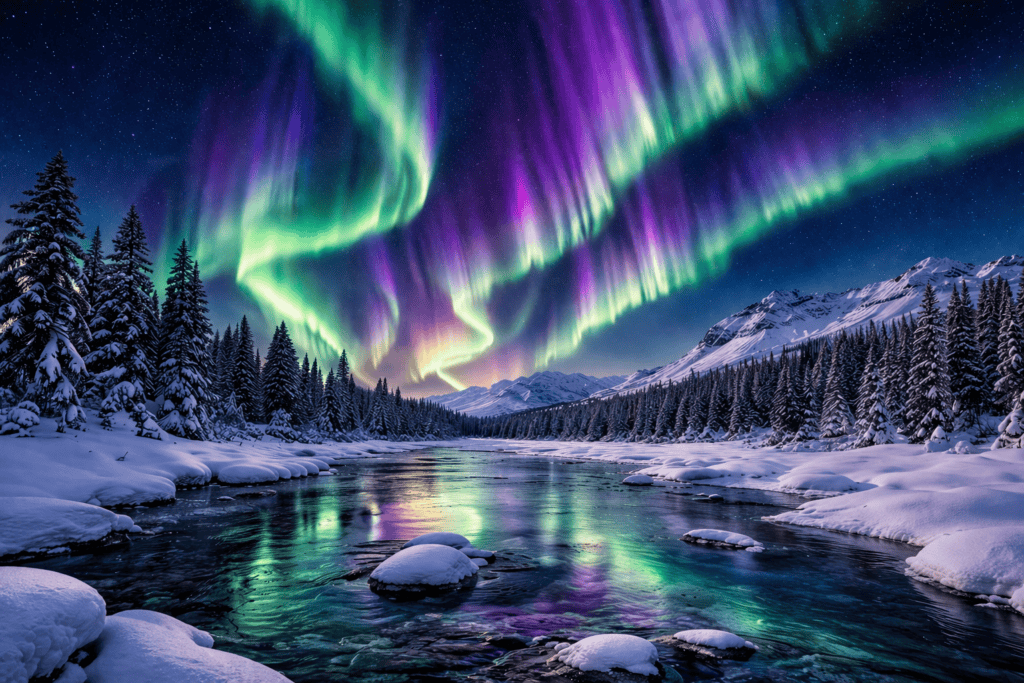
1. The Northern Lights (Iceland, Norway, or Finland)
📍 Best countries: Iceland, Norway, Finland
📅 Best time to visit: September–March
💰 Typical cost: $2,500–$6,000+ per person
🎯 Difficulty: Easy to Moderate
Let’s start with one that sounds like it should be overhyped, and yet, somehow, never is. Watching the Northern Lights dance across the sky is one of those experiences that simply cannot be adequately described with words or even photography. It’s like trying to explain a symphony to someone who’s never heard music, The aurora borealis is unpredictable, fleeting, and absolutely magical. You can read all about the best destinations to see the Northern Lights to narrow down which country suits your travel style, but know this: whether you’re in a glass igloo in Finland or standing on a frozen fjord in Norway, this one delivers every single time.
Pro tip: Go between September and March, get away from city lights, and be patient. The sky rewards the persistent.
2. Safari in East Africa (Kenya or Tanzania)
📍 Best destinations: Serengeti (Tanzania), Maasai Mara (Kenya)
📅 Best time to visit: June–October for peak wildlife; July–September for the Great Migration
💰 Typical cost: $3,500–$8,000+ per person (mid-range, 7–10 days, flights not included)
🎯 Difficulty: Easy — game drives are vehicle-based; no fitness requirement
🦁 Don’t miss: The Big Five (lion, leopard, elephant, buffalo, rhino) and the Great Migration river crossings
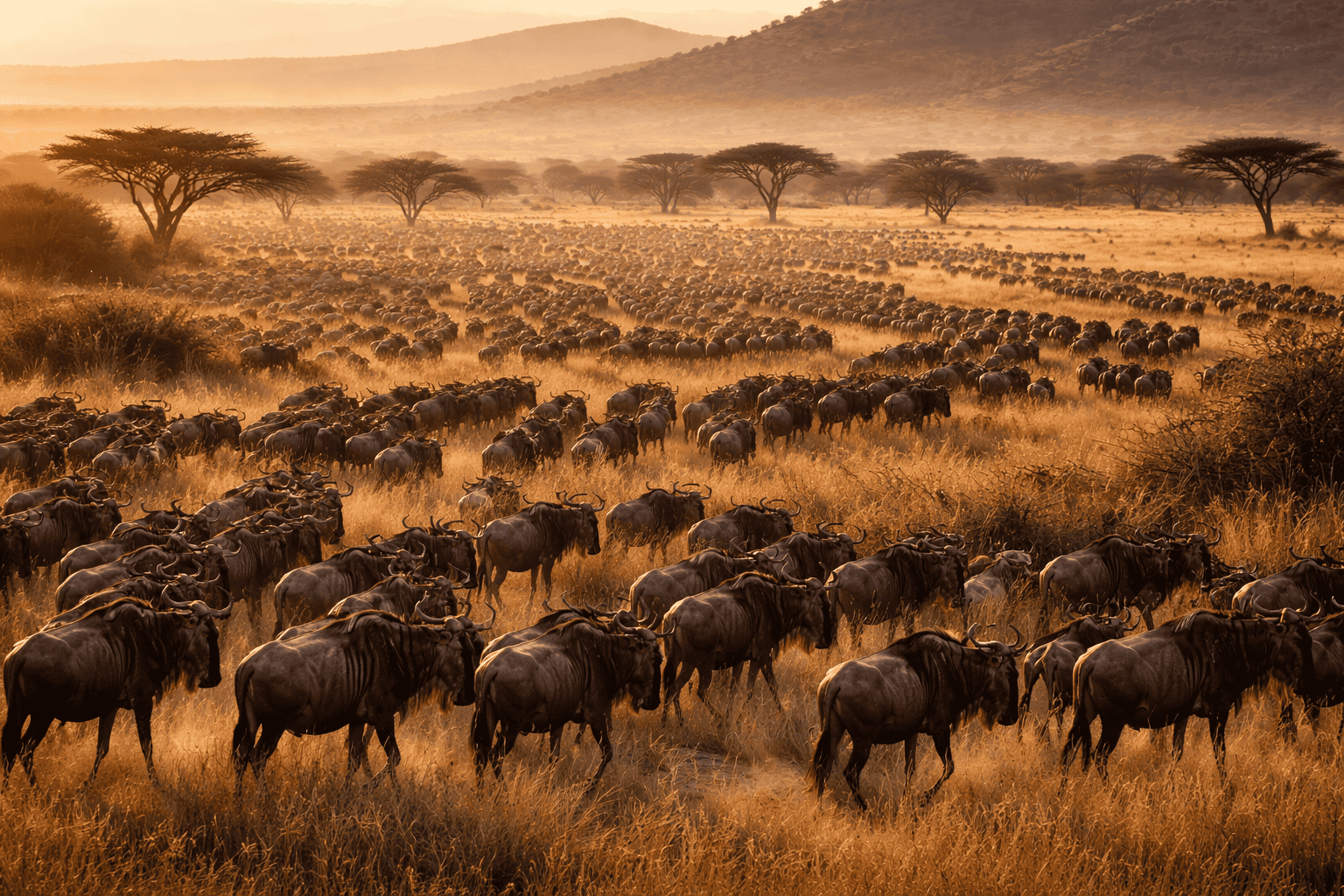
You’ve seen the nature documentaries. You’ve gasped at the footage. But nothing – nothing – prepares you for the actual scale of the Serengeti, or the sound of a lion’s roar at 5 AM when you’re in a tent that suddenly feels very, very thin.
Go for the Big Five. Stay for the sunsets. Come home a different person.
Pro tip: Book your safari 9–12 months in advance if you want to time it with the Great Migration (July–September in Kenya’s Maasai Mara).
No nature documentary can prepare you for the actual scale of this. 1.5 million wildebeest. One completely reset worldview.
3. Machu Picchu, Peru
📍 Location: Cusco Region, Peru — 7,972 feet (2,430m) in the Andes
📅 Best time to visit: May–October (dry season); June–August is peak
💰 Typical cost: $2,500–$5,500+ per person (7–10 days, flights included from US)
🎯 Difficulty: Moderate–Hard (Inca Trail); Easy–Moderate (train to Aguas Calientes)
🗓️ Book ahead: Inca Trail permits sell out 6–12 months in advance; timed entry tickets required for the citadel — don’t wait
Ancient civilizations had an absolutely elite taste in real estate, and nowhere is this more evident than Machu Picchu. Perched at 7,972 feet in the Andes, this 15th-century Inca citadel is simultaneously breathtaking and baffling; as in, how did anyone build this, and also, why did no one tell me altitude sickness hits this hard?
The Inca Trail hike is legendary for a reason, but if four days of trekking isn’t your thing, the train to Aguas Calientes is a perfectly respectable alternative. Either way, the first glimpse of those terraces emerging from the mist is pure, unfiltered wonder.
If you’re committing to the trail, a solid pair of trekking poles will save your knees on the descent, and your pride.
4. A European River Cruise
📍 Most popular routes: Rhine, Danube, Douro, Seine — visiting 4–8 countries in one trip
📅 Best time to cruise: April–May (spring tulips, mild weather) or September–October (harvest season, fall foliage)
💰 Typical cost: $3,500–$8,000+ per person (7–14 days, most meals and excursions included)
🎯 Difficulty: Easy — perfect for all ages and fitness levels; unpack once for the entire trip
🚢 Ship size: 100–190 passengers — intimate and unhurried compared to ocean cruising
🗓️ Book ahead: Christmas market cruises and spring departures sell out 12+ months in advance
If you’ve been wondering about the best time to travel to Europe for a river cruise, the answer is spring (April–May) or early fall (September–October), and yes, it’s absolutely worth planning around those windows.
A typical European river cruise covers 4–8 countries over 7–14 days, all without unpacking more than once.
Floating through the Rhine, the Danube, or the Seine on a river cruise offers something that most travel experiences don’t that most travel experiences don’t: the ability to unpack exactly once while watching multiple countries glide past your balcony like a living postcard. You wake up in Amsterdam, lunch in Cologne, and sip wine as you drift past medieval castles at dusk. It’s civilized travel at its absolute finest, and a genuinely underrated way to experience Europe.
5. The Camino de Santiago, Spain
📍 Location: Starts in St. Jean Pied de Port, France; ends at the Cathedral of Santiago de Compostela, Spain
📅 Best time to walk: April–June or September — ideal weather, manageable crowds, avoiding summer heat
💰 Typical cost: $1,500–$3,000 per person (flights + ~€30–50/day on trail in pilgrim hostels)
🎯 Difficulty: Hard — the classic Camino Francés is 500 miles (800km) walked over 30–35 days
🚶 Shorter option: The Camino Portugués from Porto is ~150 miles (7–10 days) — still earns the Compostela certificate
🗓️ Book ahead: Pilgrim hostels are first-come-first-served; book private rooms and the first/last few nights in advance during peak season
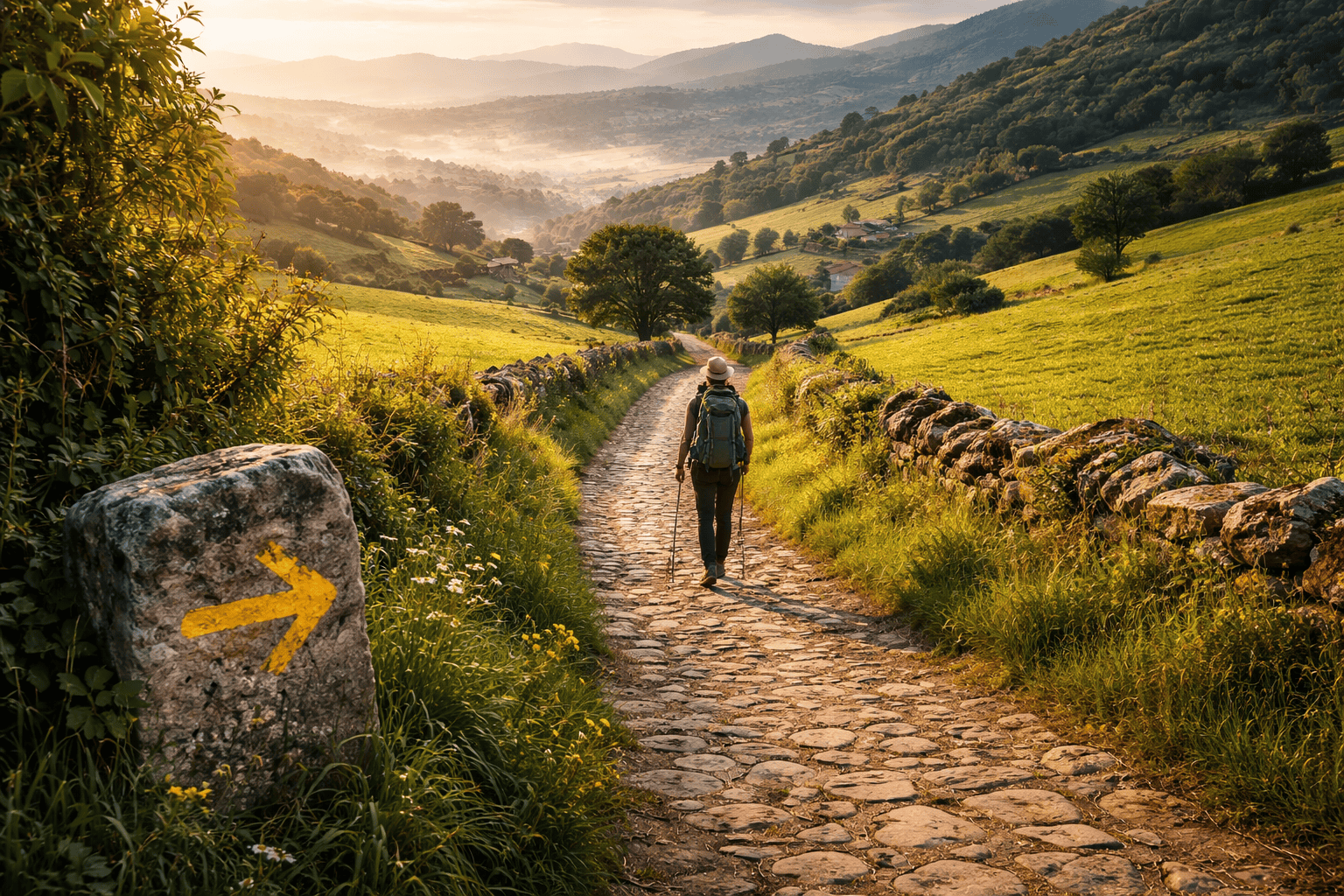
Here’s one for the soul. The Camino de Santiago is a network of ancient pilgrimage routes through Spain (and parts of France and Portugal) that converge at the Cathedral of Santiago de Compostela. People have been walking it for over a thousand years, and the reasons are as varied as the walkers themselves.
Some go for the physical challenge. Some go for the spiritual experience. Some go because they read The Pilgrimage by Paulo Coelho and never quite recovered.
If you’re ready to actually lace up, John Brierley’s A Pilgrim’s Guide to the Camino de Santiago is the trail bible. Dog-eared copies are practically a rite of passage among walkers.
Whatever draws you there, the Camino has a way of stripping away the noise of everyday life and getting very honest with you about what actually matters. It’s hard, beautiful, communal, and unforgettable.
Interested in travel with deeper meaning? You might also want to explore faith-based travel options around the world, because pilgrimage comes in many forms.
A thousand years of footsteps before yours. The Camino has a way of stripping away the noise — and getting very honest with you about what actually matters.
A bucket-list trip is too big to wing. Before you start pricing flights, run through the Before You Book Travel Checklist.it walks you through the handful of decisions that quietly make or break a once-in-a-lifetime trip. Grab the checklist →
6. New Zealand: Lord of the Rings Country (and So Much More)
📍 Location: South Pacific — two islands; South Island is the road trip star (Milford Sound, Queenstown, West Coast glaciers)
📅 Best time to visit: December–February (NZ summer) for peak conditions; March–April for fall color and fewer crowds
💰 Typical cost: $4,500–$8,500+ per person (10–14 days, flights from US included)
🎯 Difficulty: Moderate — road tripping is easy; Great Walks and alpine hikes range from moderate to strenuous
🧭 The drive: The South Island road trip covers roughly 1,000–1,500 miles of some of the most cinematic scenery on Earth
🗓️ Book ahead: Queenstown and Milford Sound accommodation fills fast in peak summer — 6–9 months ahead is smart
New Zealand didn’t need Peter Jackson to be extraordinary, but we’re not complaining. This small island nation packs in more natural wonders per square mile than almost anywhere on Earth: fjords, glaciers, geothermal hot springs, wine country, Hobbiton, and beaches that look like screensavers.
The South Island in particular, with Milford Sound, the Queenstown adventure scene, and the glaciers of the West Coast, is the kind of place that makes you question every life choice that led you to sit in an office. Road tripping New Zealand’s South Island is widely considered one of the greatest drives in the world, and we’re firmly in the “yes, this checks out” camp.
7. Japan During Cherry Blossom Season
📍 Top cities: Tokyo, Kyoto, Osaka, Hiroshima — each with iconic blossom spots
📅 Best time to visit: Late March–early April (Tokyo peaks late March; Kyoto early April; Hokkaido late April–May)
💰 Typical cost: $2,500–$5,000+ per person (10 days, flights from US included)
🎯 Difficulty: Easy — world-class public transit, safe, widely accessible for first-time visitors
🌸 Don’t miss:Hanami (picnicking beneath the blossoms) at Maruyama Park in Kyoto or Shinjuku Gyoen in Tokyo
🗓️ Book ahead: 6–12 months in advance — cherry blossom season is one of the most in-demand travel windows in Asia
Japan is magnificent year-round, but cherry blossom season (late March to early April, depending on location) elevates the whole country into something almost surreal. Parks, temples, and riverside paths transform into pink-canopied wonderlands, and the Japanese tradition of hanami, gathering beneath the blossoms with friends, food, and sake, is one of the most joyful cultural experiences you can have anywhere on Earth.
Beyond the blossoms, Japan rewards curious travelers endlessly: the food alone justifies the trip. When you can get a bowl of ramen that makes you want to call your mother and apologize for every mediocre meal you’ve ever made her, you know you’re somewhere special.
Pro tip: Cherry blossom timing varies by city. Tokyo typically peaks late March, Kyoto early April. Check Japan’s official blossom forecast in February before booking.
8. Antarctica
📍 Departure point: Ushuaia, Argentina — the southernmost city in the world
📅 Best time to visit: November–March (Antarctic summer); January–February for peak wildlife and 20+ hours of daylight
💰 Typical cost: $8,000–$20,000+ per person (10–14 days, cruise fare; flights to Ushuaia not included)
🎯 Difficulty: Moderate — expedition ships handle the logistics; the Drake Passage crossing (2 days each way) can be rough
🐧 Don’t miss: Chinstrap and gentoo penguin colonies, calving glaciers, zodiac landings on the continent itself
🗓️ Book ahead: 12–18 months in advance — Antarctic expeditions are capacity-limited and sell out faster than most travelers expect
Okay, yes. This one is expensive, logistically complex, and involves the very real possibility of seasickness in the Drake Passage (pack Sea-Band wristbands — trust us on this one). But Antarctica is the last true wilderness on Earth, and visiting it, standing on the seventh continent, surrounded by silence, glaciers, and colonies of absolutely unbothered penguins, is a transformative experience unlike any other.
Most Antarctic expeditions depart from Ushuaia, Argentina, last 10–14 days, and visit the Antarctic Peninsula between November and March.
This is the trip that makes people rethink climate change on a visceral level. It’s also the trip that makes people rethink everything they’ve been worrying about, because when you’re standing at the edge of the world in a parka, the inbox seems very, very far away.
Worth every penny. Start saving now.
Pro tip: January and February offer the best wildlife activity and longest daylight hours. Book at least 12–18 months in advance. Antarctic expeditions sell out fast.
The last true wilderness on Earth. The absolutely unbothered penguins are complimentary.
9. Road Tripping the American Southwest (Utah’s Mighty 5)
📍 The route: Zion → Bryce Canyon → Capitol Reef → Canyonlands → Arches — all within Utah
📅 Best time to visit: March–May (spring wildflowers, mild temps) or September–October (cooler, fewer crowds than summer)
💰 Typical cost: $1,500–$3,500 per person (7–10 days, domestic flights, rental car, America the Beautiful Pass recommended at $80/year)
🎯 Difficulty: Easy to Hard — scenic drives are accessible to everyone; hikes range from flat canyon walks to strenuous multi-day treks
🚗 The drive: The full Mighty 5 loop covers roughly 800 miles — most travelers complete it in 7–10 days
🗓️ Book ahead: Zion requires a shuttle reservation in peak season; popular campgrounds and lodge rooms book out 6+ months in advance
Zion. Bryce Canyon. Arches. Canyonlands. Capitol Reef. Utah’s “Mighty 5” national parks form one of the most spectacular road trip routes in the world, and yet it somehow still flies under the radar compared to international destinations.
The scale of the landscape is genuinely staggering. These are places that make you feel small in the most wonderful way, towering sandstone arches, hoodoos that look like alien architecture, canyons carved over millions of years. You don’t need a passport for this one, but you will need good hiking boots, a sense of wonder, and a playlist that does justice to the scenery.
10. The Amalfi Coast, Italy
📍 Location: Stretches 34 miles along the southern edge of the Sorrentine Peninsula, southern Italy
📅 Best time to visit: May–June or September — warm, sunny, and significantly less crowded than July–August peak 💰 Typical cost: $3,500–$7,000+ per person (7–10 days, flights from US included)
🎯 Difficulty: Easy — though the famously narrow, winding coastal roads make hiring a driver or taking ferries between towns a wise and scenic choice
🍋 Don’t miss: Positano, Ravello, a boat trip to the Grotta dello Smeraldo, and at least one meal where you lose track of time entirely
🗓️ Book ahead: 6–9 months in advance for peak season; cliffside hotels with sea views are among the most in-demand rooms in all of Europe
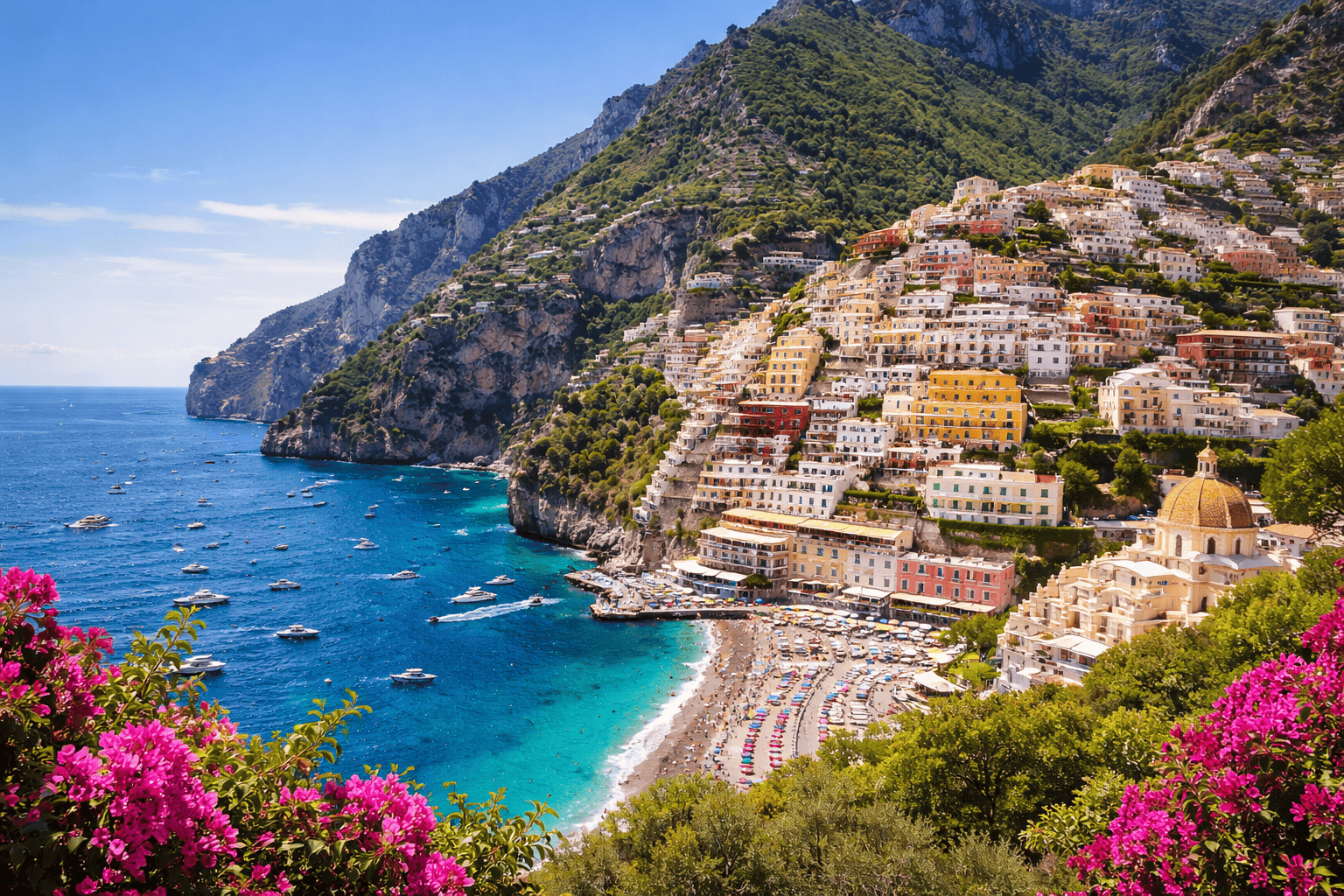
Stretching 34 miles along the southern edge of the Sorrentine Peninsula, the Amalfi Coast is, objectively, almost too beautiful. Cliffside villages in candy colors, the Mediterranean glittering impossibly blue below, fresh limoncello, pasta that tastes like it was made by someone who genuinely loves you, it’s almost an embarrassment of riches.
Yes, it’s famous. Yes, it can be crowded in peak summer. And yes, the roads are so narrow and vertiginous that you will seriously reconsider your relationship with rental cars. But the Amalfi Coast earns its reputation every single time. Come for the views, stay for the food, leave wondering how you’re supposed to go back to regular life.
Pro tip: On the Amalfi Coast, accommodation choice is everything. A room with a sea-view terrace and a room facing inland at the same property can feel like completely different trips — and the best sea-view rooms are gone first. Book with someone who knows which rooms to ask for, because this is not the trip to find out you’re looking at a wall.
Almost too beautiful. The Amalfi Coast earns every superlative — and the limoncello doesn’t hurt.
How These 10 Trips Compare at a Glance
Destination
Best For
Difficulty Level
Best Season
Wow Factor
Northern Lights
Nature & Wonder
Easy–Moderate
Sept–March
⭐⭐⭐⭐⭐
African Safari
Wildlife
Easy
June–October
⭐⭐⭐⭐⭐
Machu Picchu
History & Adventure
Moderate–Hard
May–October
⭐⭐⭐⭐⭐
European River Cruise
Culture & Comfort
Easy
April–May, Sept–Oct
⭐⭐⭐⭐
Camino de Santiago
Spiritual & Physical
Hard
March–June, Sept
⭐⭐⭐⭐⭐
New Zealand
Adventure & Scenery
Moderate
Dec–Feb (NZ summer)
⭐⭐⭐⭐⭐
Japan (Cherry Blossom)
Culture & Beauty
Easy
Late March–April
⭐⭐⭐⭐⭐
Antarctica
Once-in-a-lifetime
Moderate
Nov–March
⭐⭐⭐⭐⭐
Utah’s Mighty 5
National Parks
Easy–Hard
Spring & Fall
⭐⭐⭐⭐
Amalfi Coast
Romance & Food
Easy
May–June, Sept
⭐⭐⭐⭐⭐
Frequently Asked Questions About Bucket List Trips
What are the best bucket list trips that are actually worth the hype?
The bucket list trips most consistently described as exceeding expectations include African safaris, the Northern Lights, Machu Picchu, Japan during cherry blossom season, and Antarctica.
How do I know if a bucket list trip is worth the cost?
A trip is worth the cost when the experience is both time-sensitive (you may not always be able to do it) and genuinely unrepeatable in your everyday life.
Which bucket list destinations are best for solo travelers?
Japan, New Zealand, and the Camino de Santiago are consistently rated among the best destinations for solo travelers.
What is the easiest bucket list trip to plan for first-timers?
A European river cruise is one of the most first-timer-friendly bucket list trips available.
When is the best time to book bucket list travel?
For most major bucket list destinations, booking 6–12 months in advance is ideal.
Are bucket list trips better as group or solo experiences?
Honestly, it depends on the trip and the traveler.
How do I afford bucket list travel without going into debt?
Smart bucket list travel is about prioritization and planning rather than impulse spending.
In addition, many tour suppliers will allow you to make payments until three or four months before the trip begins.
Is Machu Picchu still worth visiting in 2026?
Yes. Machu Picchu remains one of the most rewarding bucket list trips in the world.
Is an African safari worth the cost?
For most travelers, an African safari consistently ranks among the best money ever spent on travel.
Final Thoughts: The Best Time to Go Is Now (Or at Least Soon)
Here’s the truth about bucket list trips: there will never be a “perfect” time to take them. There will always be a more convenient moment, a better financial window, a less hectic stretch at work. And then, one day, you’ll realize you’ve been saying “someday” for a decade.
The trips on this list are worth it, not just because they’re beautiful or famous or Instagram-worthy, but because they remind you of something important: the world is extraordinarily, almost recklessly magnificent, and you have a finite number of opportunities to witness it.
Pick one. Start planning. Your future self, standing on that glacier or staring up at those shifting lights, will be extremely grateful you did.
Ready to Start Planning?
If you’re feeling inspired but not quite sure where to start, you’re in the right place. Whether you’re drawn to the mystical glow of the Northern Lights, a meaningful faith-based journey, or are simply figuring out the best time to visit Europe, the most important step is the first one.
Browse our travel guides, gather your inspiration, and when you’re ready, we’d love to help you make it happen. No pressure. Just possibilities.
Have a bucket list trip that changed your life? Drop it in the comments. We’re always looking for the next great adventure.
Affiliate Disclosure: This post may contain affiliate links. If you make a purchase through one of these links, we may earn a commission at no additional cost to you. We only recommend products and services we believe may be helpful to travelers.
Hi, I'm Sue. I plan cruises, all-inclusive resorts, and slow multi-country trips through Europe, and I'm a member of the Travel Leaders Network. Twenty years in senior HR leadership before this, which mostly taught me how to read what people actually want. I live in Grain Valley, Missouri with my husband and business partner Mike.