When You Should NOT Use a Travel Agent (An Honest Guide From One)
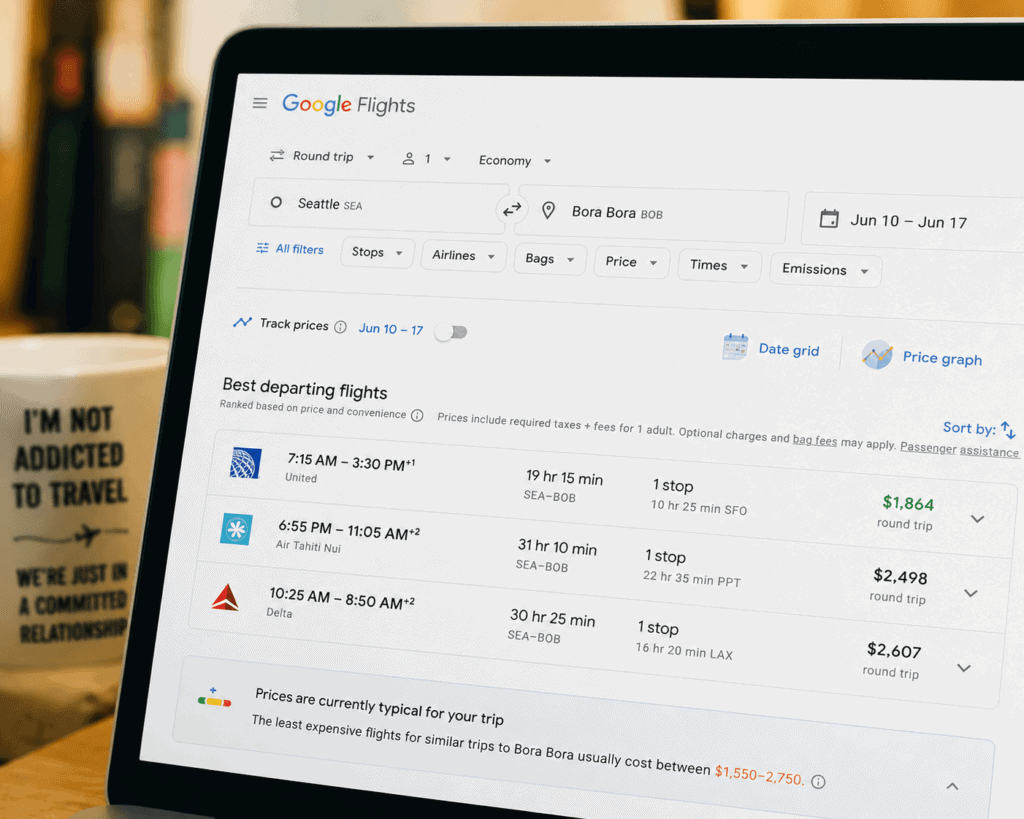
Here's something you won't read on most travel advisor websites: I am not the right fit for everyone. If you're booking a simple domestic trip, love the research process, or need a last-minute deal, you should probably just open Google Flights and go for it. This is the honest guide to when you actually need a travel advisor, and when you really, really don't.
Last updated: May 23, 2026 · Reading time: 9 minutes
I’m an travel advisor with 3 years of experience booking cruises, all-inclusive resorts, and international itineraries for families, couples, and groups. I’ve obtained more than 30 certifications in ocean and river cruises, European travel and bucket list travel.
The quick answer: You probably don’t need a travel agent if you’re booking a simple domestic trip, a single-destination weekend away, or a straightforward flight-and-hotel combo to somewhere you’ve been before. You almost certainly do need one if your trip has multiple moving parts, involves significant money, crosses international borders, or is the kind of trip you’ve been dreaming about for years and really cannot afford to get wrong.
Quick Reference: The Decision in Plain English
Simple domestic trip, one hotel: Book it yourself.
You love the research process: Book it yourself.
Last-minute, budget-focused: Book it yourself.
Repeat trip to a place you know cold: Book it yourself.
Multi-country itinerary, cruise, safari, or group travel: Use an advisor.
Honeymoon, milestone trip, or significant spend: Use an advisor.
Everything else: Depends on how much complexity is involved.
Now let me explain both of those in a way that’s actually useful.
Here’s something you probably didn’t expect to read on a travel advisor’s website: an honest guide to when not to use a travel agent, written by one.
I know. Revolutionary. But stay with me, because this might be the most useful thing you read before you book your next trip.
I’ve been a travel advisor long enough to know that the worst thing I can do for my business is take a client whose trip I’m not actually suited to help with. They end up frustrated. I end up frustrated. And somewhere in the middle, a perfectly good trip gets a bad reputation it doesn’t deserve.
So consider this your honest guide. The kind of guide I’d give a friend who grabbed coffee with me and said, “Okay, real talk. Do I actually need to hire you, or can I just do this myself?”
Sometimes the answer is: do it yourself. And I’ll tell you exactly when.
First, the Voice-Search Version (For Those of You Already Talking to Your Phone)
Do I need a travel agent for a simple trip?
Probably not. If your trip involves one destination, one hotel, and flights you can find on Google Flights in under ten minutes, you don’t need me.
Should I book online or use a travel agent?
It depends entirely on the complexity of your trip, your tolerance for logistics, and what’s at stake if something goes wrong.
Is it cheaper to use a travel agent?
Sometimes yes, sometimes neutral, rarely more expensive. But cost is often not the point. Time, expertise, and backup when things go sideways. That’s the point.
When is a travel agent worth it?
Multi-destination trips, international travel, honeymoons, group travel, river cruises, safari, all-inclusive resort bookings, and any trip where you’re spending real money on something you’ve been looking forward to for a long time.
Group travel is one of the clearest exceptions on that list, whether that’s a cruise, an all-inclusive resort, or a Missouri group trip to Branson or along Route 66. Our guide to working with a Missouri group travel specialist covers exactly why groups benefit from an advisor even when solo travelers might not.
Now let’s talk specifics.
Curious what an agent actually catches that you’d miss on your own? Our free guide, 10 Travel Mistakes a Travel Agent Helps You Avoid, is the honest version. Not a sales pitch. Just the stuff that goes wrong, and how to prevent it.
10 Travel Mistakes a Travel Agent Helps You Avoid
Grab it today!
Thank you!
Check your inbox for your guide to 10 Travel Mistakes a Travel Agent Helps You Avoid
DIY vs. Travel Agent: Which Fits Your Trip?
An honest breakdown — from a travel advisor who knows when she’s not the answer.
3+ countries, trains, hotels, logistics across time zones
High riskComplex to coordinate
Use an AdvisorWhere advisors shine
Safari or expedition travel
Africa, Antarctica, Galapagos, Patagonia
Skip
Use an AdvisorSpecialist knowledge essential
Honeymoon or milestone anniversary trip
High stakes, significant spend, non-refundable memories
High riskToo much to get wrong
Use an AdvisorWorth every penny
Group travel (6+ people)
Family reunion, girls trip, corporate offsite
Painful DIYGroup logistics multiply fast
Use an AdvisorSaves your sanity + the friendship
Book it yourself
Use a travel advisor
Either works
Adventures by MJ • Honest Travel Advice
Should I Use a Travel Agent?
A decision flowchart from an advisor who’ll tell you when to skip her.
START: Tell me about your trip.
Is this a simple domestic trip? (One destination, direct flight, hotel you can find on any booking site.)
Yes
💻
Book It Yourself
Open Google Flights. You’ve got this. No advisor needed.
No
Keep going…
Do you love researching travel? (Like, actually love it. Spreadsheets. Seventeen tabs. Strong opinions.)
Yes
🗺️
You Might Not Need One
You’ve basically done the advisor’s job already. Consider us for complex logistics only.
No
Keep going…
Does your trip involve any of these? Multiple countries. A cruise. A honeymoon. A group of 6+. Significant money. An itinerary you can’t afford to get wrong.
Yes
✈️
Use a Travel Advisor
This is exactly what we’re built for. Call one. Stop researching. Start looking forward to it.
No
One more question…
Is this a trip that really matters? (Anniversary. Bucket list. The trip you’ve been talking about for five years.)
Yes
🥂
Use a Travel Advisor
High stakes trips deserve expert backup. The memories are non-refundable.
No
🤷
Honestly? Either.
If it’s casual travel with low stakes, a booking site works fine. But if you hate the process, just call someone.
The Cheat Sheet: When It’s Worth the Call
River Cruise or SafariSpecialist knowledge matters enormously. Don’t DIY these.
Group of 6 or MoreGroup logistics are a full-time job. Let it be someone else’s.
Honeymoon or MilestoneThe stakes are too high to gamble on a booking algorithm.
3+ Countries, Many VendorsWhen something goes wrong at midnight, you want a pro on speed dial.
Weekend Domestic TripYou can do this yourself. Seriously. Open Google Flights.
Last-Minute Budget TravelAlgorithms beat advisors at finding short-window deals. Use Hopper.
When You Should NOT Use a Travel Agent
1. You’re Booking a Simple Domestic Trip
A direct flight to Nashville for a bachelorette weekend. A hotel in New York for two nights. A road trip you’re piecing together yourself. These are trips you can and should book on your own.
For straightforward domestic travel with a single destination and a simple logistics profile, the tools available to you: Google Flights, Booking.com, Hotels.com, the hotel’s own website, are excellent. You don’t need a middleman to book a Marriott in Chicago.
In fact, for truly simple trips, working with an advisor adds a step without adding much value. We’re not magicians. We can’t conjure a cheaper rate on a Tuesday night at a Hampton Inn that you couldn’t find yourself in three clicks.
Save yourself the emails. Book it yourself.
According to the U.S. Bureau of Labor Statistics, travel agents are most valuable for complex international itineraries, a useful benchmark for deciding when to call one and when to just open a new tab.
2. You Actually Love the Research
Some people find planning a trip to be genuinely fun. If you’re the person who has seventeen browser tabs open, a spreadsheet of hotel options, a color-coded Google Map of restaurants, and opinions about which neighborhood to stay in, you are not my target client, and that is a compliment.
The research-loving traveler often gets more out of planning their own trip than handing it off. The process is part of the joy. You know exactly what you want. You like finding it yourself. You’re going to fact-check everything I tell you anyway (also a compliment).
For you, a travel advisor adds friction, not value. You’ve done the homework. Trust yourself.
If that’s you, honestly, grab a Rick Steves guidebook and run with it . Yu’ve already done more research than most people who hire me.
If you’re the kind of person who’d also love a dedicated travel journal to go with it, I see you completely, and I respect it.
For simple domestic trips, Google Flights is genuinely your best friend. No advisor required.
3. Your Trip Is Last-Minute and Budget-Focused
If you’re looking to fly somewhere cheap next weekend, the algorithmic tools at your disposal are genuinely better than anything I can do for you in that timeframe. Google Flights’ price calendar, Hopper’s fare prediction, Scott’s Cheap Flights, these tools were built for exactly this kind of trip.
Last-minute budget travel is a volume and speed game. I can’t beat an algorithm at finding a $149 fare to Phoenix that appeared in the last four hours. I’m not meant to.
And while the algorithm handles your fare, a good set of packing cubes means you’re wheels-up in under an hour without the chaos.
4. You’re a Frequent Traveler With Points and Status Expertise
If you have a stack of credit card points, airline status on two carriers, hotel loyalty tiers you’ve cultivated for years, and a working knowledge of how to transfer points between programs, you have already built your own travel advisory system. It lives in your head and your wallet, and it probably works pretty well.
The loyalty points world is genuinely complex, and a great travel advisor who specializes in points optimization can help. But a generalist advisor who doesn’t live in that world is unlikely to squeeze more value out of your Chase Sapphire Reserve than you already know how to.
If points strategy is your thing, you’re better served by resources like The Points Guy, Upgraded Points, or a points-specialist advisor. Your generalist travel advisor (me, for example) is probably not your best resource here.
If you’ve been to Cabo four times, have a favorite resort, know the airport, know the transfer situation, and have a group chat with other people who’ve done this exact trip, you don’t need me. You are me, for this destination.
Repeat travelers to known destinations are well-served by booking direct or using platforms they trust. There’s genuine value in your own accumulated experience, and paying someone to replicate knowledge you already have is not a great use of money.
6. You’re Booking a Single All-Inclusive to a Resort You’ve Already Researched
But if you’ve already done three months of research, watched every YouTube review, read every TripAdvisor thread, joined the resort’s Facebook fan group (yes, those exist), and you are 100% certain you want the Barceló Maya Riviera in a junior suite, just book it. You’ve done the work. You don’t need to pay someone to confirm what you already know.
Worth noting: ASTA research consistently shows travel advisors add the most measurable value on complex trips, which tells you something about where the threshold is.
If you’re still in the comparison phase rather than the “I’ve decided” phase, our honest breakdown of Cancun vs Punta Cana vs Jamaica might be the last tab you need before you commit.
Okay. Now When SHOULD You Use One?
Since I just spent 900 words talking myself out of a sale, let me flip it.
You should absolutely use a travel advisor when:
Your trip has real complexity.
Multi-country Europe itinerary. A safari. A river cruise. A honeymoon that involves flights, transfers, multiple hotels, and a lot of moving parts. This is where we genuinely earn our keep, because coordinating multiple vendors across time zones is exactly the kind of thing that goes sideways at 11 PM on a Tuesday when you’re trying to do it yourself.
If you’re weighing your Europe options and haven’t landed on a format yet, river cruise vs guided land tour is worth reading before you make any calls.
While you’re at it, a solid RFID travel wallet is one of those things every international traveler should have regardless of who booked the trip.
Money is on the line.
If you’re spending $8,000 on a vacation, the cost of a potential mistake is significant. A travel advisor is your backup. We troubleshoot, we rebook, we call the hotel directly and escalate in ways that an app simply cannot. According to the American Society of Travel Advisors, travelers who work with advisors report significantly higher satisfaction rates on premium trips, in large part because when something goes wrong, someone who knows the industry is already on it.
You want access, not just availability.
Perks. Upgrades. Preferred amenity packages. Early check-in. Room category knowledge. A good advisor has relationships with properties that translate into tangible benefits for you. Booking direct gets you a confirmation number. Booking through an advisor sometimes gets you champagne and a better view.
This trip matters.
Honeymoon. Anniversary trip. 50th birthday. The trip you’ve been saving for and talking about for years. When the stakes are high and the memories are non-refundable, having someone in your corner who will fight for your trip if anything goes sideways is worth every penny.
If a honeymoon is what you’re planning, the best honeymoon destinations for 2026 breaks down the cruise vs all-inclusive vs custom tour decision so you’re not starting from scratch.
If you want the full affirmative case, the specific scenarios where an advisor makes a measurable difference, trips that are better with a travel agent is the logical next read.
The U.S. Travel Association’s annual research consistently shows that travelers who invest in professional planning see better satisfaction outcomes, especially on leisure trips above $5,000.
Finding the right one matters as much as deciding to use one. Look for an advisor who specializes in your trip type, asks more questions than they answer in the first conversation, and is transparent about how they’re compensated before you commit.
Complex trips — multiple countries, cruises, honeymoons, group travel — are where a good advisor genuinely earns it.
The Honest Summary: Travel Agent vs. Booking Online
The travel agent vs. booking online debate isn’t actually a debate; it’s a decision that should be made trip by trip, not once as a life philosophy. For simple, familiar, last-minute, or budget-focused travel, online tools are genuinely excellent and you should use them. For complex, international, high-stakes, or once-in-a-lifetime trips, the combination of expertise, access, and backup that a good travel advisor brings is hard to replicate with a booking platform.
The real question isn’t “should I use a travel agent?” The real question is “what kind of trip is this?” Answer that, and the rest usually sorts itself out.
DIY vs. Travel Agent: Which Fits Your Trip?
An honest breakdown — from a travel advisor who knows when she’s not the answer.
3+ countries, trains, hotels, logistics across time zones
High riskComplex to coordinate
Use an AdvisorWhere advisors shine
Safari or expedition travel
Africa, Antarctica, Galapagos, Patagonia
Skip
Use an AdvisorSpecialist knowledge essential
Honeymoon or milestone anniversary trip
High stakes, significant spend, non-refundable memories
High riskToo much to get wrong
Use an AdvisorWorth every penny
Group travel (6+ people)
Family reunion, girls trip, corporate offsite
Painful DIYGroup logistics multiply fast
Use an AdvisorSaves your sanity + the friendship
Book it yourself
Use a travel advisor
Either works
River cruises, safaris, multi-country itineraries — these are the trips where having someone in your corner actually changes the experience.
Adventures by MJ • Honest Travel Advice
Should I Use a Travel Agent?
A decision flowchart from an advisor who’ll tell you when to skip her.
START: Tell me about your trip.
Is this a simple domestic trip? (One destination, direct flight, hotel you can find on any booking site.)
Yes
💻
Book It Yourself
Open Google Flights. You’ve got this. No advisor needed.
No
Keep going…
Do you love researching travel? (Like, actually love it. Spreadsheets. Seventeen tabs. Strong opinions.)
Yes
🗺️
You Might Not Need One
You’ve basically done the advisor’s job already. Consider us for complex logistics only.
No
Keep going…
Does your trip involve any of these? Multiple countries. A cruise. A honeymoon. A group of 6+. Significant money. An itinerary you can’t afford to get wrong.
Yes
✈️
Use a Travel Advisor
This is exactly what we’re built for. Call one. Stop researching. Start looking forward to it.
No
One more question…
Is this a trip that really matters? (Anniversary. Bucket list. The trip you’ve been talking about for five years.)
Yes
🥂
Use a Travel Advisor
High stakes trips deserve expert backup. The memories are non-refundable.
No
🤷
Honestly? Either.
If it’s casual travel with low stakes, a booking site works fine. But if you hate the process, just call someone.
The Cheat Sheet: When It’s Worth the Call
River Cruise or SafariSpecialist knowledge matters enormously. Don’t DIY these.
Group of 6 or MoreGroup logistics are a full-time job. Let it be someone else’s.
Honeymoon or MilestoneThe stakes are too high to gamble on a booking algorithm.
3+ Countries, Many VendorsWhen something goes wrong at midnight, you want a pro on speed dial.
Weekend Domestic TripYou can do this yourself. Seriously. Open Google Flights.
Last-Minute Budget TravelAlgorithms beat advisors at finding short-window deals. Use Hopper.
Frequently Asked Questions
Is it cheaper to book through a travel agent or online?
The honest answer: it depends, and cost is often not the main variable. Travel advisors sometimes have access to rates, perks, or package deals that aren’t available online, and in those cases booking through an advisor is both cheaper and better. In many cases the cost is neutral; you’re not paying more, but you’re getting expertise, time savings, and backup support. Where advisors are rarely competitive is on last-minute budget fares, where algorithms genuinely win.
Do travel agents charge fees?
Some do, some don’t. Fee structures vary widely. Some advisors charge a flat planning fee, some are compensated through supplier commissions, and some use a hybrid model. The trend in the industry is toward transparent fee structures, especially for complex itineraries. If you’re not sure, just ask upfront. A good advisor will tell you exactly how they’re compensated before you commit to anything. At Adventures by MJ, we do not charge a planning fee.
Can a travel agent get me a better deal than booking direct?
Sometimes, yes, especially on cruise lines, all-inclusive resorts, and tour operators who offer advisor-exclusive perks like onboard credit, room upgrades, or complimentary amenity packages. For flights, the pricing is usually the same. The “deal” with a good travel advisor is often less about price and more about access to benefits and the safety net they provide when things go sideways.
What’s the difference between a travel agent and a travel advisor?
Mostly branding, though “travel advisor” has become the preferred term because it more accurately reflects what the job actually involves. A travel advisor is less “booking person” and more “strategic partner who knows the industry, has relationships with suppliers, and is accountable for your trip experience.” The title shift reflects a genuine shift in how the role is practiced, away from transaction, toward expertise.
Do I need a travel agent for international travel?
Not always, but the case for using one gets stronger as international complexity increases. A direct flight to London with a hotel in the West End? You can book that yourself. A three-week trip through Southeast Asia involving six cities, multiple airlines, a train segment, and a variety of accommodation types? Yes. That’s exactly where an advisor earns the engagement.
And regardless of who planned your trip, do yourself a favor and travel with a luggage scale international overweight fees have humbled better travelers than either of us.
What happens if something goes wrong when I booked on my own?
You are your own support team. Which is completely fine for simple trips; a quick call to the airline or hotel and most issues resolve. The risk increases with trip complexity. When a multi-leg international itinerary starts to unravel (delayed flight causes a missed connection causes a missed tour causes a night in the wrong city), having a professional in your corner who can work multiple phones simultaneously and who the suppliers actually know, that’s where the value of an advisor becomes extremely concrete, extremely fast.
Almost always yes, and this is one of the clearest cases. Cruise lines are complex products with a lot of variables: cabin category, dining, excursions, loyalty programs, group rates, onboard credit, travel insurance, and travel advisors who specialize in cruises have both the knowledge and the supplier relationships to navigate all of it better than a first-time buyer. The cruise lines themselves often give advisors perks to pass along to clients that aren’t available when booking direct.
How do I know if a travel agent is worth it?
Ask yourself two questions: Is my trip complex enough that a mistake would be costly or stressful to fix? And do I genuinely have the time and expertise to research it properly? If the answer to either is yes, an advisor is probably worth it. If you’re booking something simple, familiar, or last-minute, the honest answer is that you probably don’t need one.
Final Thoughts
I built my business on honesty, which means sometimes that honesty includes telling you that you don’t need me. A simple trip is a simple trip. Do it yourself, save yourself the back-and-forth, and use the time you would have spent in my inbox to actually look forward to your vacation.
But when your trip is the kind that keeps you up at night wondering if you got it right, when the itinerary has more pieces than you can comfortably hold in your head, when it’s the trip you’ve been saving for, when getting it wrong isn’t an option, that’s when you call someone like me.
Not because I’ll do it cheaper. Not because I’ll do it faster. Because I’ll do it in a way where you can stop worrying about it, which is honestly the whole point of a vacation in the first place.
Want the flip side? Our free guide covers the 10 travel mistakes a good agent catches before they cost you, whether you hire one or not.
10 Travel Mistakes a Travel Agent Helps You Avoid
Grab it today!
Thank you!
Check your inbox for your guide to 10 Travel Mistakes a Travel Agent Helps You Avoid
Thinking about a trip that might actually need an expert in your corner? Tell me a little about what you’re dreaming up, and I’ll give you an honest assessment of whether I can genuinely help, or whether you should just open Google Flights and go for it.
Affiliate Disclosure: This post may contain affiliate links. If you make a purchase through one of these links, we may earn a commission at no additional cost to you. We only recommend products and services we believe may be helpful to travelers.
Hi, I'm Sue. I plan cruises, all-inclusive resorts, and slow multi-country trips through Europe, and I'm a member of the Travel Leaders Network. Twenty years in senior HR leadership before this, which mostly taught me how to read what people actually want. I live in Grain Valley, Missouri with my husband and business partner Mike.