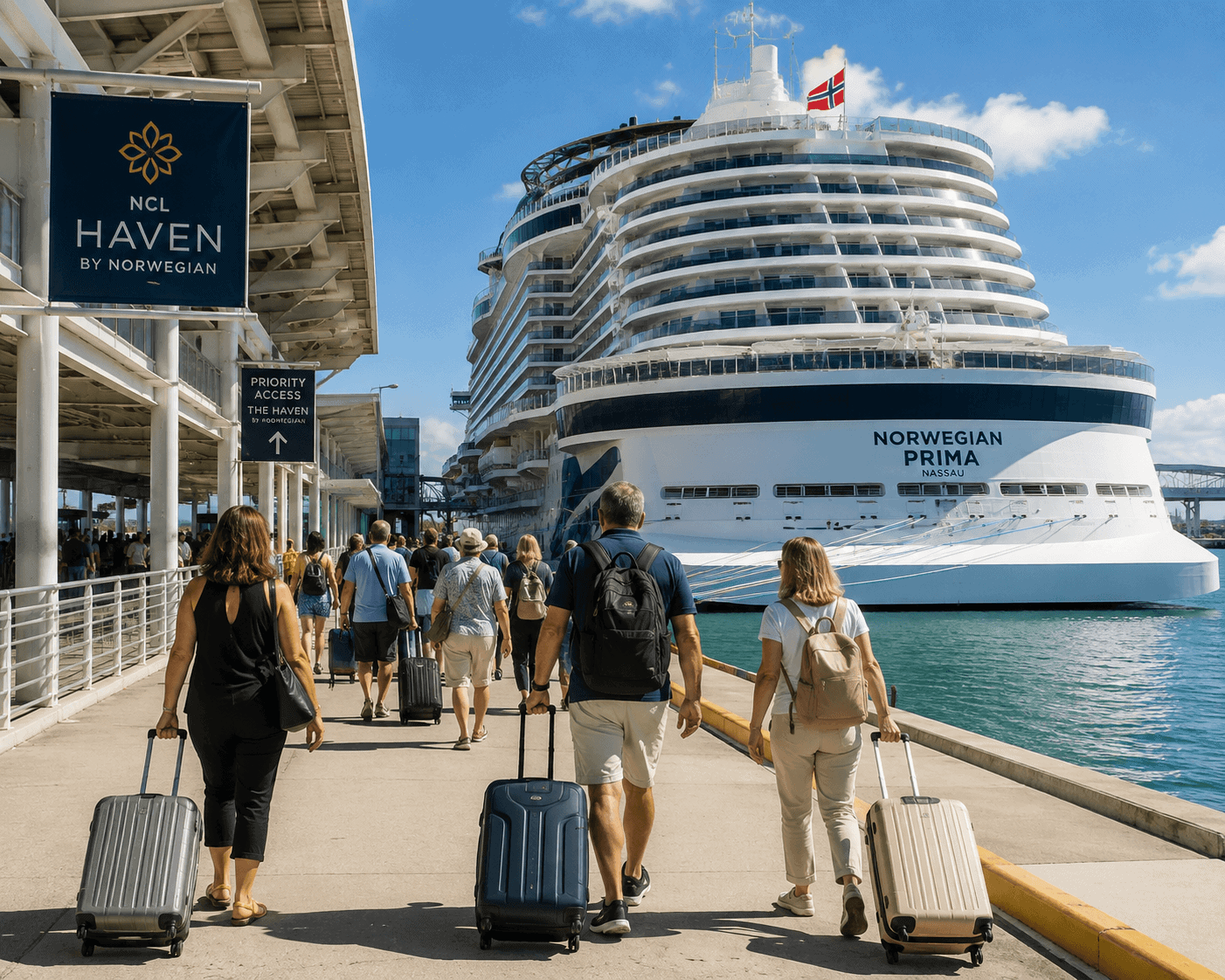
Do I Need a Passport? 2026–2027 Rules by Destination (Cruises, Mexico, Caribbean, Europe & More)
Do you need a passport for your trip? For Hawaii, Puerto Rico and closed-loop cruises, legally no. For everything else, yes. Here is the destination-by-destination breakdown for 2026, straight from State Department and CBP sources, plus the one scenario that convinces almost every client to bring the passport anyway.
Last updated: August 15, 2026 :: Reviewed by Sue Nelson, Travel Advisor
Do I need a passport? For most international air travel, yes. You can skip it for Hawaii, Puerto Rico, and the U.S. Virgin Islands, and you can legally board a closed-loop cruise with a birth certificate and photo ID. But the U.S. State Department still recommends carrying a passport book on every cruise, and after twenty years of getting people home from places they did not plan to be, so do I.
Key Takeaways: Passport Requirements by Destination
U.S. citizens do not need a passport for Hawaii, Puerto Rico, the U.S. Virgin Islands, Guam, or the Northern Mariana Islands. They are all U.S. soil.
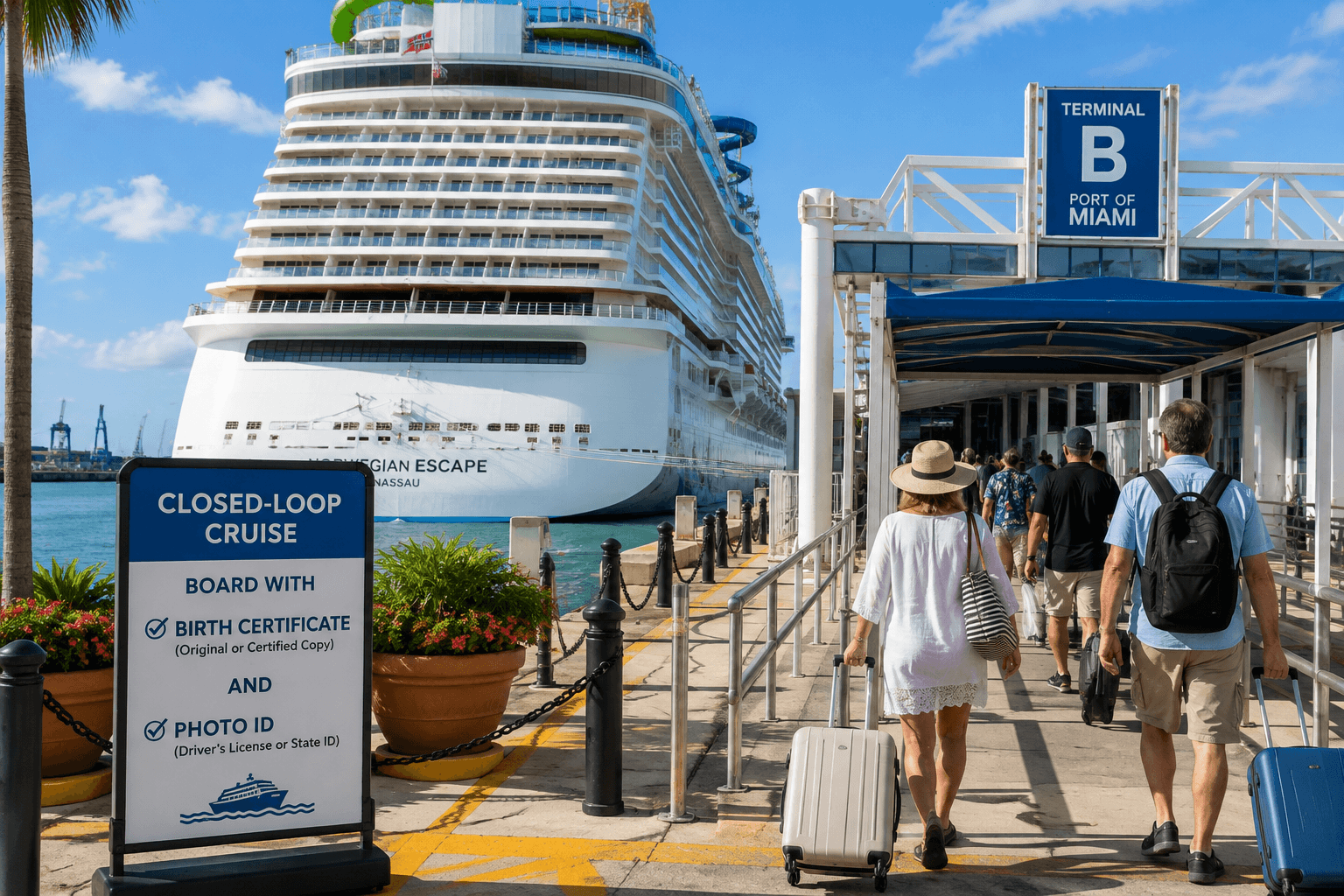
Closed-loop cruises (same U.S. port out, same U.S. port back) legally allow a certified birth certificate plus government-issued photo ID.
The State Department “strongly recommend[s] all cruise passengers travel with a passport book, even if not required by the cruise line.”
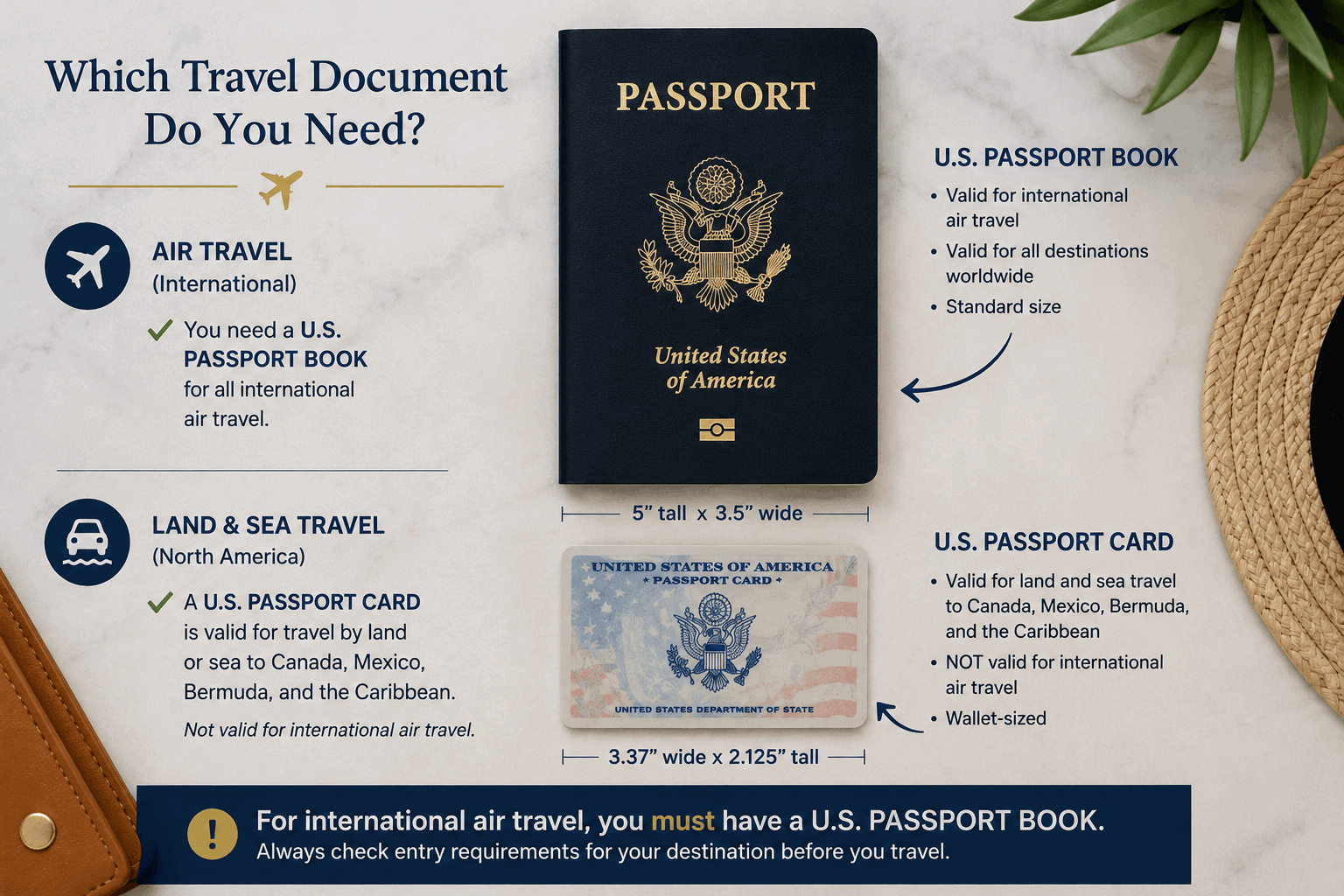
A passport card works at land and sea borders only. It will not fly you home from Cozumel.
Routine passport processing is 4 to 6 weeks, expedited is 2 to 3 weeks, and mailing adds up to 2 more weeks in each direction.
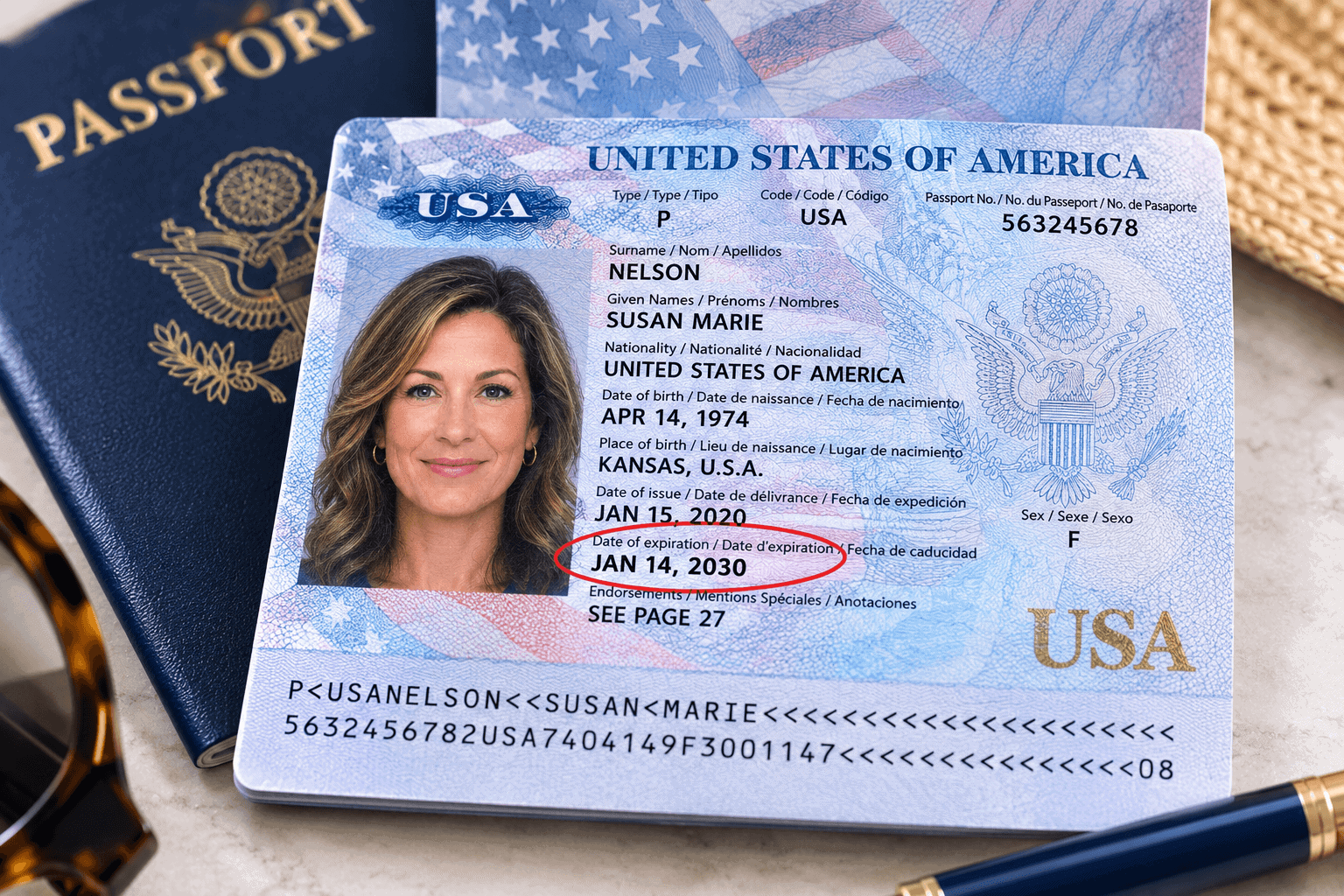
Many countries require your passport to stay valid for six months beyond your travel dates.
ETIAS for Europe has not launched yet, and as of July 2026 the EU pulled its target date from its own website.
All fees, processing times, and entry requirements in this guide were verified against travel.state.gov, cbp.gov, and dhs.gov on August 15, 2026. Requirements change, so confirm before you travel.
Every single week, someone asks me a version of the same question: do I need a passport for this trip? It usually arrives about nine days before departure, in a text message, with the energy of a person who has just realized something. I love those texts. I also wish they came sooner.
Here is the thing nobody tells you. “Do you need a passport” and “should you bring a passport” are two completely different questions, and the internet keeps answering only the first one. This guide answers both, destination by destination, with the actual government sources so you are not taking a stranger’s word for it.
Grab your coffee. This is the version I wish every client read before booking.
Voice Search: Quick Passport Answers
Do I need a passport to go on a cruise?
Not always. If your cruise leaves from a U.S. port and returns to that same U.S. port, you can board with a certified birth certificate and a government-issued photo ID. That is called a closed-loop cruise. A passport book is still the smarter choice, and I explain why below.
Do I need a passport for Hawaii?
No. Hawaii is a U.S. state, so U.S. citizens fly there with the same identification they use to fly to Denver. You will need a REAL ID compliant license or another TSA-approved ID at the airport.
Do I need a passport for Puerto Rico?
No. Puerto Rico is a U.S. territory, so U.S. citizens do not need a passport to travel there. Bring your REAL ID or passport for the TSA checkpoint and you are set.
Can I use a birth certificate instead of a passport?
How long does it take to get a passport right now?
Routine service takes 4 to 6 weeks and expedited takes 2 to 3 weeks, according to the U.S. State Department. Mailing time is separate and can add up to two weeks on each end. Plan on about ten weeks if you are using routine service.
Will I need ETIAS to visit Europe?
Eventually, yes, but not yet. ETIAS has been delayed repeatedly, and in July 2026 the EU removed its target launch date from its own website. Check before you book, because this one is genuinely moving.
Do I need my passport for a Bahamas cruise from Miami?
Not legally. A Miami round-trip to the Bahamas is a closed-loop cruise, so a certified birth certificate and photo ID will get you aboard. Bring the passport book anyway if you have one.
How much does a passport cost right now?
An adult passport book costs $130 plus a $35 execution fee for first-time applicants. A child’s book is $100 plus the same $35 fee. Expedited service adds $60.
Where can I get a passport near me?
Most first-time applicants apply in person at a passport acceptance facility, usually a post office, library, or county clerk’s office. Use the State Department’s facility search to find the closest one and book an appointment early.
The Short Answer: When You Legally Need a Passport
Here is the fast version. Find your destination, check your column, then read the section below it for the part the table cannot tell you.
Do I Need a Passport? Quick Answer by Destination
U.S. citizens, 2026. Flying versus arriving on a closed-loop cruise.
Destination
Flying There
Closed-Loop Cruise
Alaska
Not required
Not required
Antigua
Passport book
Birth cert + ID
Aruba
Passport book
Birth cert + ID
Bahamas
Passport book
Birth cert + ID
Barbados
Passport book
Birth cert + ID
Belize
Passport book
Birth cert + ID
Bermuda
Passport book
Birth cert + ID
British Virgin Islands
Passport book
Birth cert + ID
Canada
Passport book
Birth cert + ID
Cayman Islands
Passport book
Birth cert + ID
Costa Rica
Passport book
Birth cert + ID
Dominican Republic (Punta Cana)
Passport book
Birth cert + ID
Europe (Schengen countries)
Passport book
Passport book
Guam
Not required
Not required
Hawaii
Not required
Not required
Honduras (Roatan)
Passport book
Birth cert + ID
Jamaica
Passport book
Birth cert + ID
Mexico (Cancun, Cabo, Cozumel)
Passport book
Birth cert + ID
Northern Mariana Islands
Not required
Not required
Puerto Rico
Not required
Not required
St. Maarten
Passport book
Birth cert + ID
Turks and Caicos
Passport book
Birth cert + ID
United Kingdom
Passport book
Passport book
U.S. Virgin Islands
Not required
Not required
Two things this table cannot do for you. It cannot account for a cruise line that is stricter than the government, and it cannot get you on a flight home if you leave the ship unexpectedly. Where a column says “Birth cert + ID,” that is what the law allows, not what an experienced advisor recommends.
Sources: U.S. Department of State and U.S. Customs and Border Protection. Verified August 2026. Entry requirements change, so confirm before you travel.Want your specific itinerary checked? Get in touch.
Let us clear the fog. There are really only three categories, and once you know which one your trip falls into, the answer stops being complicated.
Where You Do Not Need One at All
If you never leave U.S. soil, you never need a passport. That includes Hawaii, Alaska, Puerto Rico, the U.S. Virgin Islands, Guam, and the Northern Mariana Islands. You still need TSA-acceptable identification to fly, but that is a different conversation, and we will get to it.
The one asterisk in that list is American Samoa, which sits outside the standard U.S. immigration zone. U.S. citizens need proof of citizenship and photo identification to enter, and honestly, just bring the passport.
Where You Absolutely Need One
Any time you fly into or out of a foreign country, you need a passport book. Full stop. Mexico by air, Jamaica by air, Canada by air, all of Europe, all of Asia. There is no clever workaround, no card version, no “but my cousin got through with a birth certificate in 2004.” Those days ended with the Western Hemisphere Travel Initiative.
The Gray Zone: Closed-Loop Cruises
This is where almost all the confusion lives, and it deserves its own section. Keep reading.
Do I Need a Passport for a Cruise?
Legally, often no. Practically, please yes. Let me show you both sides so you can make the call yourself.
What Is a Closed-Loop Cruise?
The Western Hemisphere Travel Initiative is the federal rule that sets which documents U.S. citizens need when entering the country from Canada, Mexico, the Caribbean, and Bermuda.
A closed-loop cruise begins and ends at the same U.S. port. Miami to the Caribbean and back to Miami. Seattle to Alaska and back to Seattle. Galveston to Cozumel and back to Galveston.
The same rule applies out of Port Canaveral, Fort Lauderdale, Galveston, New Orleans, Mobile, Baltimore, Bayonne, Tampa, and Los Angeles. If the ship returns you to the pier you left from, it is closed-loop.
The official Department of Homeland Security fact sheet on the Western Hemisphere Travel Initiative puts it plainly:
“U.S. citizens on closed-loop cruises (cruises that begin and end at the same U.S. port) are able to enter the United States with a birth certificate and government-issued photo ID.”
If your cruise starts in one port and ends in another, say Los Angeles to Vancouver, it is an open-jaw sailing and everyone on board needs a passport book. No exceptions.
Can I Cruise With Just a Birth Certificate?
On a closed-loop sailing, yes. It has to be a certified copy issued by a government agency, with a raised seal or an official registrar stamp. The souvenir certificate from the hospital with your baby footprints on it is precious, and it is not a legal document.
Pair it with a government-issued photo ID, typically your driver’s license. If your current legal name does not match the name on your birth certificate, bring the paperwork that connects the two, such as a marriage certificate or a court-ordered name change.
Do Kids Need a Passport for a Cruise?
Children under 16 get the easiest treatment in the entire system. The same DHS fact sheet states:
“U.S. and Canadian citizen children under the age of 16 (or under 19, if traveling with a school, religious group, or other youth group) need only present a birth certificate or other proof of citizenship.”
That means no photo ID required for the little ones on a closed-loop sailing, just proof of citizenship. Teenagers 16 and up follow the adult rules.
Caribbean Cruises
Nearly every Caribbean and Bahamas cruise out of Florida, Texas, or New Orleans is closed-loop, so the birth certificate route is legal. That covers most sailings on our best Caribbean cruise itineraries for 2027 roundup.
A few private island and port days have their own quirks, and some cruise lines simply require a passport regardless of what the government allows. Always read your line’s documentation page, because the cruise line can be stricter than CBP.
One caution that applies across the board: Carnival, Royal Caribbean, Norwegian, Princess, and Disney each publish their own documentation requirements, and a cruise line is always free to be stricter than the government. Check your specific line’s document page after you book, not the week you sail.
Bahamas Cruises
Nearly every Bahamas cruise out of Miami, Fort Lauderdale, Port Canaveral, or Jacksonville is closed-loop, so a certified birth certificate and photo ID will legally get you aboard. The Bahamas sits about fifty miles off Florida, which fools people into treating it like a domestic trip. It is a sovereign country, and if you fly there instead of sailing, you need a passport book.
Private island stops such as CocoCay, Half Moon Cay, Great Stirrup Cay, and Ocean Cay are all Bahamian territory, and they are covered by your cruise documents. You do not need anything extra for a beach day.
Alaska Cruises
Round-trip Alaska sailings from Seattle are closed-loop, even though most of them call at Victoria or another Canadian port. Round-trip from Vancouver, or one-way between Vancouver and Anchorage, requires a passport book for every person in your party.
This trips up families constantly. If you are sailing with kids, our guide to taking an Alaska cruise with kids walks through the document checklist alongside everything else you will want packed.
Mediterranean and European Cruises
Everybody needs a passport book. You are flying to Europe to reach the ship, and that alone settles it. Add the six-month validity rule discussed below, and you want to check your expiration date the day you book, not the week you sail. Our Mediterranean cruise itineraries for 2027 guide has more on choosing between the eastern and western routes.
Which Travel Document Actually Works?
U.S. citizens, 2026. What each document gets you and where it stops.
What you want to do
Passport Book
Passport Card
Birth Certificate + Photo ID
Enhanced Driver’s License
Board a closed-loop cruise
Yes
Yes
Yes
Yes
Board a one-way or foreign-port cruise
Yes
No
No
No
Fly internationally
Yes
No
No
No
Fly home in an emergency from a foreign port
Yes
No
No
No
Drive into Canada or Mexico and back
Yes
Yes
Limited
Yes
Clear TSA for a domestic flight
Yes
Yes
ID only
Yes
Travel to Hawaii, Puerto Rico or the USVI
Yes
Yes
ID only
Yes
Adult cost, first-time applicant
$130 + $35
$30 + $35
Varies by state
5 states only
Read the fine print
Closed-loop means the cruise departs and returns to the same U.S. port.
Birth certificates must be certified government-issued copies, not hospital souvenir certificates.
Children under 16 on closed-loop cruises need proof of citizenship only, no photo ID.
Enhanced Driver’s Licenses are issued only by Michigan, Minnesota, New York, Vermont and Washington.
Cruise lines may require more than the government does. Always check your line’s documentation page.
Short answer: A closed-loop cruise legally allows a certified birth certificate and photo ID, but the U.S. State Department recommends a passport book on every cruise.
Why I Tell Every Client to Bring a Passport Anyway
Here is the part that separates a legal answer from good advice. The closed-loop rule tells you how to get on the ship. It says absolutely nothing about how you get home if the ship leaves without you.
And I am not being dramatic here. This is the State Department’s own position, not mine.
The Medical Emergency Scenario
Straight from the U.S. State Department’s cruise ship travel page:
“If you cannot be discharged before the cruise ship is scheduled to depart, the cruise ship may leave without you. In this case, you would need a U.S. passport book to fly home.”
Picture it. You are in a clinic in Roatán with a broken wrist, the ship has sailed, and you are holding a birth certificate that cannot get you on an airplane. Now you are applying for an emergency passport at a U.S. embassy while your luggage sails toward Belize.
The Missed Ship Scenario
Ships also break. The same State Department page notes:
“Sometimes cruise ships have mechanical issues that cannot be fixed during a trip. In these cases, you might need to go ashore in a country that requires a passport.”
And then there is the classic: the excursion you booked independently that ran long, and the ship that did not wait. It happens more than the brochures suggest.
The State Department’s bottom line is unambiguous:
“We strongly recommend all cruise passengers travel with a passport book, even if not required by the cruise line, in case you need to fly home because of an emergency.”
That is a $130 insurance policy that lasts ten years. I have watched clients spend far more than that on a single specialty dinner. This is the kind of thing I catch during a booking review, and it is one of several reasons working with an advisor pays for itself.
Short answer: A birth certificate can board a ship but cannot board a flight home, which is the entire reason to carry a passport book.
U.S. Destinations Where You Do Not Need a Passport
Let us make this section easy to skim, because these are the questions I get most.
Puerto Rico
No passport required. Puerto Rico is a U.S. territory, and U.S. citizens travel there exactly as they would travel to Florida. You will need TSA-acceptable identification at the airport, but that is it.
Hawaii
No passport required. Hawaii has been a state since 1959, and flying there is a domestic flight, however long it feels somewhere over hour five. Bring your REAL ID compliant license or your passport for TSA.
U.S. Virgin Islands, Guam and the Northern Marianas
No passport required for U.S. citizens. St. Thomas, St. John, and St. Croix are all U.S. territory, which is exactly why the USVI is such an easy first “tropical” trip for families who have not sorted out passports yet. Guam and the Northern Mariana Islands follow the same rule.
One caution: if your Caribbean itinerary hops from the USVI to the British Virgin Islands, that is a different country, and you need a passport for it.
Short answer: U.S. citizens need no passport for Hawaii, Alaska, Puerto Rico, the U.S. Virgin Islands, Guam, or the Northern Mariana Islands.
Mexico, the Caribbean and Central America
Mexico by Air
Passport book required. Every time. If you are flying into Cancún, Cabo, or Puerto Vallarta, there is no alternative document that works, and this catches people who remember the pre-2009 rules. Our roundup of Mexico’s best all-inclusive resorts for 2027 assumes everyone in your party is passport-ready.
Punta Cana and the Dominican Republic
Passport book required for air travel. The Dominican Republic is a sovereign country, so the “it feels like a domestic beach trip” logic does not apply. If Punta Cana is on your list, check every passport expiration date in the family before you put down a deposit, then browse our Punta Cana all-inclusive resort picks for 2027.
Jamaica
Passport book required by air. If you reach Jamaica on a closed-loop cruise, the birth certificate rule applies for boarding, though you should re-read the section above about flying home before you decide that is a good idea.
Canada by Land, Sea and Air
An Enhanced Driver’s License is a state-issued license that also proves U.S. citizenship at land and sea borders.
Flying to Canada requires a passport book, same as anywhere else. Driving or arriving by sea gives you more options.
At land and sea ports of entry, U.S. citizens can present a passport book, a passport card, an Enhanced Driver’s License, or a trusted traveler card such as NEXUS, SENTRI, or FAST. Enhanced Driver’s Licenses are the underrated option here, though the Department of Homeland Security notes they are “currently only available to residents of the following states: Michigan, Minnesota, New York, Vermont, Washington.”
If you live in Missouri like I do, that list is a lovely piece of trivia and nothing more. Get the passport.
Europe and the New ETIAS Rule
ETIAS is a pre-travel authorization that visa-exempt visitors, including U.S. citizens, will need to enter most European countries.
You have probably seen headlines announcing that Americans now need special permission to visit Europe. Here is the accurate version as of August 15, 2026.
ETIAS, the European Travel Information and Authorisation System, is a pre-travel authorization for visa-exempt visitors including U.S. citizens. It has been delayed repeatedly. The most recent guidance pointed toward a rollout in the last quarter of 2026, followed by a six-month transitional period during which travelers can still enter without it, and then a further grace period. In July 2026, the EU removed the target launch date from its own website entirely.
So: not required today, likely required eventually, and worth a five-minute check on the official EU ETIAS page before any European trip. Be careful out there, because several of the top-ranking ETIAS websites are commercial services, not the EU. If a site wants money before ETIAS has even launched, close the tab.
Separately, the EU’s Entry/Exit System is already live and rolling out at border crossings. It is a biometric registration handled at the border, not something you apply for in advance, so it does not change what you need to pack.
Passport Book vs Passport Card: Which Do You Actually Need?
The passport card is $30 for adults instead of $130, which makes it wildly tempting. It is also the single most misunderstood travel document in America.
The State Department is direct about the limitation:
“You can use a U.S. passport card to reenter the United States at seaports of entry from Mexico, Canada, Bermuda, and the Caribbean.”
And then, immediately:
“if you cannot return on the cruise ship and need to fly back to the United States for any reason, you will need a passport book.”
Read that twice. The card gets you across a land border and back onto a ship. It cannot put you on an airplane home. For $100 more, the book does everything the card does, plus international air travel, plus every country on earth.
My honest recommendation: get the book. If you cross the Canadian or Mexican land border often, get both, which costs $160 for adults and saves you carrying the book on quick trips.
Do I Need a Passport?
Find your trip. Get your answer. U.S. citizens, 2026.
No Passport Required
You Never Leave U.S. Soil
Hawaii
Alaska (by air or land)
Puerto Rico
U.S. Virgin Islands
Guam and the Northern Marianas
You still need TSA-acceptable ID, such as a REAL ID compliant license.
Legal Without One, But Bring It
Closed-Loop Cruises
Round-trip Caribbean from Florida or Texas
Round-trip Bahamas
Round-trip Alaska from Seattle
Round-trip Mexico from California
Certified birth certificate plus photo ID is legal. A passport book is the only thing that flies you home if the ship leaves without you.
Passport Book Required
Any International Flight
Mexico, Jamaica, Dominican Republic
All of Europe
Canada by air
One-way and repositioning cruises
Mediterranean and European sailings
No card, no birth certificate, no exceptions.
Three Things to Check Before You Book
1
Expiration date. Many countries require six months of validity beyond your entry date.
2
Everyone’s passport. Kids’ passports last five years, not ten. Check every one.
3
Your timeline. Routine is 4 to 6 weeks, expedited is 2 to 3, and mailing adds up to 2 more each way.
“We strongly recommend all cruise passengers travel with a passport book, even if not required by the cruise line, in case you need to fly home because of an emergency.”
U.S. Department of State, Cruise Ship Travel, updated June 10, 2026
Sources: U.S. Department of State, U.S. Customs and Border Protection, U.S. Department of Homeland Security. Verified August 2026. Rules change, so confirm before you travel.
Not sure what your itinerary needs? Let’s sort it out.
Short answer: A U.S. passport card works only at land and sea borders, while a passport book works for international air travel worldwide.
REAL ID, the $45 TSA Fee, and Why Your Passport Just Got More Useful
A REAL ID is a state-issued license or ID that meets federal security standards and is marked with a star in the upper corner.
No, a passport is not required for domestic flights, but it is one of the easiest ways to satisfy TSA if your license is not REAL ID compliant. Here is how that works in 2026.
REAL ID enforcement is live at TSA checkpoints, and there is a 2026 wrinkle most people have not caught up with. As of February 1, 2026, travelers who show up without REAL ID compliant identification can be routed through TSA’s ConfirmID process, which carries a $45 fee and a receipt valid for ten days.
A valid U.S. passport book or passport card is on TSA’s list of acceptable identification, which means your passport doubles as your REAL ID backup. If your license renewal is stuck in a queue somewhere, the passport in your drawer solves the problem.
Confirm current requirements at TSA’s REAL ID page before you fly, since this policy has moved more than once.
The Six-Month Rule Nobody Warns You About
This is the one that ruins vacations, and it is entirely preventable.
Many countries will not admit you unless your passport remains valid for at least six months beyond your entry date. Some require three months. A handful only require validity through your stay. Airlines enforce these rules at check-in, which means you can be denied boarding in Kansas City for a passport that does not technically expire until next spring.
Do this today, not in March. Open the drawer, find every passport in the house, and write the expiration dates on your calendar. If any of them expire within nine months of your travel date, start the renewal now.
Some countries also require blank pages, typically one to two, for entry stamps. If your passport is nearly full, renew early.
Short answer: Many countries require a passport valid for at least six months beyond your entry date, and airlines enforce this at check-in.
According to the U.S. State Department, routine processing takes 4 to 6 weeks and expedited processing takes 2 to 3 weeks. Mailing time is separate and is not included in those estimates. Applications can take up to two weeks to reach the agency, and another two weeks to come back to you.
Do the math on routine service and you are looking at roughly ten weeks door to door. For urgent travel within 14 days, you need an in-person appointment at a passport agency with proof of your international travel.
The State Department itself recommends applying between October and December, because late winter through summer is peak season. Translation: apply in the fall, when everyone else is thinking about pumpkin bread instead of Portugal.
Children’s passports are valid for five years, not ten. If your youngest got a passport for a cruise in 2021, it has already expired.
Where to Apply Near Kansas City
Most first-time applicants have to apply in person at a passport acceptance facility, and in the Kansas City metro that usually means a post office, a county clerk’s office, or a public library. Appointments are required at most locations and they book up in spring, which is exactly when everyone realizes their summer trip is real.
Use the State Department’s facility search to find the closest one and check current appointment availability before you drive anywhere. If you are also planning the trip itself, our guide to family vacations from Kansas City covers what departs easily from MCI.
Short answer: Routine U.S. passport processing takes 4 to 6 weeks and expedited takes 2 to 3 weeks, plus up to 2 weeks of mailing each direction.
My Passport Will Not Arrive in Time. What Now?
First, breathe. You have more options than you think, and I have watched all of them work.
Book an Urgent Travel Appointment
If you are traveling internationally within 14 calendar days, you can request an in-person appointment at a passport agency and bring proof of your travel. Appointments open on a rolling basis and they go fast, so check repeatedly rather than once.
Pay for Expedited Service Plus Fast Delivery
Expedited processing runs 2 to 3 weeks for an extra $60, and 1 to 3 day return delivery costs $23.36. That combination can shave more than a week off the total, and it is far cheaper than rebooking a cruise.
Check Whether Your Trip Actually Requires One
This is where a lot of people are pleasantly surprised. If your sailing is closed-loop, a certified birth certificate and photo ID may be enough to board. It is not what I would choose, but it beats canceling.
Know What Your Deposit Terms Say
If none of the above works, find out what your cancellation window looks like before you make any decisions in a panic. Moving a booking is often cheaper than losing it, and most people do not read those terms until the worst possible moment.
What to Pack So Your Documents Survive the Trip
A passport that spent a week loose in a beach bag comes home looking like it lost a fight. A few small things make a real difference, and these are the ones I actually recommend.
A slim passport wallet with RFID blocking. Keeps the book flat, keeps the pages clean, and holds boarding passes. SHOP PASSPORT WALLETS ON AMAZON
A family document organizer. If you are traveling with four passports, three birth certificates, and a stack of cruise luggage tags, one zippered case beats four separate pockets. SHOP TRAVEL DOCUMENT ORGANIZERS ON AMAZON
A waterproof pouch for port days. For tender rides, catamarans, and anything involving a wet landing. Cheap insurance for an expensive document. SHOP WATERPROOF DOCUMENT POUCHES ON AMAZON
A small in-room safe lock or luggage lock. Most cabins have a safe, and a backup lock for your carry-on is still worth having. SHOP TSA APPROVED LUGGAGE LOCKS ON AMAZON
One more free tip that costs nothing: photograph the picture page of every passport in your party, email the images to yourself, and leave a paper copy with someone at home. If a passport goes missing abroad, that copy speeds up the replacement enormously.
Frequently Asked Questions
Do I need a passport for a closed-loop cruise?
No, not legally. U.S. citizens on a cruise that departs and returns to the same U.S. port may board with a certified birth certificate and a government-issued photo ID. The State Department still strongly recommends carrying a passport book in case you need to fly home unexpectedly.
Can I use a birth certificate instead of a passport on a cruise?
Yes, on closed-loop sailings only. It must be a certified copy issued by a government agency, not a hospital souvenir certificate. Adults 16 and over also need a government-issued photo ID, and children under 16 need only proof of citizenship.
Do I need a passport for Puerto Rico or Hawaii?
No. Both are U.S. soil, so U.S. citizens travel there without a passport. You still need TSA-acceptable identification such as a REAL ID compliant license or a passport to clear airport security.
What is the difference between a passport book and a passport card?
The card is cheaper and works only at land and sea ports of entry from Mexico, Canada, Bermuda, and the Caribbean. The book works everywhere, including international air travel. If you can only have one, make it the book.
How long does it take to get a passport in 2026?
Routine processing takes 4 to 6 weeks and expedited takes 2 to 3 weeks, per the U.S. State Department. Mailing adds up to two weeks in each direction on top of that. Budget about ten weeks for routine service and apply in the fall if you can.
Does my passport need to be valid for six months?
Often, yes. Many countries require at least six months of validity beyond your entry date, and airlines enforce this at check-in. Check the specific requirements for your destination well before departure, because a valid-looking passport can still get you denied boarding.
Do children need passports for a cruise?
Not on closed-loop sailings. Children under 16 need only proof of citizenship, such as a certified birth certificate, and no photo ID is required. Children 16 and over follow the adult rules, and a child’s passport is valid for five years rather than ten.
What happens if I miss the ship in a foreign port without a passport?
You will need to visit the nearest U.S. embassy or consulate to obtain an emergency passport before you can fly home. That process takes time, money, and patience you did not budget for. This is the exact scenario the State Department cites when it recommends carrying a passport book on every cruise.
Do I need a passport to go to Mexico?
Yes, if you are flying. A passport book is required for all international air travel to and from Mexico. If you arrive by closed-loop cruise, the birth certificate rule applies for boarding, though a passport book remains the safer choice.
Will Americans need ETIAS to visit Europe?
Eventually, though not right now. ETIAS has been delayed repeatedly, and in July 2026 the EU removed its target launch date from its own website. Check the official EU travel page before booking, and be wary of commercial sites charging fees for an authorization that has not launched.
Final Thoughts
The honest summary is short. Legally, you can skip the passport for Hawaii, Puerto Rico, the U.S. Virgin Islands, and a closed-loop cruise. For everything else, you need the book.
But the better question is not what you can get away with. It is what happens on the one trip out of fifty where something goes sideways. A passport book costs $130 and lasts a decade. It is the cheapest piece of travel insurance you will ever buy, and the only one you hope stays completely unused.
So go find the drawer. Check the dates. Then go book something wonderful.
Not sure which documents your specific itinerary requires? That is genuinely one of my favorite questions to answer, and it takes about five minutes. If you are in the early stages of planning a cruise or a beach escape and you would like a second set of eyes on the details before you commit, reach out and let’s talk it through. No pressure, no pitch, just a straight answer about what you need and when to apply.
By Sue Nelson | Adventures by MJ | Updated for 2026
Sue Nelson is a travel advisor and the owner of Adventures by MJ, based in Grain Valley, Missouri. She specializes in cruises, all-inclusive resorts, and group travel, and she has spent years helping travelers sort out the details that do not show up in a brochure. This guide is reviewed and updated quarterly against U.S. State Department, CBP, and DHS sources.
Sources
U.S. Department of State, Passport Fees
U.S. Department of State, Passport Processing Times
U.S. Department of State, Cruise Ship Travel (updated June 10, 2026)
U.S. Customs and Border Protection, Western Hemisphere Travel Initiative
U.S. Department of Homeland Security, Enhanced Driver’s Licenses
Transportation Security Administration, REAL ID
European Union, ETIAS
Affiliate Disclosure: This post may contain affiliate links. If you make a purchase through one of these links, we may earn a commission at no additional cost to you. We only recommend products and services we believe may be helpful to travelers.
Hi, I'm Sue. I plan cruises, all-inclusive resorts, and slow multi-country trips through Europe. I'm a certified Hawaii travel specialist, and I book through host agency Outside Agents as a member of the Travel Leaders Network. Twenty years in senior HR leadership before this, which mostly taught me how to read what people actually want. I live in Grain Valley, Missouri with my husband and business partner Mike.