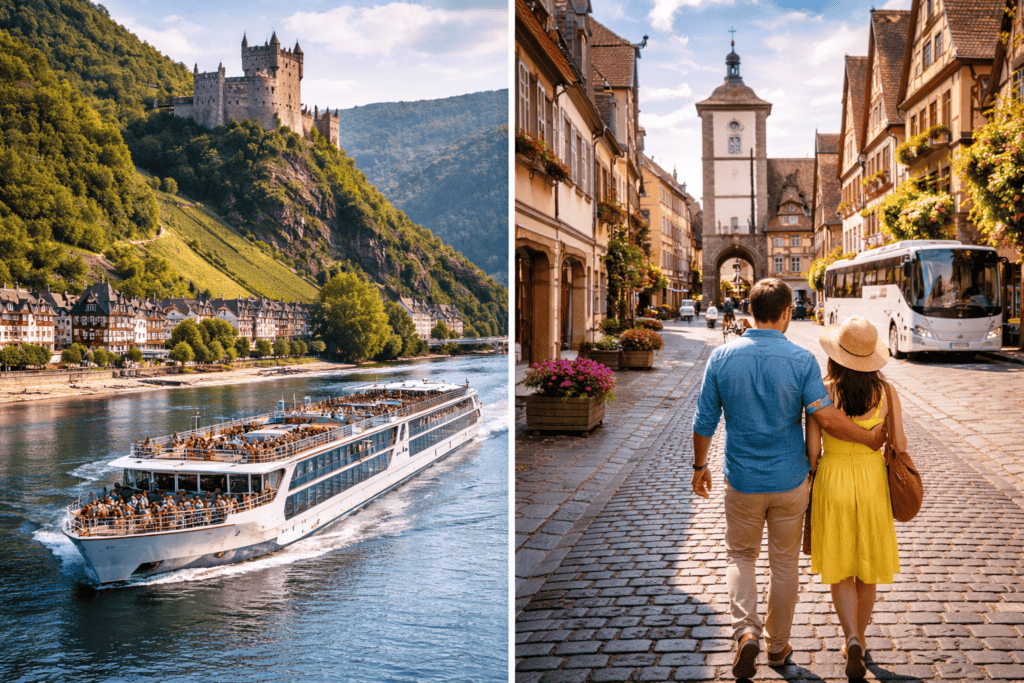
River Cruise vs Guided Land Tour in Europe: Which Is Better?
You've earned the good version of Europe; the one where someone else handles the luggage. But should that someone be a river cruise line or a guided land tour? Both promise castles, culture, and carbs. Only one is right for you. We compare them head-to-head so you can stop researching and start packing.
Last updated: October 1, 2026 :: Written by Sue Nelson, Travel Advisor | Adventures by MJ
Picture this: you’ve decided to finally do Europe. Not the “two cities, seven flights, fourteen hostels” version you did at 23. The real Europe. The “lingering over wine as castles drift past the window” version. The “someone else handles the luggage” version. You’ve earned it.
Now comes the question that has launched a thousand travel forum debates and more than a few marital disagreements: river cruise or guided land tour?
Both promise the highlights in this river cruise vs land tour Europe debate. Both promise the culture, the cuisine, the history, the Instagram moments. But they are fundamentally different travel experiences, and choosing the wrong one for your style is the kind of mistake that follows you home like a bad souvenir. So let’s settle this properly.
Here is an honest, thorough, occasionally opinionated comparison of the river cruise vs land tour Europe debate, so you can stop researching and start packing.
A river cruise is better for travelers who want a relaxed, all-inclusive experience with minimal logistics — you unpack once and let Europe come to you. A guided land tour is better for travelers who want to cover multiple countries, hit iconic cities across Europe, and have more flexibility. Neither is universally superior; the right choice depends entirely on your travel style, budget, and priorities.
Key Takeaways: River Cruise vs Land Tour in Europe
A river cruise is best for comfort-focused travelers who want an all-inclusive, low-logistics experience in one European region.
A guided land tour is best for travelers who want to cover multiple countries and major cities in one trip.
River cruises typically include more (meals, excursions, accommodation) in the upfront price.
Land tours offer more flexibility and free time for independent exploration.
Both formats are most enjoyable in shoulder season (April–June and September–October).
Seasickness is rarely a problem on a river cruise, because rivers do not have ocean swells.
Neither is right for everyone — the decision comes down to pace, priorities, and travel style.
River cruise or guided land tour in Europe? One gives you unpack-once ease and scenic sailing. The other delivers deeper, boots-on-the-ground exploration. The best choice depends on how you want to experience Europe.
Quick Voice Search Answers: River Cruise vs Land Tour in Europe
How does a river cruise compare to a land tour of the same region?
A river cruise goes deeper and slower, while a land tour covers more ground. On the Danube, for example, a river cruise docks in Vienna and Budapest and moves you overnight, while a land tour of the same area adds hotel changes but can also reach places off the river, like Prague.
Should I add a land tour to my river cruise?
If it’s your first time in Europe, usually yes. Most river cruise lines sell pre- and post-cruise land extensions, like a few nights in Prague before a Danube cruise, and they bundle the hotel, transfers and some touring. Price it both ways, because booking the hotel yourself is sometimes cheaper.
What is the most immersive way to explore European cities?
Stay longer in fewer places. A river cruise helps because ships often dock close to town, so you can walk back in after dinner, and a land tour helps most when it builds in free afternoons and two-night stays.
Which guided tour companies are best for Europe?
It depends on your budget and how much free time you want. Tauck and Abercrombie & Kent sit at the premium end, Insight Vacations puts the focus on comfort, and Rick Steves tours keep groups small and leave more time on your own.
Will I get seasick on a river cruise?
Almost certainly not. Rivers don’t have ocean swells, so river ships glide rather than roll, which is why river cruising is a popular choice for travelers who get seasick on big ships.
First: What Exactly Are We Comparing?
Before we get into it, let’s define our terms, because “guided land tour” covers a lot of ground (pun entirely intended).
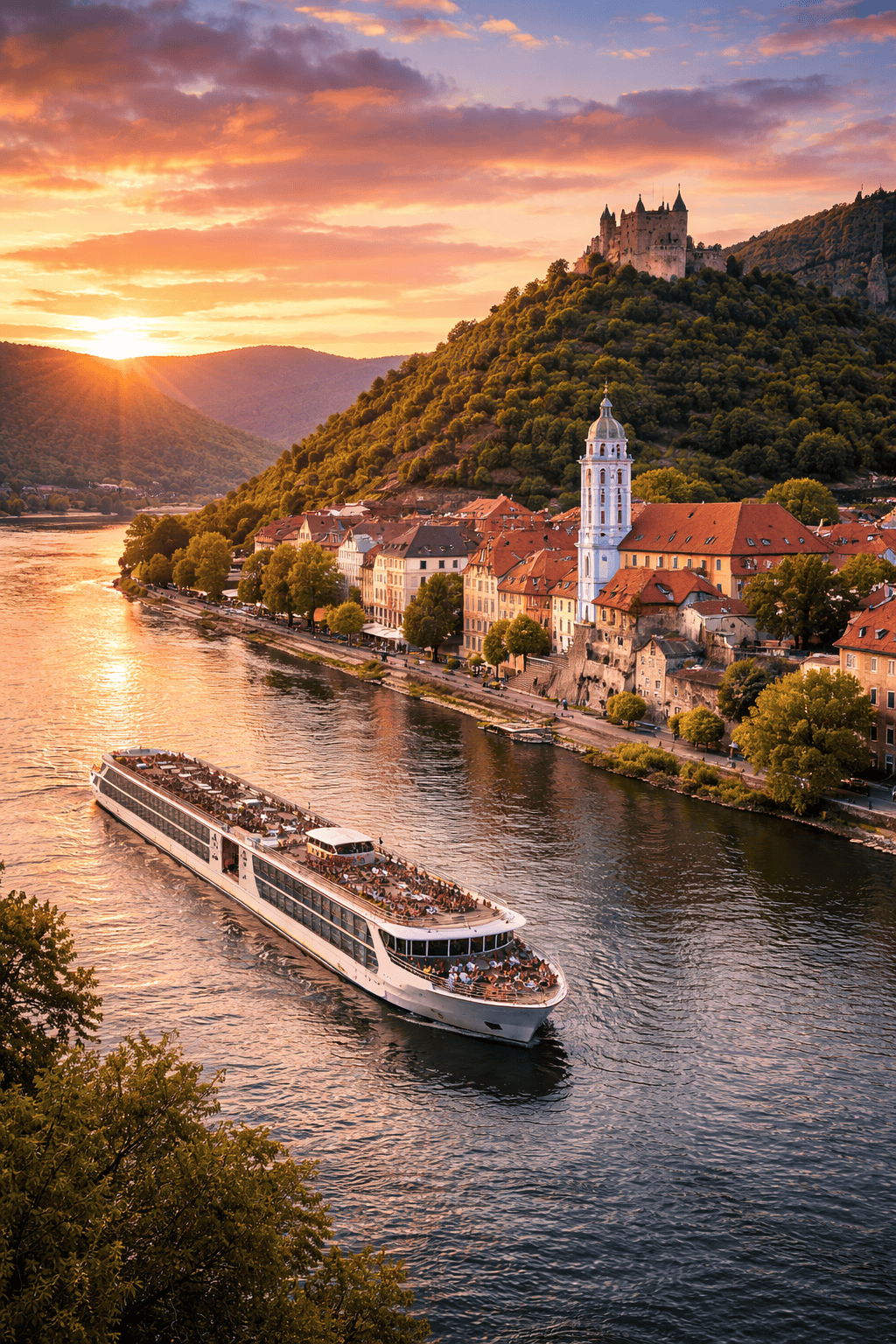
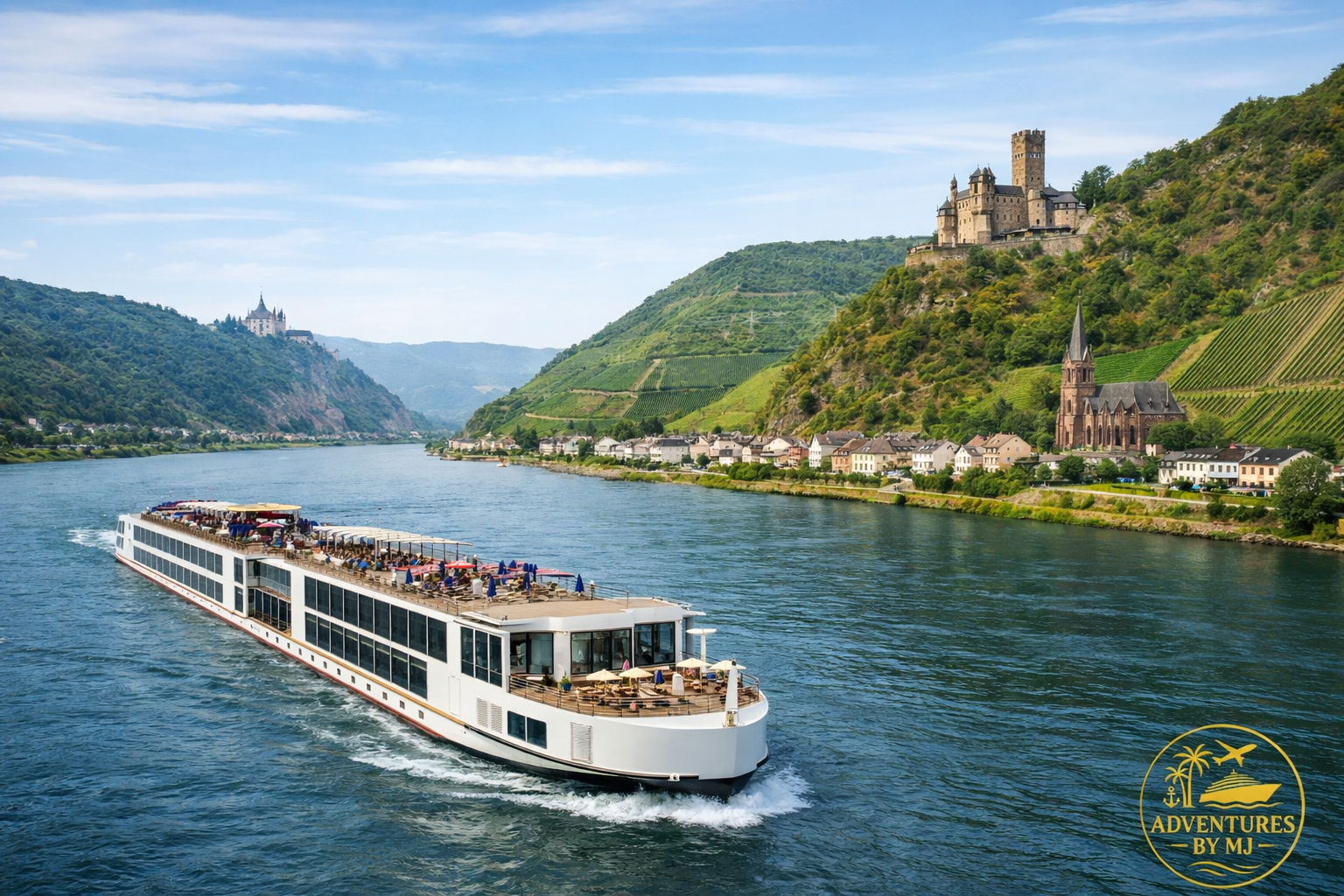
A European river cruise puts you on a ship, typically a long, sleek, purpose-built riverboat, that travels along iconic waterways like the Danube, the Rhine, the Seine, or the Douro. Your cabin floats with you from city to city. You unpack once. Meals are largely included, excursions are organized, and the scenery changes while you sleep. It is, by almost every metric, the most civilized way to travel.
In short: a European river cruise is an all-inclusive floating hotel that travels along iconic waterways, moving from city to city while you sleep.
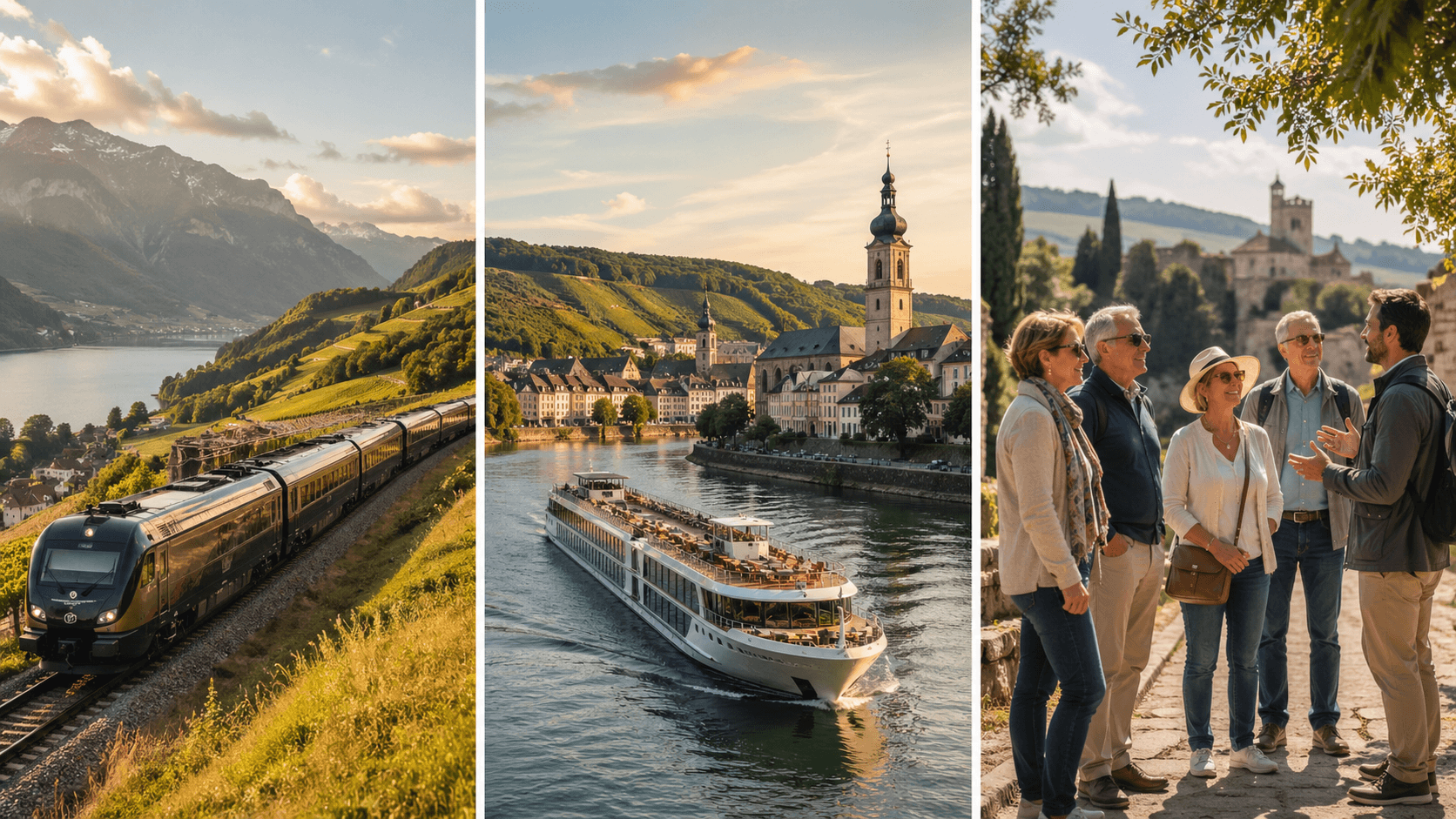
A guided land tour moves you through multiple destinations by coach, train, or a combination of both, with a tour director leading the group through a pre-planned itinerary. Think Tauck, Insight Vacations, Rick Steves, or countless others. You stay in hotels, move with your group, and cover more ground, sometimes a lot more ground.
In short: a European guided land tour is a structured, director-led group journey through multiple destinations by coach or train, staying in hotels along the route.
In fact, Rick Steves’ Best of Europe guidebook is a great companion for land tour planning — it’s essentially a curated argument for slowing down and going deeper.
Both have passionate advocates. Both have legitimate drawbacks. Let’s go through them honestly.
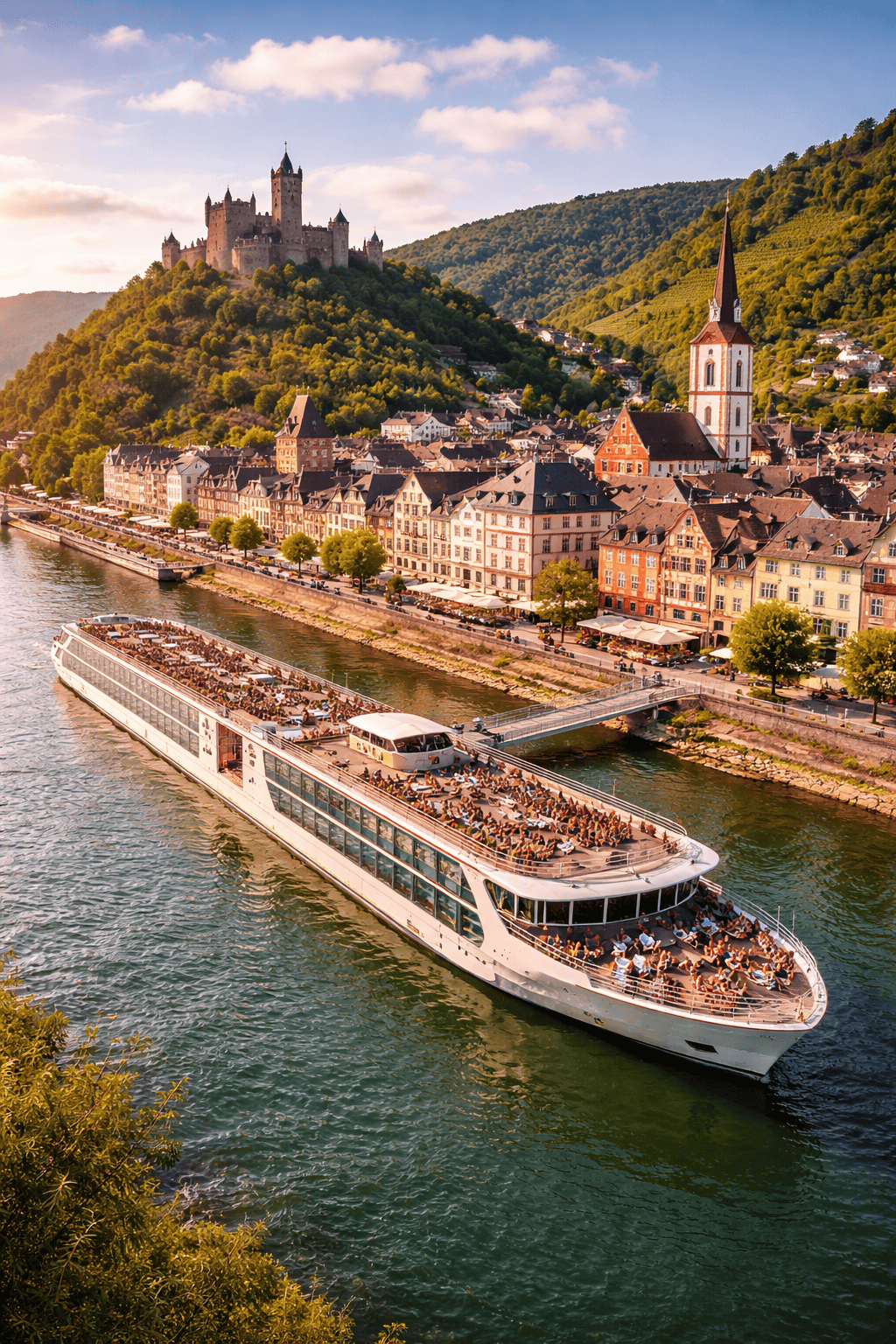
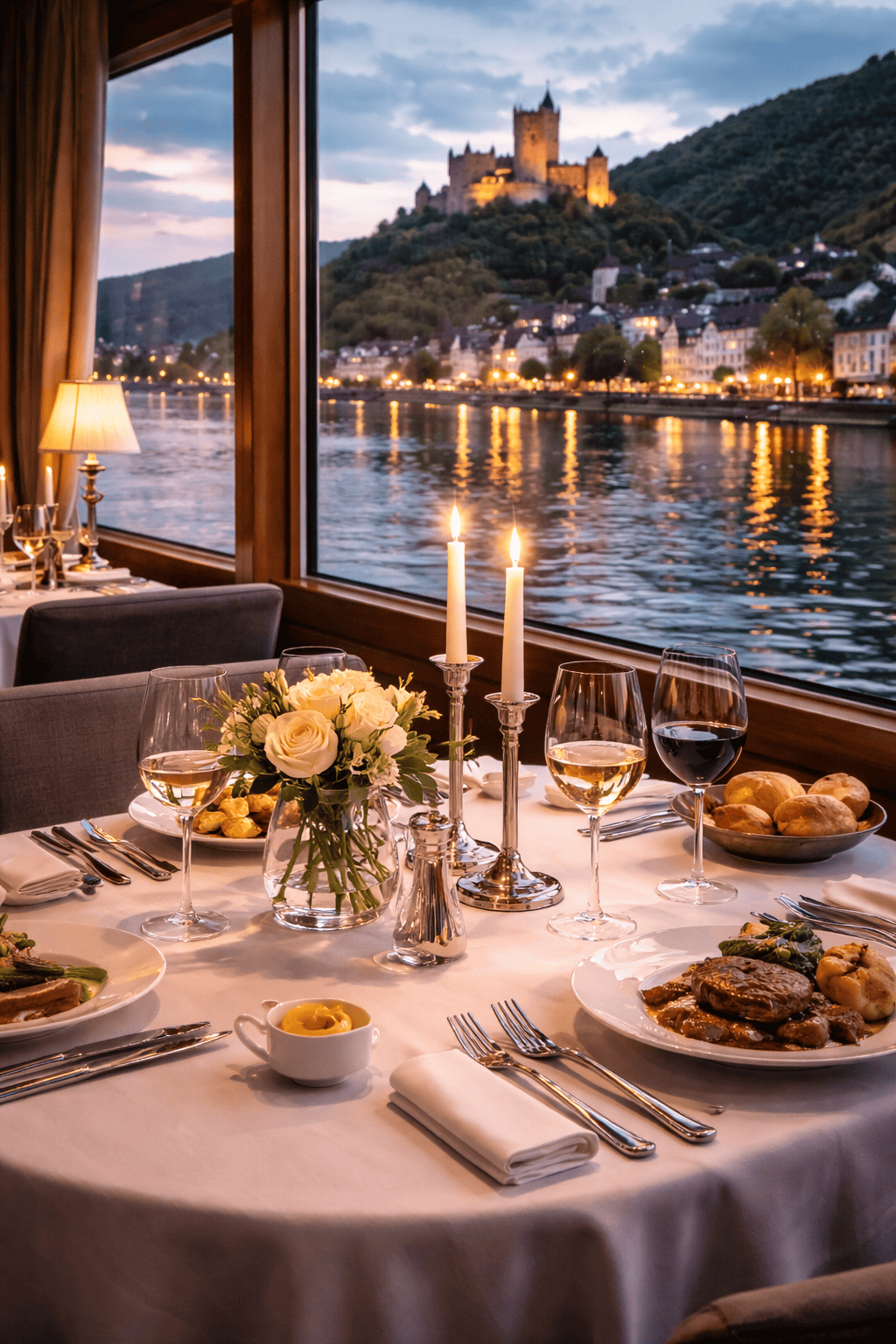
Your hotel, your dining room, and your transport — all in one very elegant package.
Round 1: Ease and Logistics
Is a River Cruise or Land Tour Easier to Navigate in Europe?
Winner: River Cruise — and it’s not close.
Here is the single greatest thing about a river cruise: you unpack exactly once. Your cabin is your home base. It travels with you. There is no loading luggage onto a coach at 7 AM while half-awake, no checking in and out of a different hotel every two nights, no “did I leave my charger in Prague?” panic, and as The Points Guy’s comprehensive river cruise guide notes, that single-unpacking convenience is consistently one of the top reasons travelers choose cruising over land tours.
Do you have to pack and unpack on a European river cruise?
No. You unpack once on the first day, and your cabin travels with you for the whole cruise.
Either way, a good lightweight daypack, like the classic Day Pack, is one of those non-negotiables that serves you equally well whether you’re heading ashore from a cruise ship or striking out solo on a guided tour’s free afternoon.
On a guided land tour, even the best-organized itineraries involve a fair amount of logistical choreography. You’re packing and unpacking, navigating check-ins, loading and unloading buses, and wrangling your belongings across multiple cities, which is why packing light for a European guided tour requires a different strategy than it does for a cruise. It’s manageable, millions of people do it every year, but if the thought of it makes you tired before you’ve even left home, that tells you something.
For travelers who want Europe without the logistical friction, a river cruise is the clear answer. For those who don’t mind a bit of movement and actually enjoy the variety of different hotel properties, land tours hold their own.
If you’re still weighing your options on pace and logistics, our guide to the best way to see Europe without rushing is worth a read before you commit to either format.
Round 2: Destinations and Coverage
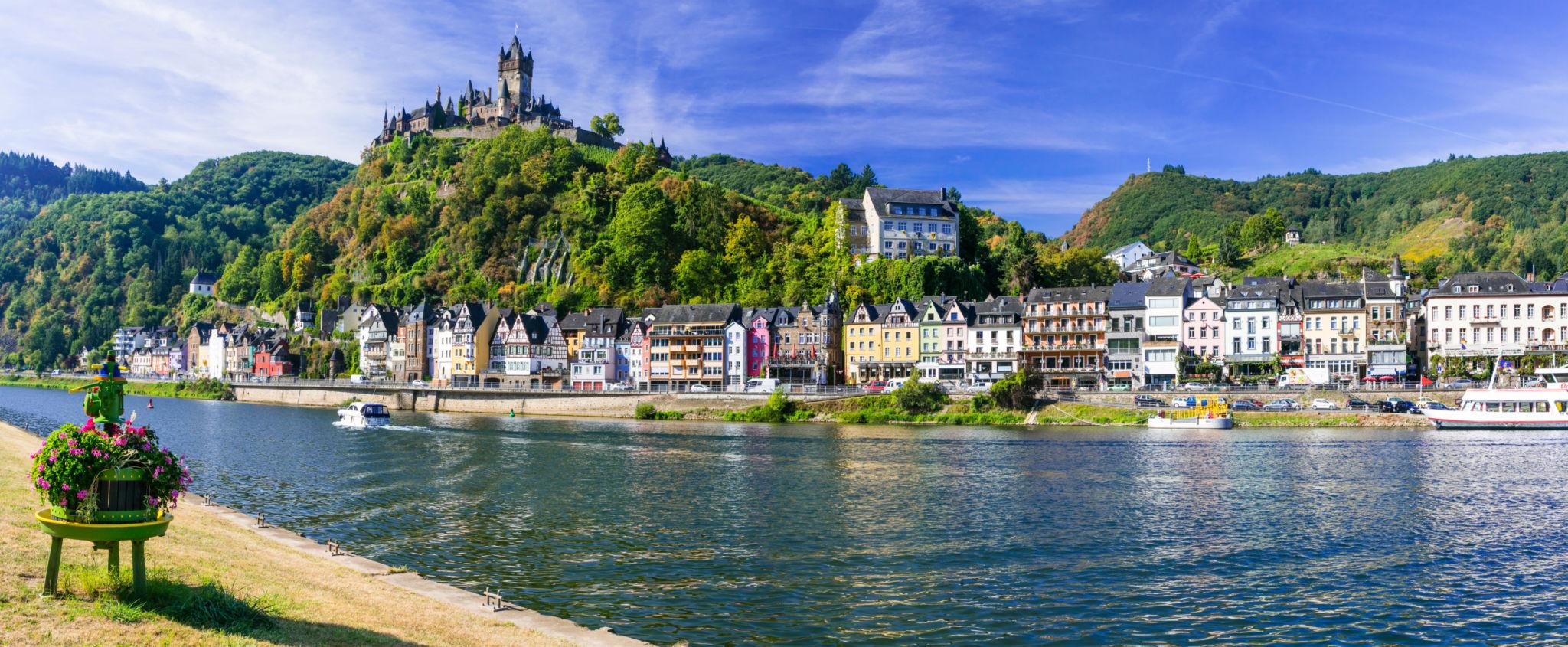
River cruises offer depth over breadth — but what a route it is.
Which Covers More European Destinations — River Cruise or Land Tour?
Winner: Guided Land Tour — but with caveats.
This is where land tours earn their stripes. A well-designed guided tour can take you from Paris to Prague to Vienna to Budapest across two weeks, covering a breadth of countries and cities that simply isn’t possible on a single river cruise. If your primary goal is to see as many iconic European destinations as possible in one trip, a land tour has the edge.
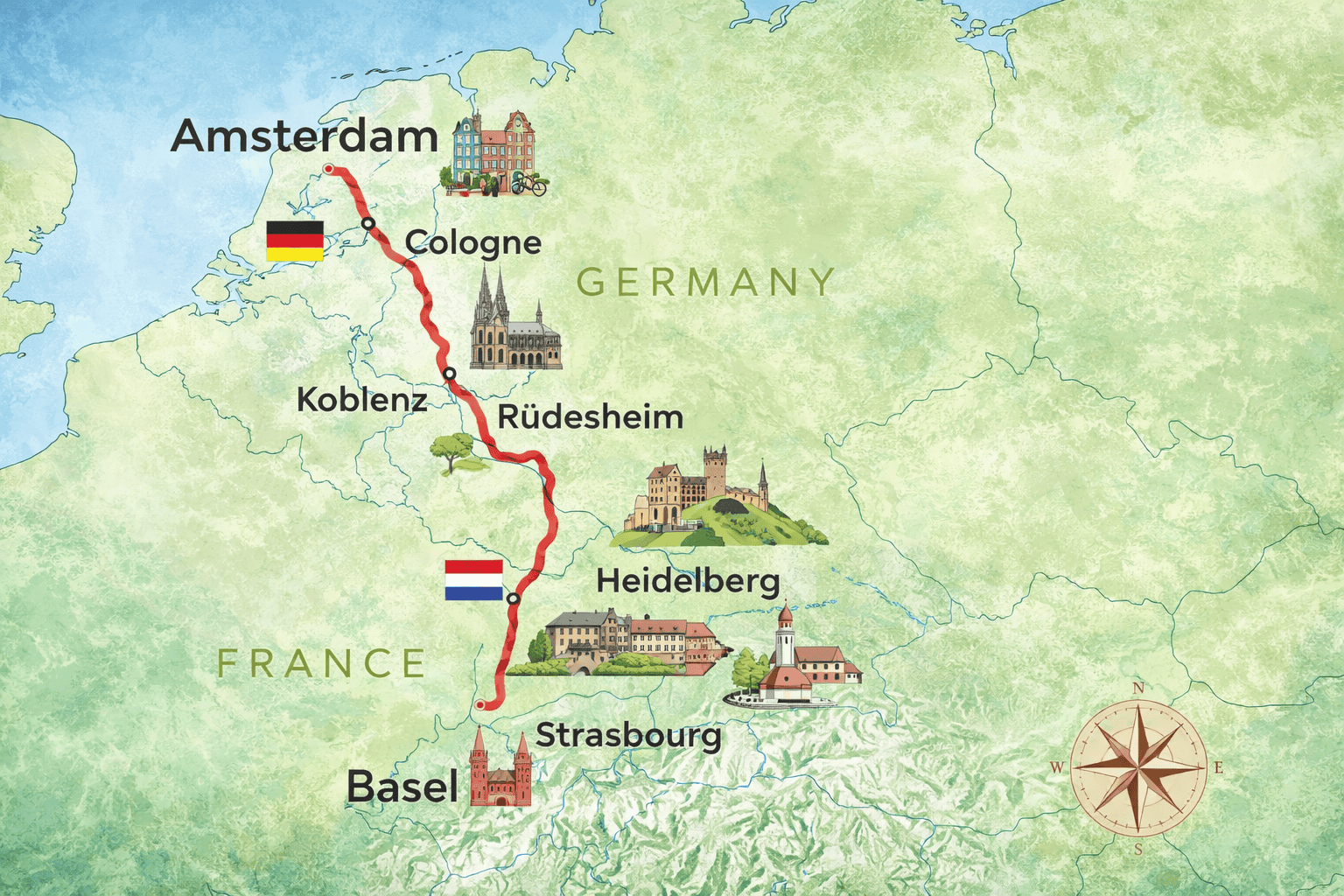
River cruises, by contrast, are inherently linear; you’re following a waterway, which means your destinations are geographically connected by that river. The classic Rhine River cruise itinerary stays on the Rhine, and the longer Grand European itinerary links the Rhine, Main and Danube between Amsterdam and Budapest (or the reverse), stopping at cities like Cologne, Rüdesheim, Regensburg, Passau and Vienna. That’s an extraordinary journey, but it’s not going to include Rome, Barcelona, or Athens.
If you want to go even deeper into the region before or after your cruise, Rick Steves’ Central Europe guide covers the Danube corridor in exceptional detail — consider it your onshore homework.
That said, “more destinations” doesn’t always mean “better experience.” River cruises offer depth over breadth: longer, more relaxed time in each port, the ability to explore at your own pace, and the experience of arriving in cities the way travelers did for centuries, by water. There’s something genuinely atmospheric about gliding into Budapest or Dürnstein that a bus window simply cannot replicate.
The caveat: if you’re a first-time European traveler hoping to hit the “greatest hits” across multiple countries, land tours offer flexibility and range that cruises can’t match. If you want to go deep on one region and savor it, a river cruise wins.
Round 3: Dining
River Cruise Dining vs Land Tour Dining in Europe
Winner: River Cruise — comfortably.
European river cruises are famous for their dining experience, and for good reason. Most itineraries include all or nearly all meals on board, featuring regional cuisine that changes with your location. You’re eating Austrian food as you float through Austria. French wine as you drift through Burgundy. The ships are small enough (typically 100–190 passengers) that dining is a genuine experience rather than a cafeteria-with-views.
When dinner comes with a side of Danube views, it somehow tastes even better.
Guided land tours vary significantly by operator and price point. Budget tours might mean a lot of included dinners at large group restaurants where the food is… fine. Fine is a word that should not describe food in Europe. Premium operators like Tauck or Abercrombie & Kent do a much better job of incorporating local culinary experiences, but you’re paying accordingly.
The advantage of land tours is that you’re in the cities, with access to whatever the local dining scene offers, and the freedom to wander off and find your own three-Michelin-star hole-in-the-wall on your own schedule. That kind of spontaneous culinary adventure is harder to pull off when dinner is at 7 PM sharp in the ship’s dining room.
Round 4: The Social Experience
Is a River Cruise or Guided Tour Better for Meeting People?
Winner: Draw — depends entirely on what you want.
River cruises tend to attract a specific demographic: couples and seasoned travelers, often 55+, looking for a relaxed, refined experience. The ship is small, the passenger list is intimate, and you’ll likely get to know your fellow guests over multiple days of shared meals and excursions. It’s lovely if that sounds appealing. It’s less ideal if you were hoping for the kind of lively, cross-generational energy that some guided land tours deliver.
And while river cruises have historically skewed toward the 55+ set, market research cited by RetirementLiving.com expects 36- to 45-year-olds to be one of the leading groups, so the demographic assumptions are shifting faster than the Rhine.
Guided land tours, especially those targeted at specific age groups (yes, there are fantastic tour options for 30- and 40-somethings) can be surprisingly social and fun. You’re spending extended time with the same group of people, sharing experiences, and often forming the kind of quick-but-genuine travel friendships that only happen when you’re standing in front of the Colosseum at golden hour with strangers who are also crying a little.
If you want quiet, elegant, adult-only energy: cruise. If you want a more dynamic social experience with potential for genuine connections: land tour.
Round 5: Value for Money
River Cruise vs Land Tour Europe: Which Gives You More for Your Money?
Winner: Complicated. Let’s talk about it.
River cruises look expensive on the surface, and they are, upfront. But when you factor in what’s included (accommodation, most meals, port taxes, excursions, onboard entertainment and the sheer convenience of not moving every two nights), the all-inclusive river cruise cost often compares favorably to a similarly structured land tour of equivalent quality.
Seasoned travelers on Fodor’s Travel forums consistently echo this — the consensus being that once you tally the true cost of a land tour’s hotels, meals, and transfers, the gap narrows considerably.
According to the 2025 State of the Cruise Industry Report, cruise demand keeps growing year after year, which suggests that more travelers are running the real math and liking what they see.
Guided land tours have more price variation. Budget operators can be genuinely affordable, though the “budget” experience reflects that. Mid-range and luxury land tours approach or exceed river cruise pricing, sometimes without the same level of inclusions.
The real value question isn’t just about cost; it’s about what you value most. If you’re paying for ease, elegance, and the experience of waking up in a new city without lifting a finger, river cruises deliver extraordinary value. If you’re paying for breadth of experience, flexibility, and the ability to hand-select your hotels and restaurants, land tours offer a different but equally valid kind of value.
How much does a European river cruise cost compared to a guided tour?
Entry-level European river cruises typically start around $2,000 to $3,000 per person for a week, while guided land tours run under $1,500 at the budget end and well over $6,000 at the top, so compare what is included, not just the headline price.
For a deeper look at how river cruises specifically stack up financially and experientially, check out our guide on whether aEuropean river cruise is worth it. It breaks down exactly what you get for your money.
Round 6: Weather and Seasonality
Best Time of Year for a European River Cruise or Guided Tour
Winner: Neither — both are subject to the whims of European meteorology.
River cruises face one weather-related challenge that land tours largely avoid: low water levels. In summer, some European rivers, particularly the Rhine and Danube, can run low enough to affect sailing schedules, requiring passengers to disembark and bus to the next port. It doesn’t happen every year, but 2026 was a bad one: the Rhine hit record lows in August, and lines were still rerouting sailings into the fall. High water in spring can occasionally cause delays as well.
Land tours, by contrast, are unaffected by river conditions and offer slightly more flexibility in dealing with weather events. If it rains in one city, you board a coach and move on.
Both formats are most enjoyable in shoulder season, the best season for a European river cruise or guided tour, April through June and September through October, when crowds are thinner, temperatures are pleasant, and Europe is at its most atmospheric. For detailed guidance on optimizing your timing, our post on the best time to travel to Europe covers this thoroughly.
Oh, and regardless of whether you cruise or tour, pack a universal travel adapter before you leave home. Europe’s plugs are not waiting for you to figure it out at the airport.
Head-to-Head Comparison Chart
River Cruise vs Land Tour Europe: Full Comparison at a Glance
Category
River Cruise
Guided Land Tour
Packing / Unpacking
Once — your cabin moves with you
Multiple times across hotels
Destinations Covered
One river region, depth over breadth
Multi-country, broad coverage possible
Dining Quality
Excellent; mostly included, regionally inspired
Varies widely by operator and price
Pace
Relaxed, leisurely
Can be fast; varies by itinerary
Typical Demographic
Couples, 50+, seasoned travelers
All ages depending on operator
Included in Price
Most meals, excursions, accommodation
Varies; often room + some meals
Flexibility
Lower; structured schedule
Moderate; free time built into most tours
Social Atmosphere
Intimate, refined
Dynamic; varies by group
Best Season
April–June, Sept–Oct
April–June, Sept–Oct
Scenery
Stunning; riverside castles, villages
Iconic city sights and rural landscapes
Overall Ease
⭐⭐⭐⭐⭐
⭐⭐⭐⭐
Value Transparency
High — all-in pricing
Variable — read the fine print
So Which One Is Actually Better?
Here’s the answer no one on the internet wants to give you: it depends on you. (We know. We know.)
But if you want a sharper take: choose a river cruise if you prioritize comfort, ease, and a slower immersion into one region of Europe. Choose a guided land tour if you want to cover more ground, have a specific bucket list of cities, or prefer the energy of exploring from a home-base hotel rather than a ship.
Choose a European river cruise if you:
Want to unpack once and let the scenery come to you
Prefer an all-inclusive price with no surprise costs
Value a relaxed pace over covering maximum ground
Are traveling as a couple or with someone who hates logistics
Choose a guided land tour if you:
Want to visit cities across multiple countries in one trip
Prefer the energy of urban exploration and hotel variety
Have a specific European bucket list that spans multiple regions
Want more unstructured free time to explore independently
And if you genuinely can’t decide? Many dedicated European travelers do both; a river cruise for one trip, a land tour for another. They are not competing for your loyalty. Europe is large. There’s room for both.
If this post has nudged you toward the river cruise side of the fence, here’s your next step: Which River Cruise Is Right for You? Ama vs Viking vs Avalon. The three big lines look almost identical from the outside and feel surprisingly different once you’re onboard. The guide lays out the differences that actually shape your week: cabin size, demographic, dining, and what’s included before the upsells start. Grab the comparison →
Frequently Asked Questions
Is a river cruise or a guided land tour better for first-time visitors to Europe?
For first-time visitors to Europe who want to cover the most iconic cities, a guided land tour typically offers broader geographic coverage. For those who prefer ease and a relaxed pace, a Rhine or Danube river cruise is an exceptionally accessible introduction to Central Europe.
How do prices compare between river cruises and European guided land tours?
Entry-level river cruises typically start around $2,000–$3,000 per person, while guided land tours can range from under $1,500 to well over $6,000 depending on the operator, duration, and inclusions. River cruise pricing generally includes more (most meals, excursions, port fees), making direct price comparisons somewhat misleading — a $2,500 river cruise may actually include more than a $2,500 land tour. Always compare what’s included before deciding which offers better value for your budget.
What age group are river cruises best suited for?
River cruises have historically attracted travelers aged 50 and older, and many operators do cater to a more mature, comfort-focused demographic. However, several cruise lines have introduced programs specifically designed to attract younger travelers and active adults, and the demographic is broadening.
Can solo travelers do a river cruise or guided land tour in Europe?
Yes, solo travelers can absolutely enjoy both a European river cruise and a guided land tour, though each comes with different cost considerations. Guided land tours are often particularly welcoming to solos, as the group dynamic provides built-in social opportunity; many operators also offer “solo-share” cabins to avoid single supplements. River cruises do typically charge single supplements (often 50–100% of the per-person rate), though some lines offer occasional single cabins or promotions. Solo travelers should compare supplement policies carefully before booking.
Which option offers more flexibility and free time?
Guided land tours generally offer more unstructured free time, as most itineraries build in afternoons or evenings for independent exploration.
What is the biggest downside of a European river cruise?
The most common complaints about river cruises center on limited flexibility (you’re at the mercy of the ship’s schedule), potential river level issues in peak summer, and the single supplement cost for solo travelers. Some travelers also find the experience slightly repetitive after several days. Scenic riverbanks are beautiful, but if you’re someone who craves urban energy and constant new stimulation, the gentler pace of a cruise can feel limiting by day four or five.
What is the biggest downside of a guided land tour in Europe?
The most frequent criticism of guided land tours is the pace, particularly on budget or “highlights” itineraries that try to cover too many destinations in too little time. “If it’s Tuesday, it must be Belgium” is a cliché rooted in lived experience. Frequent hotel changes, early departure times, and the occasional herding-of-cats energy of managing a large group can be exhausting. Choosing a premium operator with a smaller group size and more generous time in each destination significantly improves the experience.
Final Thoughts: The Real Winner Is Europe
At the end of the day, and we mean this with complete sincerity, you genuinely cannot go wrong. Floating past a medieval castle on the Rhine at dusk and walking through the streets of Vienna the next morning is extraordinary. So is standing at the top of the Eiffel Tower, then waking up in the Swiss Alps, then eating pasta in Rome three days later. Both versions of Europe are magnificent.
The question is simply which version of you is boarding the plane. The one who wants to relax, unpack once, and let the scenery come to them? Book the cruise. The one who wants to cover ground, check cities off the list, and negotiate their own dinner reservations? Book the tour.
Either way: go. Europe has been waiting patiently, and it has a lot to show you.
Written by Sue Nelson, Travel Advisor | Adventures by MJ | Updated for 2027
Affiliate Disclosure: This post may contain affiliate links. If you make a purchase through one of these links, we may earn a commission at no additional cost to you. We only recommend products and services we believe may be helpful to travelers.
Hi, I'm Sue. I plan cruises, all-inclusive resorts, and slow multi-country trips through Europe, and I'm a member of the Travel Leaders Network. Twenty years in senior HR leadership before this, which mostly taught me how to read what people actually want. I live in Grain Valley, Missouri with my husband and business partner Mike.