Best Mediterranean Cruise Ports You Shouldn’t Skip (And Two That Are Overrated)
Not all Mediterranean cruise ports are created equal — and a travel advisor will tell you that two of the most-marketed stops on any Greek Isles itinerary are also the most likely to leave you wondering what all the fuss was about. Here's the honest port-by-port breakdown: what's worth every step off the gangway, what to do once you're there, and which two ports you can safely lower your expectations on before you arrive.
Last updated: June 7, 2026 :: Reviewed by Sue Nelson, Travel Advisor
The best Mediterranean cruise ports in 2026 include Kotor (Montenegro), Valletta (Malta), Dubrovnik (Croatia), Athens/Piraeus (Greece), Taormina/Catania (Sicily), La Spezia for Cinque Terre, and Santorini (when your ship actually calls there). The two most overrated? Mykonos and Monte Carlo. Both look incredible on an itinerary and consistently disappoint on the day. Keep reading for the honest breakdown.
I book Mediterranean cruises for clients year-round as a travel advisor with the Travel Leaders Network. This post is the version I give clients who want the honest breakdown, not the brochure version.
Key Takeaways: Best Mediterranean Cruise Ports (2026)
Kotor, Montenegro is the most underrated port on any Mediterranean itinerary. Walled medieval city, jaw-dropping bay, almost no lines. Book it before everyone figures this out.
Valletta, Malta is one of the most historically dense cities in Europe and still gets slept on. Every inch of it is UNESCO World Heritage. Half a day here changes people.
Dubrovnik is still worth it, but the crowds are real. Go early, go strategic, and read the tips below before you wing it.
Santorini now caps cruise visitors at 8,000 per day. Your ship may not call there at all in 2026. Check your itinerary carefully before you assume you’re going.
Mykonos is beautiful in photos. As a cruise day trip, it is expensive, crowded, and logistically annoying. If your itinerary includes it, go in with lowered expectations.
Monte Carlo sounds glamorous on paper. In practice, day-trippers walk around for 90 minutes, look at the casino they can’t really enter, photograph some yachts, and wonder what they’re missing. (You’re missing a yacht.)
A good day bag with anti-theft features is the single most practical thing you can bring to any Mediterranean port. Cobblestones, crowds, and pickpockets are a real combination.
Not every port is right for every traveler. Here is the quick version:
Kotor and Valletta. Low crowds, walkable, and historically extraordinary without requiring advance planning.
Best Mediterranean cruise ports for history lovers:
Athens and Valletta. Between the Acropolis and the Knights of St. John, you will need more than one day.
Best Mediterranean cruise ports for beach lovers:
Santorini and La Spezia. The volcanic beach at Perissa and Monterosso al Mare in Cinque Terre are both exceptional.
Best Mediterranean cruise ports for families:
La Spezia and Taormina. Both are walkable, manageable, and genuinely interesting for kids and adults equally.
Best Greek Isles cruise port for culture:
Athens (via Piraeus). Not technically an island, but no Greek Isles itinerary is complete without the Acropolis.
Best Greek Isles cruise port for scenery:
Santorini, when your itinerary actually calls there. Rhodes and Crete are strong alternatives if it does not.
Adventures by MJ • Travel Advisor Edition
Best Mediterranean Cruise Ports (2026)
Honest picks from a travel advisor who books these trips all year
✅ Must-Visit Ports
🇲🇪
Kotor, Montenegro
Eastern Med • Docked • UNESCO Walled City
Medieval old city inside a dramatic fjord-like bay. Almost no crowds. The wall climb to San Giovanni fortress delivers the best view in the entire Mediterranean.
Walk the city walls (~$9)Walk off ship directlyBest kept secret in the Med
🇲🇹
Valletta, Malta
Central Med • Docked • Entire city is UNESCO World Heritage
One of the most historically rich cities in Europe, completely walkable, and still criminally undervisited by cruise passengers. Don’t skip St. John’s Co-Cathedral and the Caravaggio.
Co-Cathedral (~$16)Upper Barrakka GardensVery hot July–Aug
🇭🇷
Dubrovnik, Croatia
Eastern Med • Tender (peak season) • Crowds are real
Still worth every step, but timing is everything. Go early. The city walls at 8 a.m. are one of the great travel experiences in Europe.
Off ship by 8:30 a.m.City walls (~$38)Skip Stradun shops
🇬🇷
Athens (Piraeus), Greece
Eastern/Greek Isles • Docked • 30 min metro to Acropolis
Non-negotiable. Book skip-the-line Acropolis tickets in advance. Take the metro for $1.50, not a private transfer. Add the Acropolis Museum.
Pre-book Acropolis ticketsMetro: ~$1.50 each waySkip overpriced ship tours
🇬🇷
Santorini, Greece
Greek Isles • Tender • 8,000/day cap now in effect
As dramatic as advertised. But Greece caps cruise visitors at 8,000/day. Your ship may be rerouted. Verify your actual port call before you assume you’re going.
Confirm your itinerary!Santo Wines caldera tastingTender: 30–45 min each way
🇮🇹
Taormina / Catania, Sicily
Western/Central Med • Docked • Mount Etna views
Third-century BC Greek theater still in use, views of Etna, and the best arancini of your life. Low crowds, high payoff. Highly underrated.
Greek Theater, TaorminaEat the arancini45 min drive from Catania
🇮🇹
La Spezia (Cinque Terre)
Western Med • Docked • Regional train to villages
Five rainbow-colored villages on a cliff. Take the train ($8+ Cinque Terre Card). Pick two villages maximum. Wear real shoes. Don’t try to do all five in a cruise port stop.
Cinque Terre Card ($8+)Pick 2 villages onlySandals = bad idea
⚠️ The Honest Section — Two Ports That Disappoint — ⚠️
⚠️ Overrated Ports (Adjust Expectations)
🇬🇷
Mykonos, Greece
Greek Isles • Tender • Party island for 25-year-olds
Stunning photos, genuinely disappointing day trip. Expensive, crowded, and the beach clubs have $110–$330 minimums. Great for a 3-night stay. Poor value as a cruise port stop.
Windmills → Little Venice → DoneBeach clubs not worth itLower your expectations
🇲🇨
Monte Carlo, Monaco
Western Med • Docked • One square mile of “Is that it?”
You will look at the casino (entry: ~$18), look at the yachts, and wonder what you’re supposed to do next. The Océanographique Museum is genuinely great. Budget 3 hours max and go there.
Musée Océanographique (~$22)Casino: overrated for tourists3 hours max, then leave
What are the best Mediterranean cruise ports to visit?
The best Mediterranean cruise ports worth your time are Kotor, Valletta, Dubrovnik, Athens, Taormina/Catania, La Spezia, and Santorini (when your ship gets there). Each one delivers something genuinely different and memorable.
Which Mediterranean cruise ports are the most crowded?
Dubrovnik, Santorini, and Mykonos are the most crowded Mediterranean cruise ports. Dubrovnik and Santorini have both introduced visitor caps in recent years because the volume of cruise passengers was damaging the towns.
Is Santorini worth visiting on a cruise?
Santorini is worth it if your ship actually calls there, but Greece now caps daily cruise visitors at 8,000 per day. Some ships are redirecting to other Greek ports as a result. Check your specific itinerary before assuming Santorini is on the schedule.
What is the most underrated Mediterranean cruise port?
Kotor, Montenegro is consistently the most underrated Mediterranean cruise port. It is a perfectly preserved medieval walled city inside a dramatic fjord-like bay, with almost none of the crowds you will find in Croatia or Greece. Most travelers have never heard of it before their cruise and rave about it afterward.
Which Greek island is best for a Mediterranean cruise?
For culture and history, Athens (via Piraeus) is the non-negotiable. For island scenery, Santorini tops the list when you can get there. For a more authentic, less commercialized island experience, Rhodes and Crete are worth the itinerary upgrade.
Is Dubrovnik worth visiting on a Mediterranean cruise?
Dubrovnik is absolutely worth visiting, but timing is everything. Go early: off the ship by 8:30 a.m., and walk the city walls before the crowds arrive. The experience at 8 a.m. and the experience at 11 a.m. are genuinely different trips.
What is a tender port on a Mediterranean cruise?
A tender port is one where the ship anchors offshore and passengers ride a small boat to shore instead of docking directly. Tender ports add 20 to 45 minutes each way and can be affected by weather. Santorini, Dubrovnik in peak season, and Mykonos are all tender ports on most itineraries.
Before You Pick Your Mediterranean Cruise Ports: What to Know
Mediterranean cruise itineraries are not created equal. Two ships can sail the same general region and call at completely different ports. Before you book based on a port you love (or avoid one you dread), pull up the actual port list for your specific itinerary and confirm the stops.
A few logistics that affect your experience regardless of port: tender ports, where you ride a small boat to shore, add 20 to 45 minutes each way and can be weather-dependent. Docked ports let you walk off the ship directly. I will flag which is which as we go.
Also: Rick Steves’ Mediterranean Cruise Ports guide is genuinely the most useful physical reference to have on the ship. If you are a planner who wants context before you step off the gangway, it is worth every dollar. Buy it before you sail, not in a port gift shop where it costs twice as much.
Best Mediterranean Cruise Ports Worth Every Step Off the Gangway
Kotor, Montenegro: The One Everyone Talks About Afterward
If you have one port on your Eastern Mediterranean itinerary that is going to change how you see the trip, this is it.
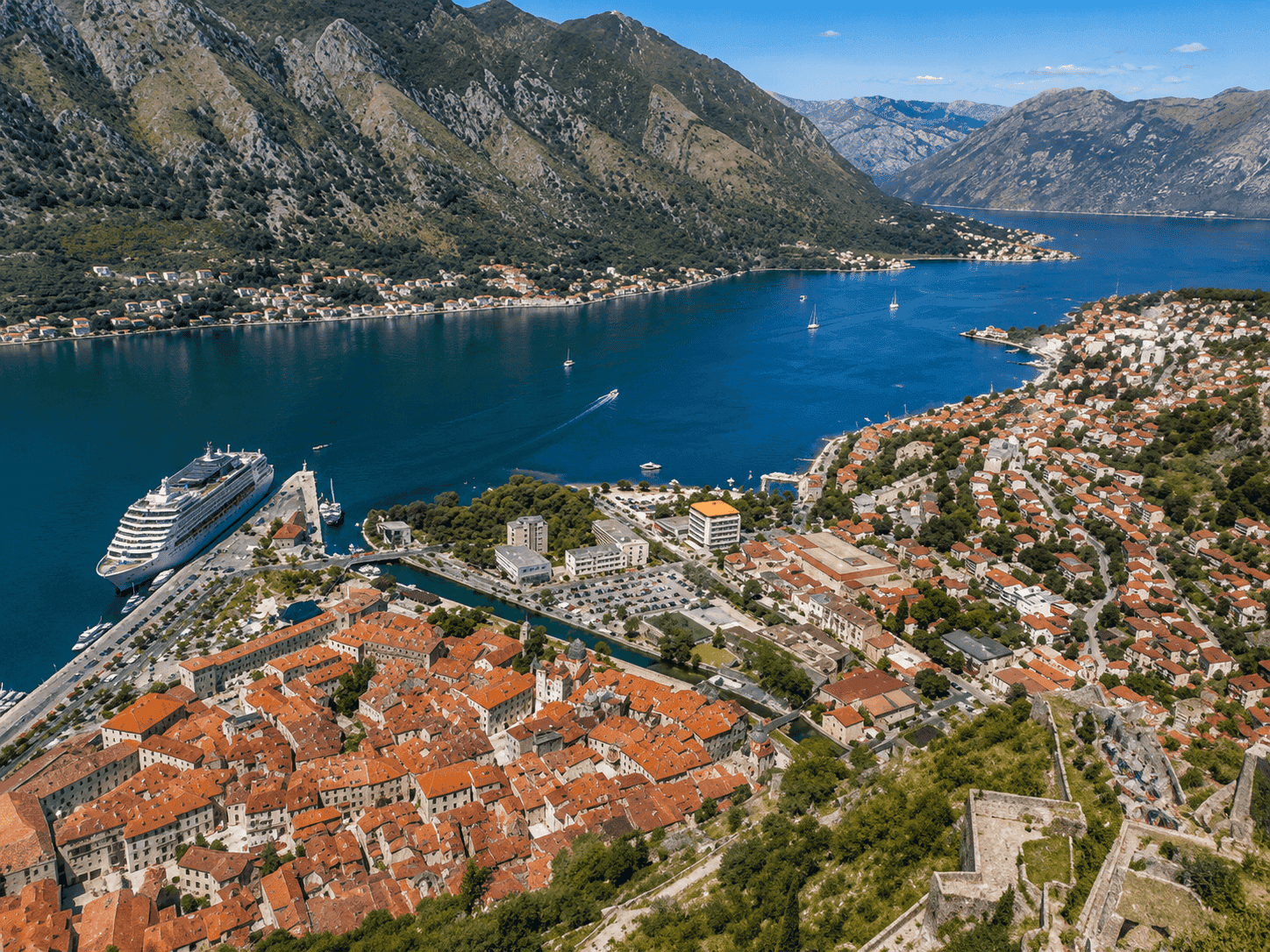
The Bay of Kotor is often mistaken for a fjord — it's actually a submerged river canyon, which makes it even more dramatic up close.
Kotor sits at the end of a long, winding bay that looks so much like a Norwegian fjord that first-time visitors genuinely wonder if the ship has taken a wrong turn. The bay is called the Bay of Kotor, it is surrounded by limestone mountains that drop straight into blue-green water, and the walled medieval old city at the end of it is compact, remarkably preserved, and a UNESCO World Heritage Site since 1979 (UNESCO World Heritage List).
What to Do in Kotor
Walk the old city walls. The full circuit takes about 90 minutes to two hours, climbs to the fortress of San Giovanni, and delivers one of the best views in the entire Mediterranean. Entrance costs approximately €8. There is also a cats museum inside the old town, which sounds like a joke and is not at all a joke. The cats of Kotor are a genuine local institution.
Logistics
Kotor is a docked port. You walk off the ship and you are essentially at the old city gates. Getting back on the ship is not complicated. Weather note: summer can be warm and humid, and the wall climb is exposed. Go early in the morning and bring water.
Budget Expectations
About €30 to €50 per person for walls, lunch, and a coffee, unless you shop. The old town has some genuinely lovely local shops and the souvenir game here is better than most ports.
Valletta, Malta: The Most Underrated Port in the Mediterranean
I have been saying this for years and I will keep saying it until everyone believes me: Valletta is extraordinary and most cruise travelers either sleep through it, spend it on the ship, or know nothing about it before they arrive.
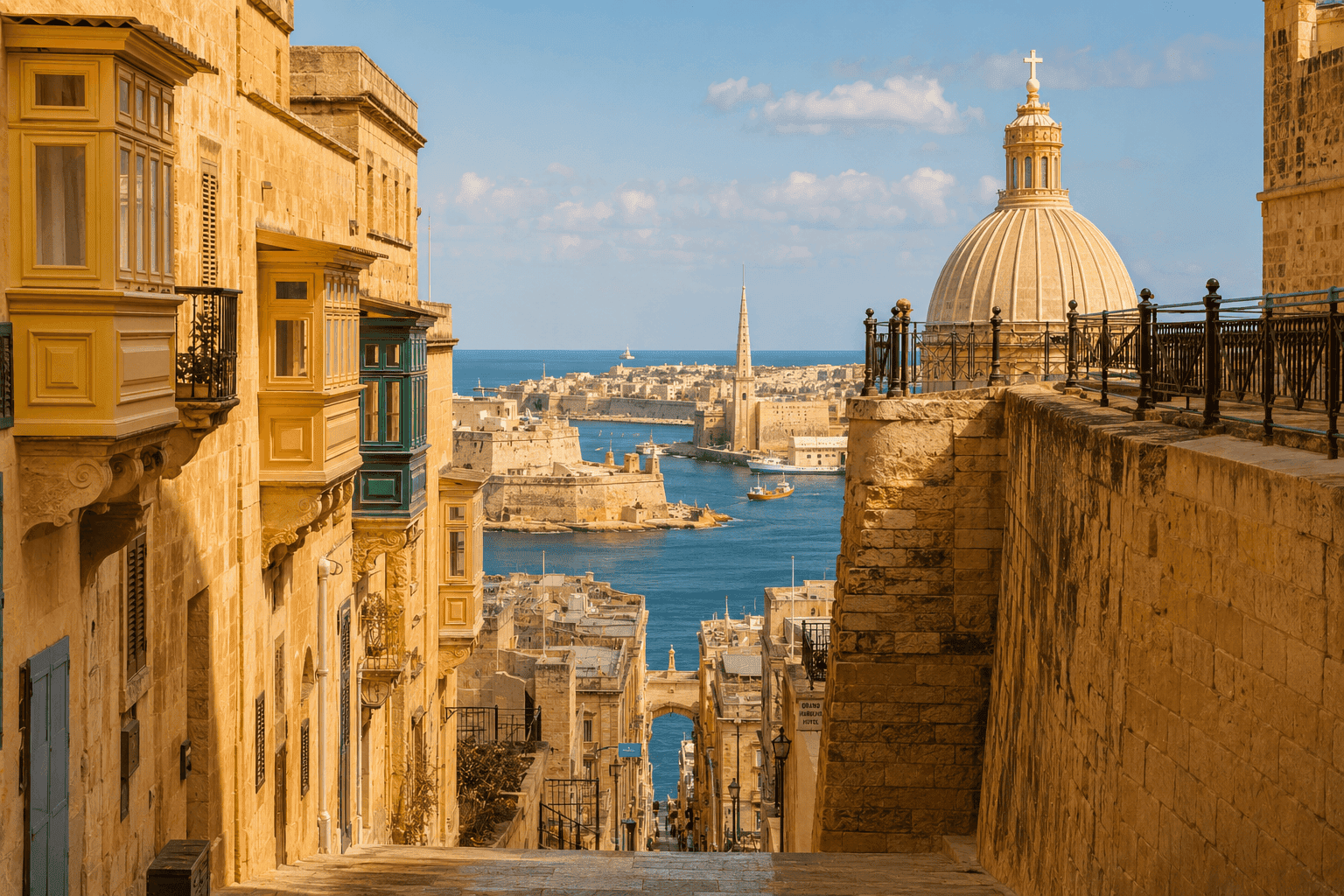
Valletta's entire city center is UNESCO World Heritage — the elevator from the cruise terminal to the upper town deposits you directly into 500 years of history.
Valletta is the capital of Malta. It is one of the smallest capital cities in the European Union. It is also one of the most historically dense places on the planet. The entire city is a UNESCO World Heritage Site. The Knights of St. John built it. Napoleon took it briefly. The British held it for 150 years. It withstood one of the most sustained aerial bombardments of World War II. The whole city is essentially a compressed, walkable history of Western civilization’s last 500 years, and you can cover the highlights in four hours.
What toDo in Valetta
The Co-Cathedral of St. John is non-negotiable. The interior is one of the most opulent baroque spaces in Europe, and Caravaggio’s largest painting lives here. Admission is €15. The Upper Barrakka Gardens give you a panoramic view over the Grand Harbour that will make you immediately understand why everyone fought over this place for six centuries. The walk between them is 15 minutes of golden limestone streetscapes that photograph beautifully and are genuinely not crowded.
Logistics
Valletta is a docked port. The Valletta Waterfront cruise terminal sits directly below the city. There is an elevator from the terminal to the upper town.
The Valetta Weather
Malta can be very hot in July and August. The city is built on a hill with a lot of exposed limestone that absorbs and radiates heat. May, June, September, and October are better months if you have the choice.
Dubrovnik, Croatia: Still Worth It, With Conditions
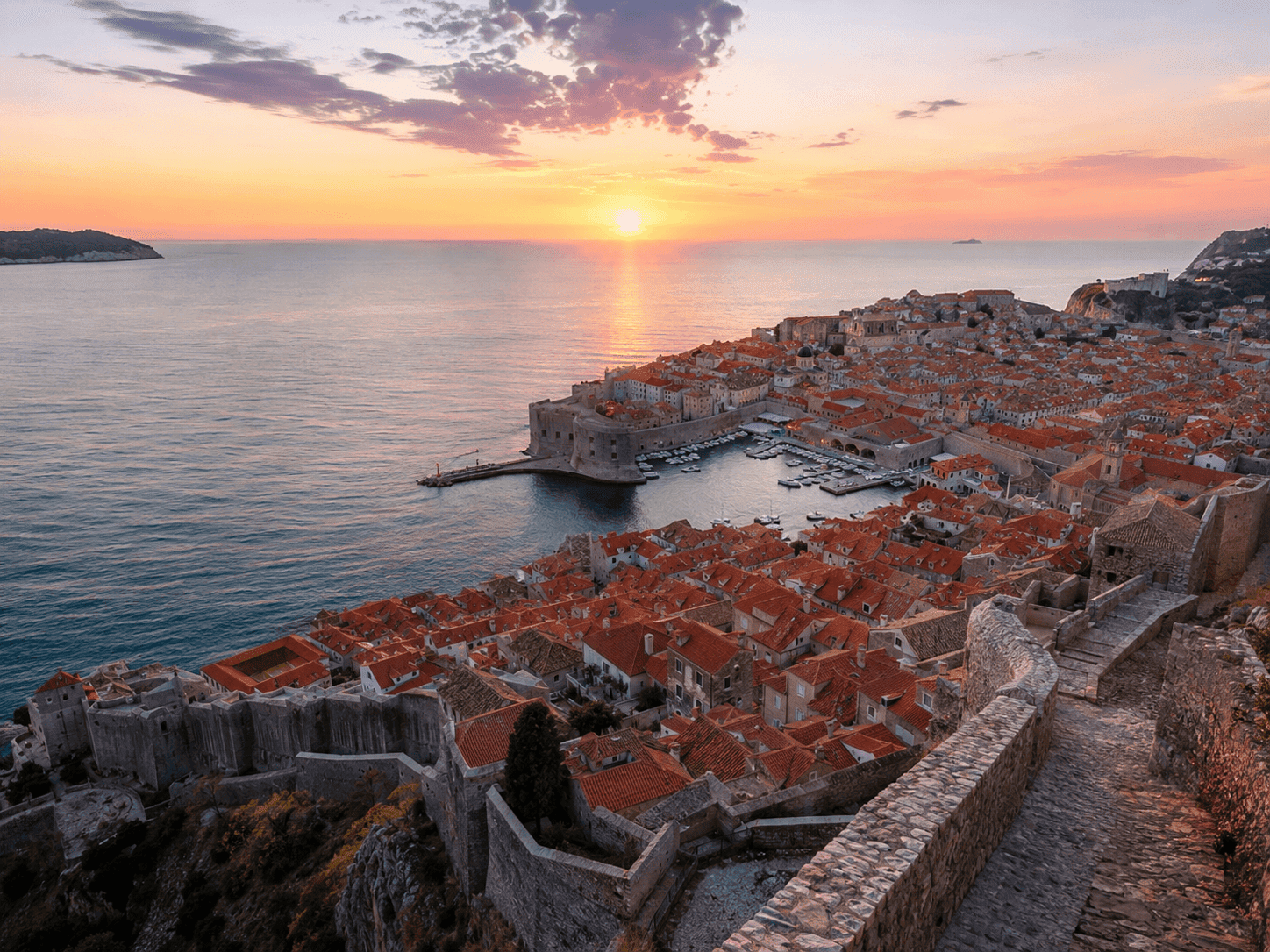
Dubrovnik is the most photographed city in Croatia, the filming location of King’s Landing in Game of Thrones, and for the last decade, arguably the most over-crowded small city in Europe during peak summer. It is also genuinely one of the most beautiful places on the continent. Both things are true.
How to Do Dubrovnik Right
Go early. The ships dock, and by 10 a.m. the old city is filling with visitors. If you are off the ship and through the Pile Gate by 8:30 a.m., you will have approximately two hours of the old city in something resembling its natural state. The city walls open at 8 a.m. and the early walk is one of the genuine pleasures of the Mediterranean. By 11 a.m., the Instagram lines at the wall overlooks are 20 deep.
The Dubrovnik city walls open at 8 a.m. Go then. By 10 a.m. the wall is a very different experience.
What to Do in Dubrovnik
Walk the walls (€35, about 2 km, 90 minutes). Take the cable car up Mount Srđ for the panoramic view over the city, the Adriatic, and the Elaphiti Islands (€25 round trip). Swim at Banje Beach, which is a five-minute walk from the Pile Gate and significantly less chaotic than the old town itself.
Logistics
Dubrovnik tenders in peak season when the port is full. Add 30 to 40 minutes each way. The Croatia National Tourist Board (croatia.hr) publishes crowd data and city entry guidelines that are worth checking before your sail date.
What to Skip in Dubrovnik
The Stradun main street shops are mostly tourist schlock. Save your money for lunch at a konoba in one of the side streets, where the food is better and the prices are a third lower.
Athens (Piraeus), Greece: Some Things Are Non-Negotiable
The port is Piraeus, which is a 30-minute metro ride from the Acropolis. Do not let anyone talk you into a private transfer when the metro costs €1.40 and runs perfectly well. The Acropolis is the Acropolis. There is no substitute, no close second, and no legitimate reason to be within 20 miles of it and not go. Book your skip-the-line tickets at the official Acropolis ticketing portal in advance. The queues without a timed ticket are brutal in high season.
What Else to Know About Piraeus
The Acropolis Museum (€10) is exceptional and routinely undervisited compared to the hill above it. Allow at least 90 minutes. Monastiraki neighborhood for lunch. Syntagma Square and the changing of the guard at 11 a.m. on Sundays if you are there on the right day.
What to Skip in Piraeus
Any “Athens city tour” sold through your cruise line that promises to take you to the Acropolis, the Plaka, two museums, and a meze lunch in four hours. You will see everything and experience nothing. Book your own time. The metro works.
Taormina/Catania, Sicily: The Italian Port That Overdelivers
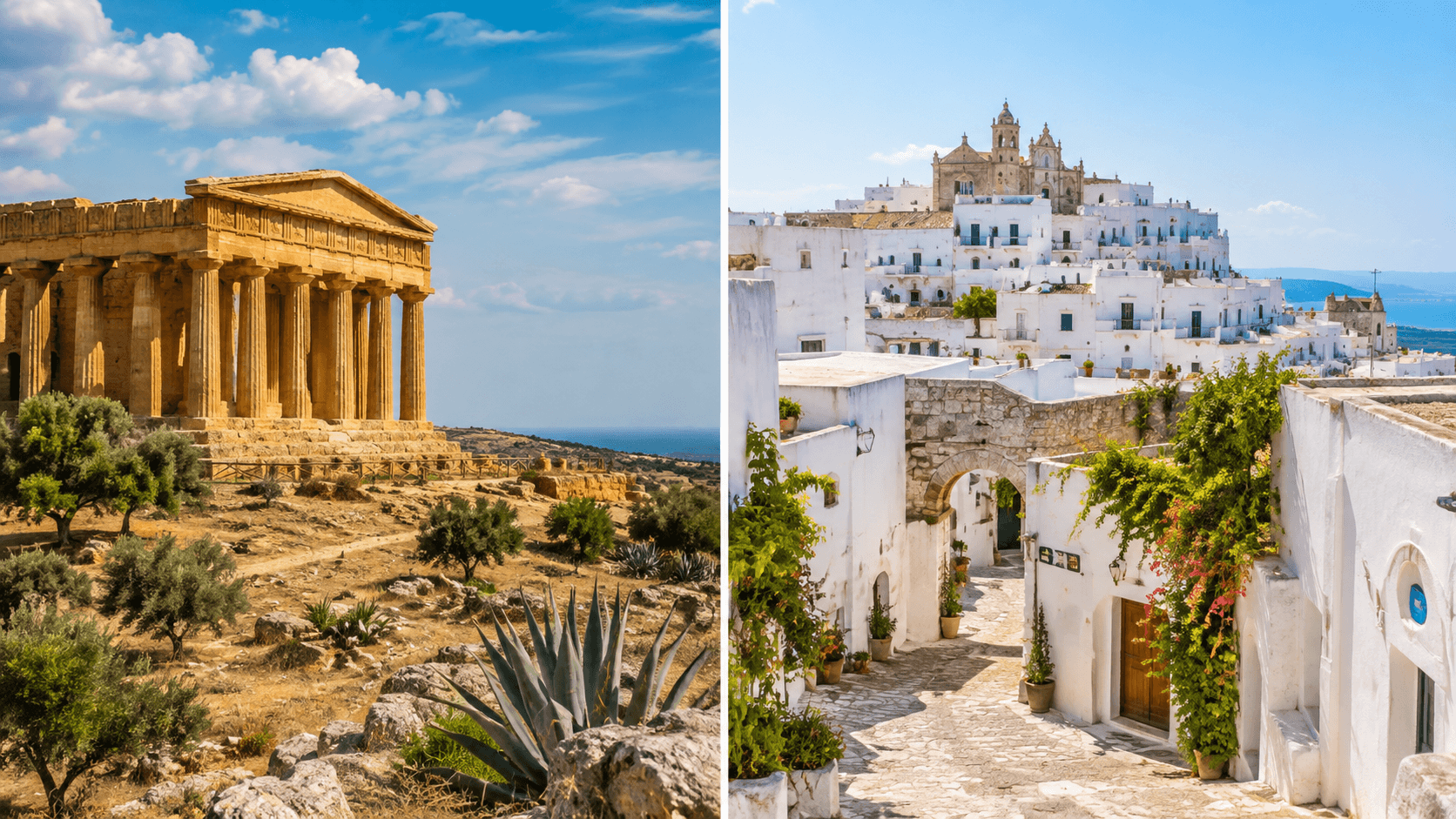
Catania is the port. Taormina is where you want to spend your time. It is about 45 minutes by car or bus, sits 204 meters above the sea on a cliff overlooking both the Ionian Sea and Mount Etna, and contains a 3rd-century BC Greek theater that is still in use. On a clear day, you can see Etna steaming from the theater steps.
What to Do in Taormina
Walk Corso Umberto, the main street. Eat arancini, which are Sicilian rice balls and one of the best things on the planet. Look at Etna from the Greek theater. Buy Sicilian ceramics if you are not yet at your luggage limit.
Budget Note For Taormina
A packing cube set is the move for Mediterranean cruise ports. (If you are still building your overall packing strategy, European River Cruise Packing List covers the overlap between river and ocean cruise packing surprisingly well.) You will want to bring something home from Sicily. You will have no room. Packing cubes solve this problem in advance.
La Spezia for Cinque Terre: The Shore Excursion That Earns Its Own Category
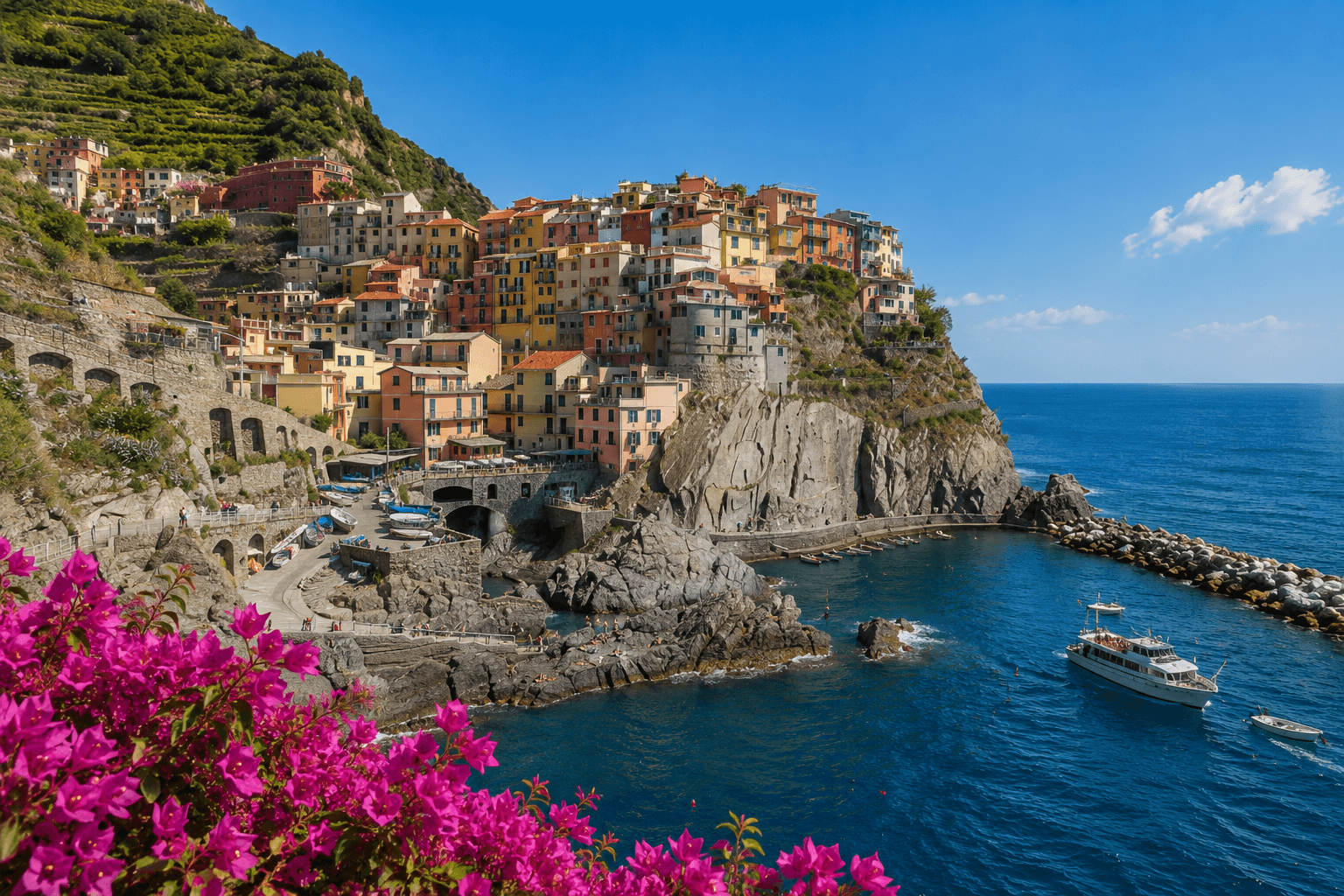
La Spezia is a port town. Cinque Terre is why you are there. The five villages of Cinque Terre (Riomaggiore, Manarola, Corniglia, Vernazza, and Monterosso al Mare) are strung along a dramatic stretch of Ligurian coastline, painted in colors that look digitally enhanced and are entirely real.
Pick Vernazza or Manarola for the most dramatic scenery. Pick Monterosso al Mare if you want a beach. Don't try to do all five.
The Logistics Truth About Cinque Terre
Cinque Terre is accessible by regional train from La Spezia in 15 to 30 minutes depending on which village you are heading to. A Cinque Terre Card covers all train travel between the villages and access to the coastal trails and costs €7.50 to €18 depending on what you include. The trails between villages range from easy (Riomaggiore to Manarola, 20 minutes) to demanding (the full Via dell’Amore, 3.5 hours). Know before you go. Wear actual shoes.
What Not to Do in Cinque Terre
Do not attempt all five villages in one day on a cruise ship port stop. Pick two. Eat a proper lunch. Take the train back.
Santorini: Still the Dream, With a Real Caveat
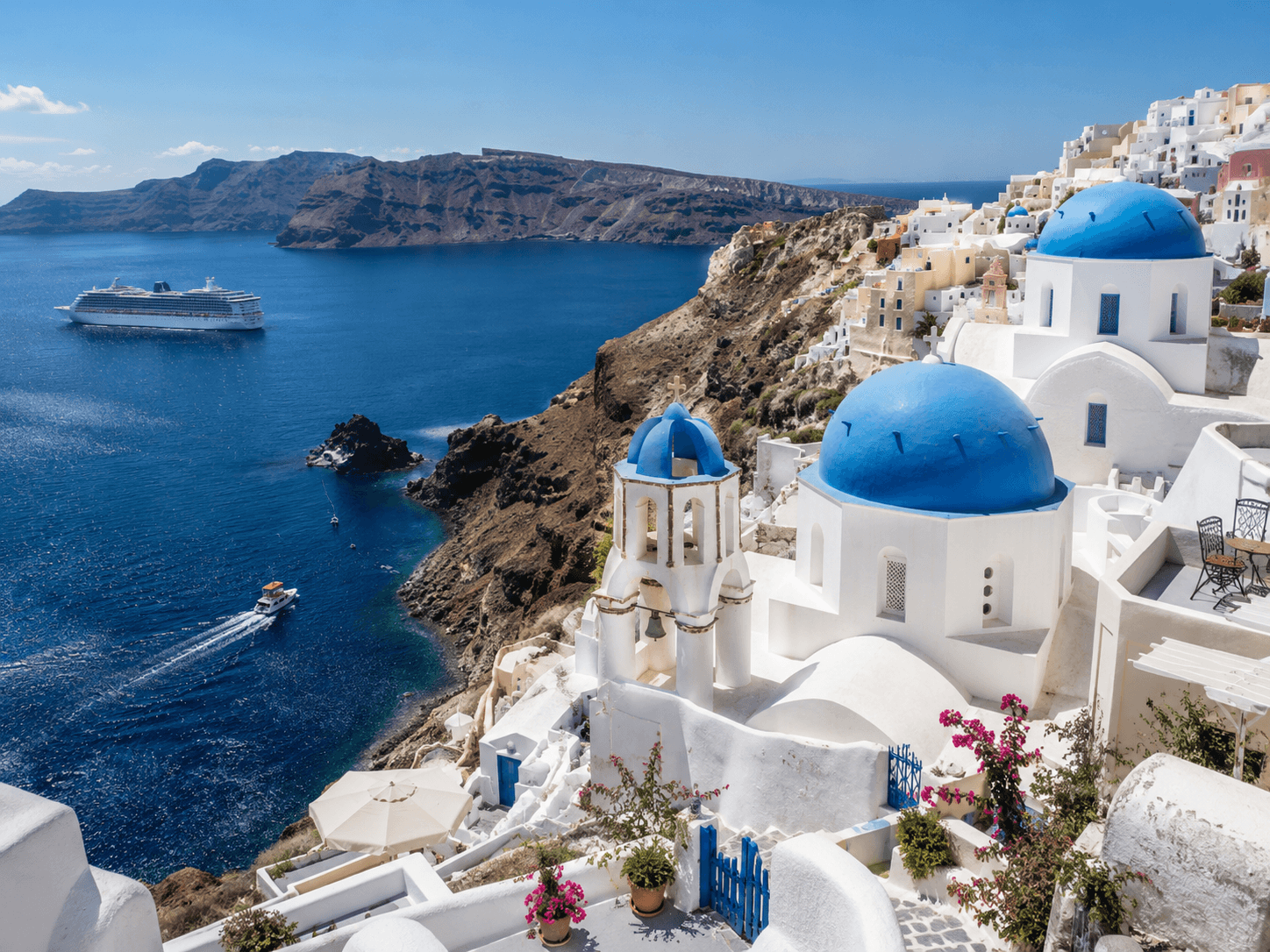
For most travelers booking Greek Isles cruise ports, Santorini is the blue-domed-church postcard. It is genuinely as dramatic as advertised. Caldera views from Oia, the volcanic beach at Perissa, a wine tasting at Santo Wines on the caldera rim, all of it is real and worth it.
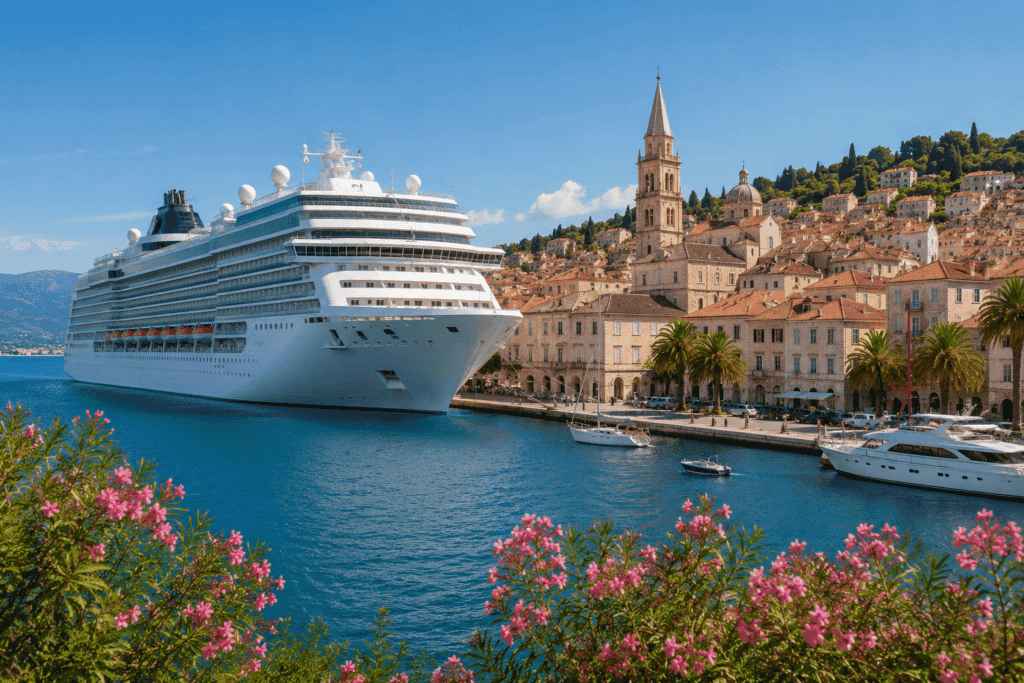
Santorini tenders from the caldera — that cruise ship in the water is how you get there. Factor 30 to 45 minutes each way into your day plan.
The Santorini Cap: What It Means for Your Itinerary
Greece capped cruise passenger arrivals in Santorini at 8,000 per day as of 2024 (CNN Travel), and some cruise lines have quietly rerouted their Greek Isles itineraries as a result. Check your specific sailing’s port call list. Do not assume Santorini is on it just because it appears in the line’s general marketing materials.
Logistics note: Santorini is a tender port. You anchor in the caldera and take a small boat to shore. The tender wait in peak season can be 30 to 45 minutes each way. Factor this into your day.
The Two Ports That Are Overrated (Sorry, Not Sorry)
Mykonos: The Instagram Trap
Mykonos is photogenic. The windmills are real. Little Venice is genuinely charming if you can find it under the crowds. The beaches are beautiful.
The day-trip reality: You arrive in peak season to one of the busiest islands in the Aegean. The port is a 15-minute bus ride from Mykonos Town. Mykonos Town is small, labyrinthine, and designed in a way that is traditionally explained as making it hard for pirates to navigate but in practice makes it hard for anyone to navigate. You will get lost. That is fine. The problem is that what you find while lost is largely designer stores, overpriced cocktail bars catering to the very young and very wealthy, and souvenir shops selling the same items you have seen at every port since Barcelona.
The beaches require additional transportation. The famous beach clubs (Nammos, Paradise, Super Paradise) operate at a price point that is genuinely not a day-trip proposition. Minimum spends at the beach clubs run €100 to €300 per person.
Bottom Line on Mykonos
Mykonos makes complete sense as a destination if you are 25, staying for three nights, and have a beach club budget. As a cruise day trip for anyone who is not specifically there for the party scene, it is a lot of effort for not much payoff. If it is on your itinerary, go to the windmills, eat something, walk the little streets, and reset your expectations.
Monte Carlo: All Yacht, No Substance
Monte Carlo is the one port that everyone is excited about before the ship arrives and slightly confused by afterward.
The principality of Monaco is roughly one square mile. (To put this in perspective: the best Alaska cruise ports give you six-square-mile towns with more to do per hour than Monaco does.) It is beautiful in a very specific, very manicured, very expensive way. The harbor full of superyachts is genuinely impressive. The casino is gorgeous from the outside. The famous Casino de Monte-Carlo charges a €17 entry fee during the day and considerably more in the evening, and the gaming floor is smaller than you expect, aimed at serious gamblers, and does not particularly want tourists wandering around taking photos.
What is Actually Good About Monte Carlo on a Day Trip
The Oceanographic Museum (Musée Océanographique de Monaco) is a legitimate gem. Jacques Cousteau was its director for 32 years. It has an aquarium, a museum, and a rooftop terrace with harbor views that is far less crowded than the casino square. Admission is €20. Go here instead.
The Honest Version of Monte Carlo
If Monte Carlo is on your itinerary, it is worth an easy morning. The Oceanographic Museum plus the Old Town plus a coffee at a café looking at the harbor is a completely satisfying three hours. Just do not expect it to feel glamorous in the way the brochure implies. You are a day-tripper on a cruise ship. The glamour belongs to the people who arrive by helicopter and stay on the yachts. You are looking at their lifestyle, not living it. This is fine. So is the Oceanographic Museum.
Best Mediterranean Cruise Ports: At-a-Glance Comparison (2026)
Rated by a travel advisor • Scores out of 5 • Red rows = overrated
Before I send you off the gangway, a word on logistics. Mediterranean ports have a few things in common: heat, cobblestones, crowds, and varying levels of pickpocket risk in tourist-dense areas.
A few things worth having:
Anti-theft day backpack: Something you can lock, wear on the front in crowded areas, and doesn’t scream “tourist with valuables.” The slash-proof bags with hidden zippers are worth the extra $20.
Collapsible water bottle: Refillable, takes no space in your bag, and saves you €3 every time you’d otherwise buy a plastic bottle at a port shop. Hydration in Mediterranean summer is not optional.
Portable phone charger: You will use your phone for navigation, photos, tickets, and translation. It will die before you are ready to get back on the ship. A 10,000 mAh battery bank weighs nothing and has saved more port days than I can count.
Rick Steves’ Mediterranean Cruise Ports: Port by port context, walking tours, and historical background. The kind of thing that makes a 90-minute wait at the Acropolis feel like learning rather than standing in line.
Before You Finalize Your Itinerary
If you are still in the planning stages, I would love to help you sort through which itinerary, which cruise line, and which ports actually fit the trip you have in mind. If you are undecided between ocean and river cruising for Europe, European River Cruise vs. Hotel Barge is worth a read too. Reach out through my contact page and let’s talk.
Frequently Asked Questions: Best Mediterranean Cruise Ports
How many ports does a typical Mediterranean cruise visit?
A seven-night Mediterranean cruise typically calls at five to seven ports, depending on the itinerary and how many sea days are built in. Longer 10 to 14 night sailings can reach eight to twelve ports, though more ports means less time at each one.
Is it better to book shore excursions through the cruise line or independently?
Independent operators are almost always 30 to 40 percent less expensive than the same excursion booked through the ship. The main reason to book through the ship is the guaranteed return: if a ship-sold excursion runs late, the ship waits. If you are on an independent tour and your group gets delayed, you may miss the departure. For time-sensitive or remote excursions, this matters.
Which Mediterranean ports are easiest to explore independently without a tour?
Valletta, Kotor, Dubrovnik old town, and Taormina are all easy to navigate independently. They are walkable, compact, and well-signposted. Athens is also very manageable on the metro. Monte Carlo is essentially impossible to get lost in because it is one square mile.
What is the best month to cruise the Mediterranean for port visits?
May, June, September, and October are the ideal months for Mediterranean port visits. The weather is warm, the crowds are manageable, and the towns are operating normally rather than at peak tourist capacity. July and August are the busiest months across every port on this list. Santorini and Dubrovnik in particular are extremely crowded in peak summer.
Can you walk Dubrovnik’s city walls from the cruise ship?
Yes, but factor in your logistics. Dubrovnik is a tender port in peak season, which adds 30 to 40 minutes each way. The tender drops you near the Pile Gate, and the city walls entrance is a two-minute walk from there. The wall walk itself takes about 90 minutes to two hours. Build in time and go early.
Is Monte Carlo worth visiting on a Mediterranean cruise?
Monte Carlo is worth a few hours but tends to disappoint travelers expecting a glamorous experience. The Oceanographic Museum is genuinely excellent. The harbor views are beautiful. The casino charges entry and caters to serious gamblers rather than curious visitors. Adjust expectations and you will have a good morning.
How far in advance should I book Mediterranean shore excursions?
Book popular excursions (small-boat tours, cooking classes, skip-the-line tickets) three to six months before your sail date. Generic city tours and hop-on hop-off buses are usually available on the day, but prime independent operators fill up well in advance, especially for peak season sailings in June through August.
What should I bring on a Mediterranean cruise port day?
The basics that matter most: a refillable water bottle, an anti-theft day backpack, a portable phone charger, comfortable closed-toe shoes (cobblestones are real), sunscreen, and your phone charged and loaded with offline maps. Skip the rolling bag; it does not work on cobblestones and announces your tourist status louder than any souvenir hat.
Final Thoughts
The Mediterranean is one of the most-sailed cruising regions in the world for a reason. The ports are extraordinary, the food is absurd in the best way, and there is enough history packed into a seven-night itinerary to make you feel genuinely educated by the time you reboard for the last time.
But not all ports are created equal, and the most-marketed ones are not always the most worthwhile. Skip the hype on Mykonos and Monte Carlo unless those fit your specific travel style. Go early in Dubrovnik. Take the walls seriously in Kotor. Eat the arancini in Sicily. Book the Caravaggio cathedral in Valletta before your ship even docks.
The Mediterranean rewards the traveler who does a little homework before they arrive. You are already doing the homework. You are going to have a great trip.
Ports are only as good as the excursions you booked in them. Mike books those too, through the line or with a local operator depending on which is better.
Affiliate Disclosure: This post may contain affiliate links. If you make a purchase through one of these links, we may earn a commission at no additional cost to you. We only recommend products and services we believe may be helpful to travelers.
Hi, I'm Sue. I plan cruises, all-inclusive resorts, and slow multi-country trips through Europe, and I'm a member of the Travel Leaders Network. Twenty years in senior HR leadership before this, which mostly taught me how to read what people actually want. I live in Grain Valley, Missouri with my husband and business partner Mike.