The Shoulder-Season Secret: Why October in Puglia Beats June in Tuscany (And Costs Half as Much)
The best time to visit Italy isn't when the influencers are posting — it's after they've gone home. If you've been saving for a June trip to Tuscany, there's a quieter, sunnier, and significantly cheaper version of the Italian dream happening 400 miles south in Puglia. Half the price, twice the olive oil, and not a tour bus in sight. Here's why October in Puglia is the shoulder-season secret worth planning your calendar around.
Last updated: October 2, 2026 :: Written by Sue Nelson, Travel Advisor | Adventures by MJ
This post contains affiliate links. I may earn a small commission at no extra cost to you.
Here’s a travel truth your Instagram feed won’t tell you: the best time to visit Italy isn’t when the influencers are posting. It’s after they’ve gone home, unpacked their linen dresses, and started pretending they care about pumpkin spice again.
Quick Answer: October is one of the best months to visit Puglia, with highs around 70 to 75°F, swimmable seas, olive harvest season and far fewer crowds. In our cost comparison, a week for two runs about half the price of June in Tuscany.
If you’ve been dutifully saving for that bucket-list Tuscany trip; the one with rolling vineyards, cypress-lined roads, and a Vespa you’ll definitely rent and absolutely regret, I’d like to gently ruin your plans. Not because Tuscany isn’t wonderful (it is, truly), but because there’s a quieter, sunnier, and significantly cheaper version of the Italian dream happening 400 miles south in Puglia. And October is when it shines brightest.
Welcome to shoulder-season travel, the best-kept secret in European tourism. Puglia in October? It’s the crown jewel.
Key Takeaways: October in Puglia vs June in Tuscany
October in Puglia costs roughly 49% less than June in Tuscany for a week-long trip for two ($3,752 vs $7,295).
Weather is often better: 70-75°F with low humidity versus June Tuscany’s increasingly common 90°F+ heatwaves.
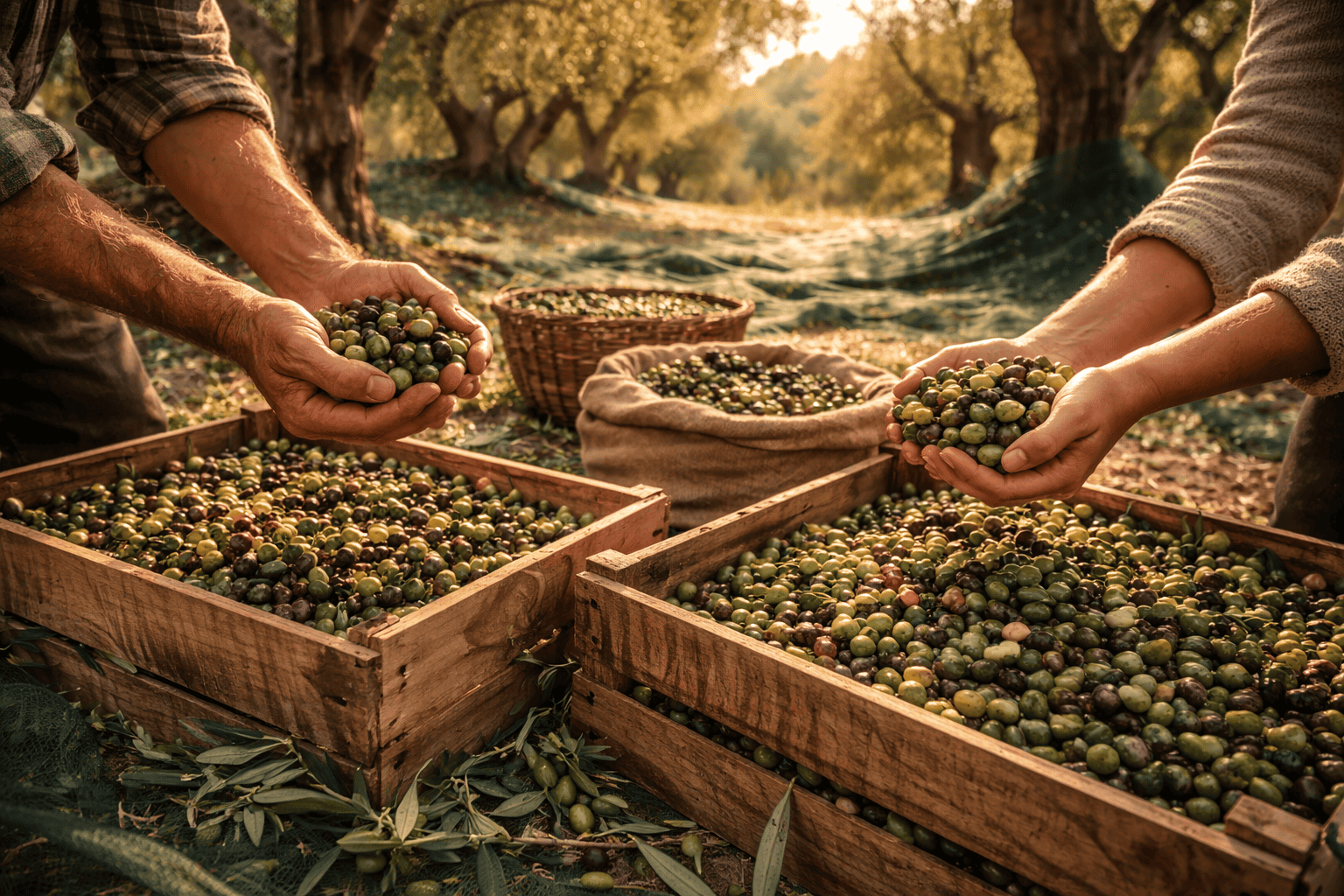
October is harvest season: olive oil pressings, truffles, and fresh orecchiette hit their peak.
Crowds drop dramatically after mid-September, making masserias, beaches, and restaurants easily bookable.
Best airports: Bari (BRI) and Brindisi (BDS), both with lower car rental rates than Rome or Milan.
Hot take… but an accurate one. October in Puglia means golden olive groves, fewer crowds, and that slow, authentic Italy everyone thinks they’ll find in Tuscany in June. If you know, you know. And if you don’t… this might change your plans.
If this has you reconsidering your entire European travel strategy, good. Our free Slow Europe Planner helps you build a trip around the places worth lingering, not the ones everyone else is already photographing.
The Thoughtfully Curated Europe Planner
Most people plan Europe trips backward. These 7 questions fix that.
Thank you!
Check your inbox for your Slow Europe Planner.
What Is Shoulder Season, Exactly?
Shoulder season is the travel period between a destination’s peak and off-peak seasons, in Europe, typically late April through early June and September through mid-November. You get most of the weather, a fraction of the crowds, and prices that don’t require a second mortgage.
Think of shoulder season as Italy’s director’s cut: same movie, better pacing, no one kicking your seat. (If you want the bigger picture, here’s why September and October are the sweet spot for European travelacross the entire continent — Puglia just happens to be the standout.)
Same country, same charm, approximately 4% of the elbows.
Puglia in October: The Italy You’ve Been Promised
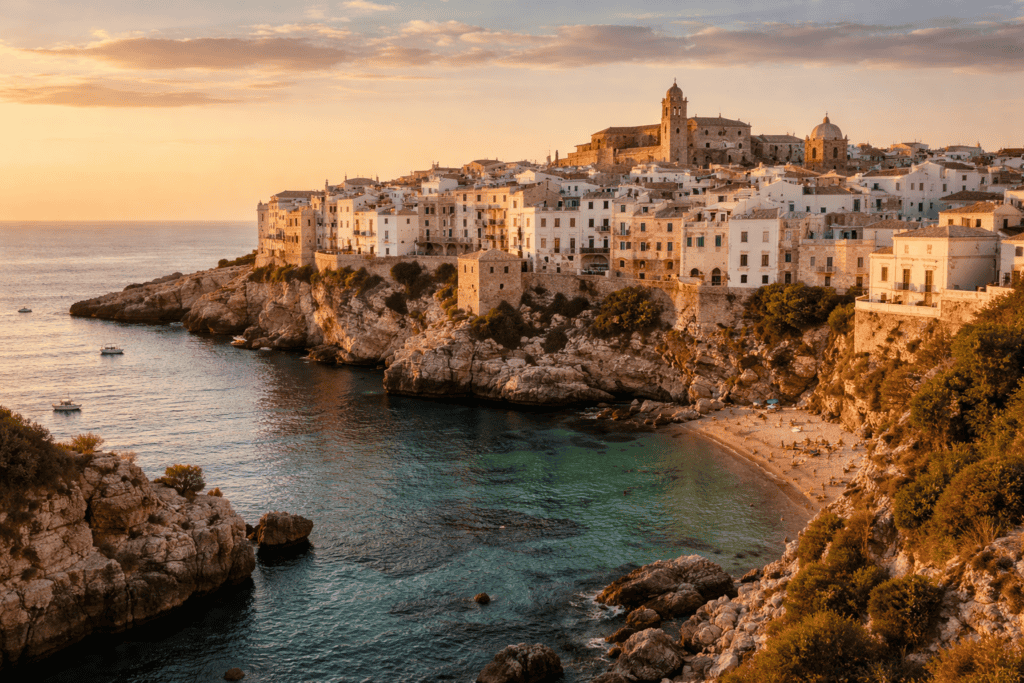
Puglia (pronounced POOL-ya, and yes, locals will forgive you the first three times) is the sun-drenched heel of Italy’s boot. It’s the Italy of ancient olive groves, whitewashed hilltop villages, cone-roofed trulli houses, and a Mediterranean coastline that looks Photoshopped even when it isn’t. In summer, it’s glorious but increasingly overwhelmed. In October, it’s close to perfect. Italy’s official tourism board has a good overview of the region if you want to start dreaming.
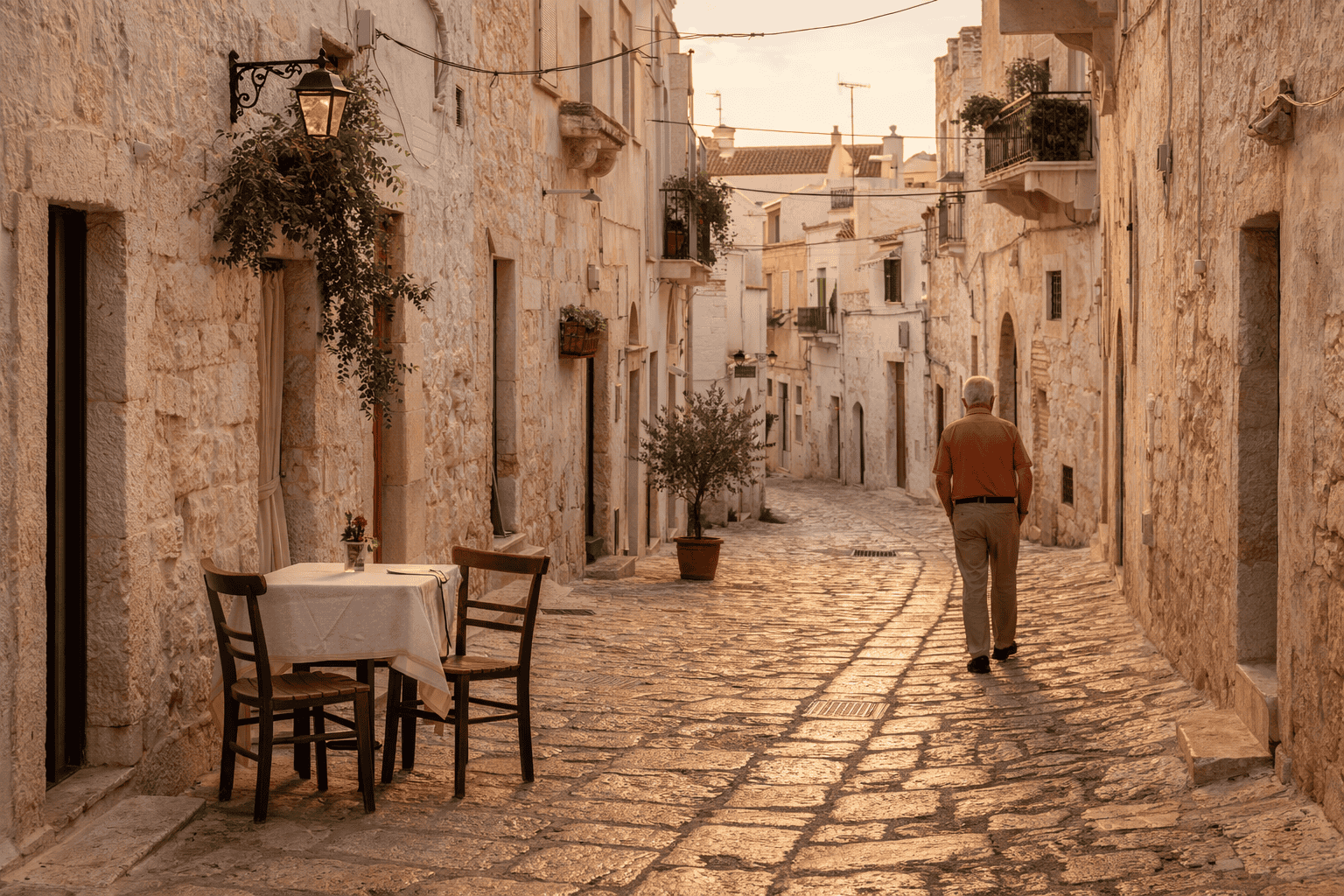
Here’s what October in Puglia actually looks like. Daytime temperatures hover between 68 and 75°F. Sea temperatures remain swimmable at around 72°F. The olive harvest is in full swing, and local pressings welcome curious visitors. Restaurant reservations, which feel like Hamilton tickets in July, are suddenly walk-in-able. And sunset over the Adriatic happens without you jostling a German tour group for the last good photo angle.
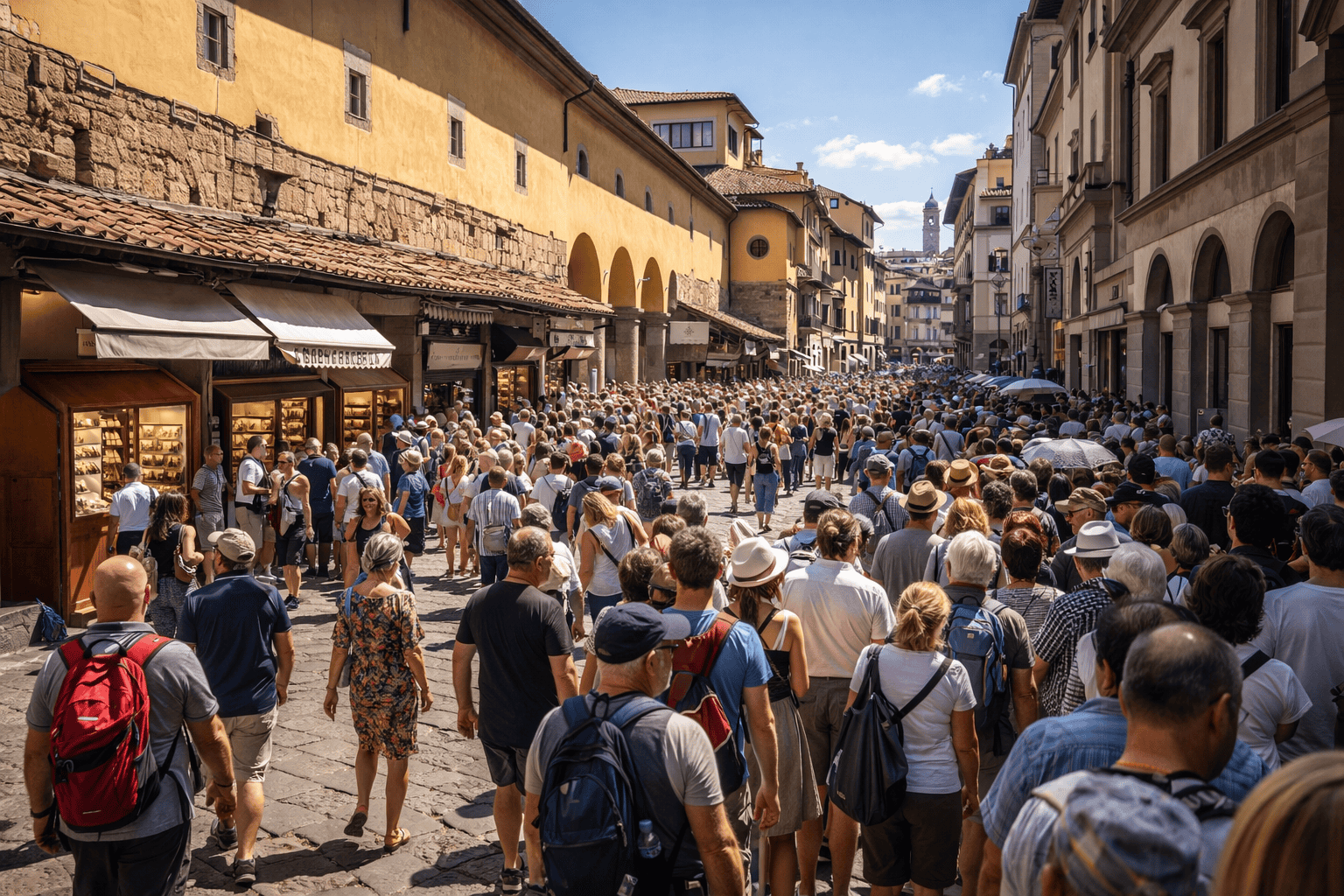
Meanwhile in June, Tuscany is charming, and packed. You’re sharing San Gimignano’s towers with fifteen tour buses, paying €35 for a forgettable panino, and waiting two hours to see David’s, ahem, artistic details.
Why June in Tuscany Has Quietly Become a Tourist Trap
Don’t get me wrong—Tuscany is magnificent. But June has become its own kind of problem.
June used to be considered “early summer” and thus a bit of a hack among seasoned travelers. That secret got out roughly a decade ago. You’re now essentially visiting in peak season, paying peak prices, for the privilege of queuing behind someone’s extended family reunion. Florence’s historic center is a UNESCO World Heritage site, and UNESCO’s Sustainable Tourism program exists because places like it strain under concentrated seasonal crowds. Translation: it’s crowded, it’s expensive, and the locals are visibly tired. You can still have a lovely time—but you’re paying a premium to work harder for it.
June in Florence: beautiful, historic, and occasionally indistinguishable from a theme park line.
The Cost Comparison That’ll Convert You
Let me put this in terms my finance friends would appreciate. Here’s what you’re actually paying for a week-long trip for two, including accommodation, meals, car rental, flights, and local experiences.
Puglia (October) vs. Tuscany (June): A Real-World Breakdown
Puglia (October) vs. Tuscany (June)
Estimated cost for two travelers, one week · USD
Tuscany in June
Puglia in October
Hotel / agriturismo (7 nights)
$1,979
$907
Rental car (compact, 7 days)
$495
$289
Dinner for two at a trattoria
$106
$65
Wine tasting tour (per person)
$112
$65
Flights (round trip, 2 people)
$3,298
$2,120
Daily coffee & gelato habit
$21
$12
Estimated total (one week, two people)
$7,295
$3,752
Save $3,543
That’s roughly a 49% savings — a second trip, a very good handbag, or three months of summer camp.
Figures converted from euros at 1 EUR = 1.178 USD (rate as of April 16, 2026).
“That’s roughly a 49% savings; the same country, the same language, and shockingly good pasta.”
Visualizing the Gap
Estimated total cost for two travelers, one week
Tuscany (June)
$7,295
Puglia (October)
$3,752
$0$2k$4k$6k$8k
You save $3,543 — roughly 49% less for the same country, same language, and shockingly good pasta.
Figures converted from euros at 1 EUR = 1.178 USD (rate as of April 16, 2026).
Same country. Same language. Same shockingly good pasta. Half the price.
October in Puglia: the month the olive trees quietly steal the show.
But Is the Experience Actually Better? Yes, Here’s Why.
The Weather Sweet Spot
October in Puglia averages 70 to 75°F with low humidity and sunny skies on roughly 80% of days. Compare that to June in Tuscany, which now regularly sees 90°F-plus heatwaves. Italian summers aren’t what your mother remembers; climate shifts have made inland Tuscan towns genuinely uncomfortable in peak months. Nothing ruins a cathedral visit quite like realizing your linen dress is now a second skin.
The Food Calendar
This is where Puglia in October genuinely pulls ahead. October is harvest season. Olive oil is being pressed (you can attend), wine is being made, pork is becoming salumi, orecchiette is rolled fresh each morning by women who’ve been doing it since before your grandparents met, and truffles start appearing on menus like little brown miracles. It’s the gastronomic Super Bowl. June in Tuscany is lovely, but it’s mostly a trailer for the real food season to come.
“October is Puglia’s gastronomic Super Bowl.”
The Crowds (Or Lack Thereof)
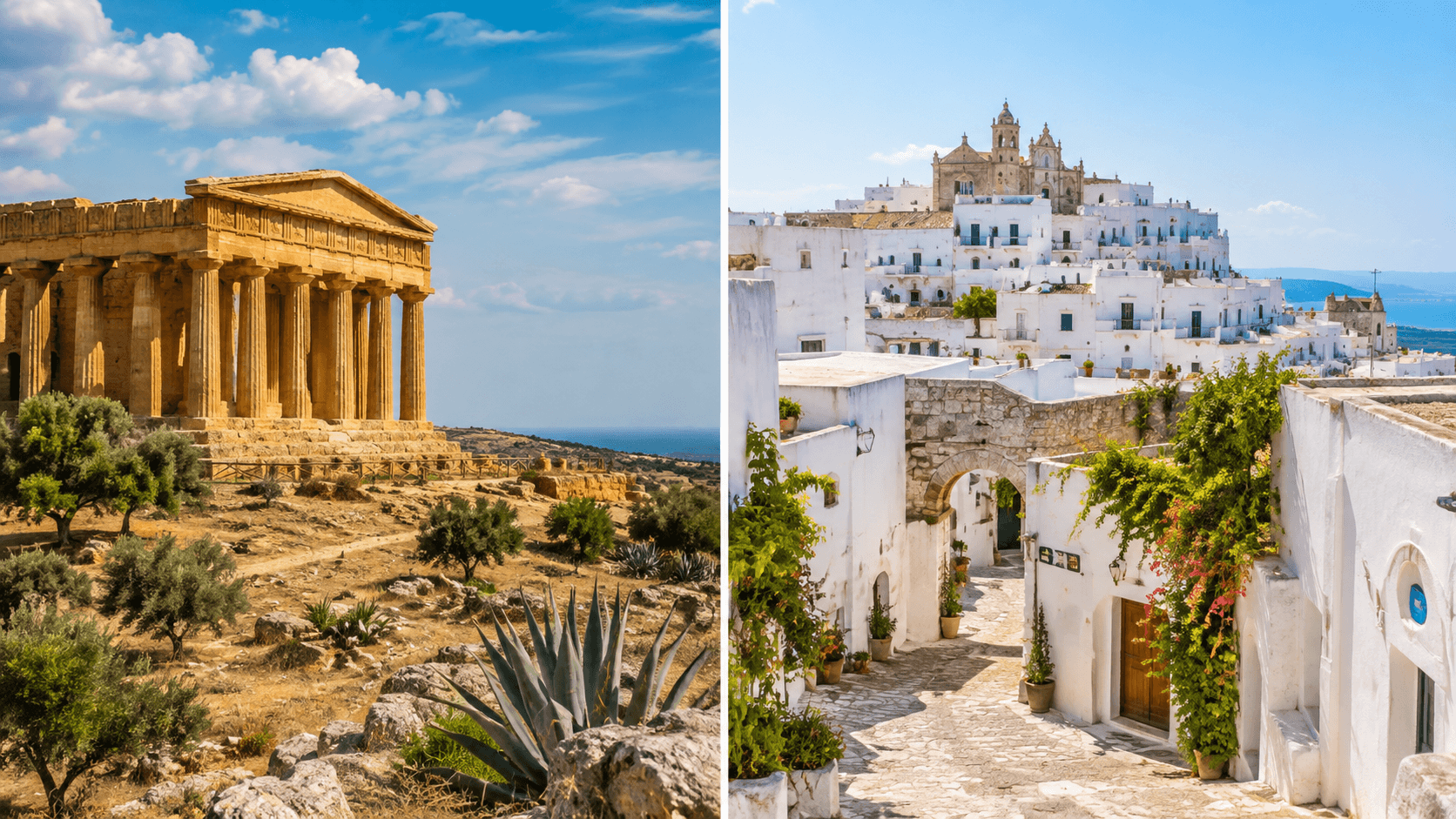
In June, Florence sees multiples of the visitor volume that Lecce or Ostuni see in October. In Puglia’s whitewashed town of Ostuni, you can actually hear the church bells echo without a drone buzzing overhead. Alberobello, home to those fairytale cone-roofed trulli, becomes genuinely magical once the tour buses thin out after 5 p.m. on an October Tuesday.
The Locals Have Time for You
This one is subtle but real. In peak season, Italian service workers are exhausted, understandably short-tempered, and running on fumes. In October, your waiter has time to explain the difference between capocollo and soppressata with the patience of a slightly eccentric uncle. Your host at the masseria remembers your name. The signora at the bakery sneaks you an extra pasticciotto because you asked the right question about her grandson. These tiny moments are what separate a good trip from one you’ll tell your grandchildren about.
What to Actually Do in Puglia in October
Puglia rewards travelers who wander with intention, so a solid Puglia guidebook goes a long way toward turning a good trip into a great one. Here are five things you absolutely shouldn’t miss.
Wander Lecce, the “Florence of the South.” Without, crucially, the crowds of Florence. Lecce’s baroque architecture is carved from a honey-colored local limestone that practically glows at golden hour, which happens to stretch for roughly 90 luxurious minutes each October evening.
Stay in a masseria. These are converted fortified farmhouses, and they’re the Puglian answer to a Tuscan villa. Often with better pools, fewer jet-lagged Americans, and a fraction of the price. Many come with olive groves you can actually walk through during harvest, which is exactly as charming as it sounds.
Eat your weight in orecchiette. The little ear-shaped pasta is Puglia’s gift to the world, traditionally hand-rolled by local women on stoops in Bari’s old town. Yes, you can still see this. No, they do not love being filmed. A respectful nod works better than your phone.
Visit the Salento Coast. The southernmost tip of Puglia, where the Adriatic meets the Ionian, features water so clear it looks digitally enhanced. October temperatures still allow swimming, especially along the Ionian side, and the beaches are blissfully quiet after the August mayhem.
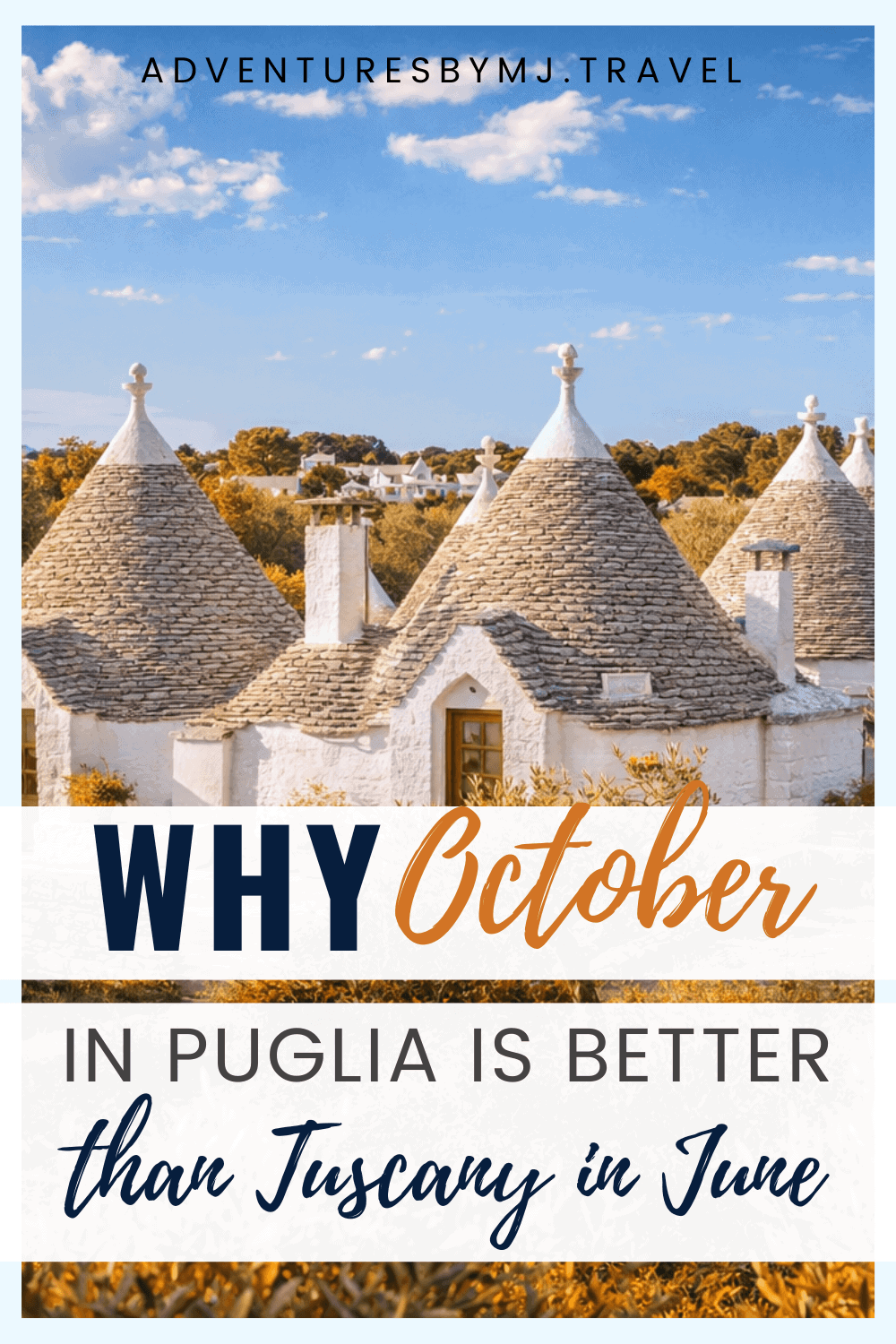
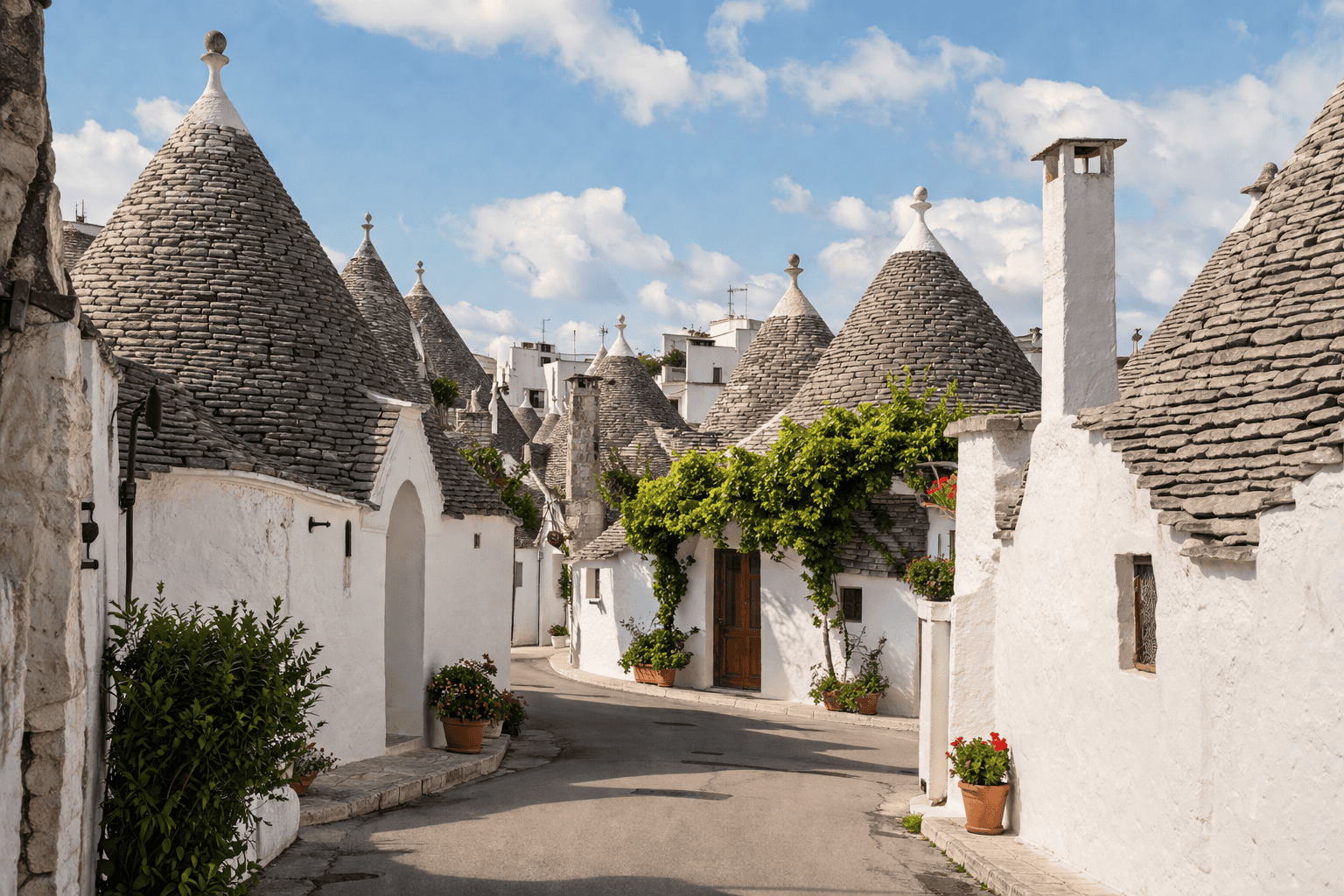
Explore the Trulli of Alberobello. These UNESCO-protected cone-roofed dwellings are unlike anything else in Italy. In July, they’re overrun. In October, they’re a wonderland you half-expect to find a hobbit living in.
Alberobello’s trulli: somewhere between a fairytale village and a very ambitious Airbnb host.
The Practical Case for Shoulder-Season Travel
Beyond the personal joy of uncrowded piazzas, there’s a genuine ethical argument for shoulder-season travel. Overtourism is straining beloved European destinations. By shifting your travel window, you’re helping distribute economic benefits more evenly across the calendar, reducing pressure on peak-season infrastructure, and supporting local communities during months that have traditionally been lean.
This is the rare travel decision where the selfish choice and the sustainable choice happen to be the same. Your wallet, the locals, and the planet all quietly agree.
If trulli mornings and long Tuscan lunches are calling, you’re not really planning a trip, you’re planning a pace. That’s a different kind of itinerary, and it deserves a different kind of planner. The Slow Europe Planner is built for travelers who’d rather stay a week in one stone village than tick five cities off a list. It walks you through choosing your home base, building in market days and lazy afternoons, and pacing the trip so you come home rested instead of recovering. Send me the planner →
Tips for Nailing an October Puglia Trip
Fly into Bari or Brindisi. Both airports handle major European connections, and car rental rates are dramatically lower than in Rome or Milan. You can also catch a high-speed train from Rome if flying feels excessive.
Rent a small car. Puglian villages have streets designed for donkeys, and they retain that character proudly. Your full-size Mercedes will not fit down the alley your Airbnb insists you drive down. Trust me.
Book a masseria for at least three or four nights. These places are the heart of the Puglian experience, and they almost always include a breakfast featuring homemade ricotta that will quietly change your life.
Bring layers. Evenings get crisp in October, especially inland, and a packable lightweight jacketearns its spot in your carry-on roughly ten minutes after the sun sets. Stone buildings hold the chill like a grudge.
Learn five Italian words: buongiorno, grazie, prego, per favore, and scusi, or better yet, tuck a small Italian phrasebook in your day bag and actually crack it open. Puglians speak less English than Tuscans, which is part of the charm. Your effort will be appreciated disproportionately.
Pack a universal travel adapter before you leave home. Italy uses Type F and Type L outlets, and airport kiosks charge roughly triple what Amazon does for the same thing the night before your flight.
Embrace slow travel. Puglia is not a checklist destination. Pick two or three bases, settle in, and let the region unfold on its own schedule. You’ll have a better trip than the person trying to “do” all of Italy in ten days, and you’ll come home actually rested.
📍 Want a shortcut to slow travel? If “embrace slow travel” sounds wonderful in theory but completely unhelpful in practice, I built something for that. My free Slow Europe Planner walks you through choosing your pace, picking the right two or three bases, and designing a trip that doesn’t leave you needing a vacation from your vacation. Grab your free copy here →No credit card, no spam, no itinerary police.
Quick Voice Search Answers: Puglia in October
What is Puglia like in October?
Warm, quieter and in full harvest mode, with highs around 70 to 75°F, sea temperatures near 72°F and olive oil pressings underway. Some beach clubs close after mid-month, but the towns stay fully open.
Is Puglia cheaper in October?
Yes. Masserias and hotels drop well below summer rates after mid-September, and our week-for-two estimate comes in around $3,752, about half of June in Tuscany.
How busy is Puglia in October?
Much quieter than summer, especially after the first week. Alberobello still gets midday tour buses, so go early or after 5 p.m., but Lecce and Ostuni feel local again.
Is early October a good time to visit Puglia?
Yes, early to mid-October is the sweet spot, with the warmest sea and most beach clubs still open. By late October, evenings cool off and rain becomes more likely.
Is Puglia better than Tuscany?
For an October trip, yes, for most travelers, because it’s warmer, cheaper and less crowded. Tuscany still wins for Renaissance art and Florence, so first-timers who want the classics may prefer it in shoulder season.
Frequently Asked Questions: Puglia in October
Is October too late to visit Puglia for good weather?
Not at all. October averages 70 to 75°F with mostly dry, sunny days, making it one of the most pleasant months of the entire year. The sea remains warm enough for swimming through mid-October, and you’ll enjoy far better conditions than the 95°F-plus heatwaves that increasingly define June and July.
How much cheaper is Puglia than Tuscany, really?
In our cost comparison, a week for two in October Puglia runs about 49% less than June Tuscany. Accommodation sees the biggest drop, about 54% in our numbers, while food and wine run roughly 40% lower. Flights also tend to be significantly more affordable in shoulder season across the board.
Do I need to speak Italian to travel in Puglia?
Knowing basic phrases helps more in Puglia than in Tuscany, as English proficiency in rural areas is notably lower. That said, Italians are remarkably patient with language attempts, and translation apps handle the heavy lifting beautifully. A warm smile and five well-deployed phrases will carry you further than you’d expect.
What’s the best way to get around Puglia?
A rental car is essential for exploring beyond the major towns. Trains connect Bari, Lecce, and Brindisi reliably, but Puglia’s real charm lives in its small villages and coastal drives, which require wheels. Roads are well-maintained overall, though they get endearingly narrow in town centers.
Is October a good time for beach time in Puglia?
Absolutely, especially early-to-mid October. Sea temperatures average around 72°F, air temperatures hover in the mid-70s, and beaches are nearly empty. The Salento coast in particular offers that impossibly clear water without the August elbow-to-elbow experience.
Will restaurants and attractions still be open in October?
Yes, with minor exceptions. Some purely seasonal beachfront restaurants close after mid-October, but in towns and cities, everything operates normally. You’ll actually find better restaurant availability since places that require weeks of advance booking in July will often seat you same-day.
Is Puglia safe for solo travelers?
Puglia is considered very safe, with low crime rates and a famously warm, family-oriented local culture. Solo female travelers consistently report positive experiences throughout the region. Standard travel awareness applies everywhere, but Puglia is notably welcoming to travelers of all kinds.
What should I pack for October in Puglia?
Pack for layered warmth: light dresses or shirts for daytime, a sweater and light jacket for evenings, comfortable walking shoes made for cobblestones (your feet will thank you around hour three of hill-town wandering), and a swimsuit for the still-warm sea.
Yes, Puglia is significantly cheaper than Tuscany, about 50% less on average for accommodation, dining, and car rentals. A week-long trip for two in October Puglia costs around $3,752 compared to roughly $7,295 in June Tuscany.
What is the weather like in Puglia in October?
Puglia in October is warm, sunny, and dry, with daytime temperatures averaging 70 to 75°F and sea temperatures near 72°F. Rain picks up toward the end of the month, but sunny skies are the norm on most days.
How many days do you need in Puglia?
Five to seven days is ideal for a first-time Puglia trip. That’s enough time to base yourself in two masserias, explore Lecce, Alberobello, and Ostuni, and spend a full day along the Salento coast without rushing.
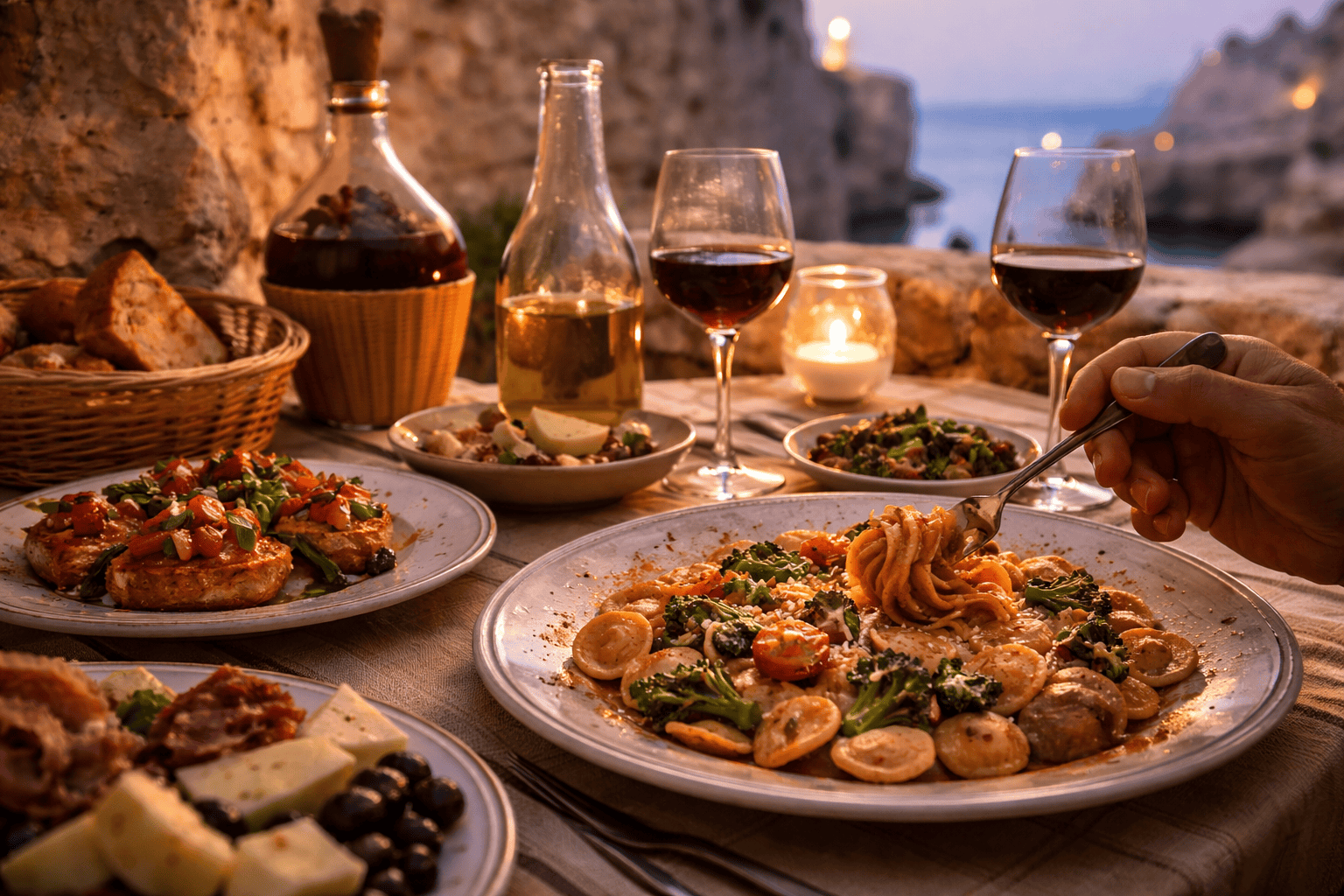
The kind of dinner that ruins you for airport pasta forever.
Final Thoughts
Travel wisdom used to be whispered between friends over wine. Now it’s shouted by algorithms, and the algorithms are usually selling you a sunflower field in Tuscany in mid-June, which will be beautiful for the fourteen seconds your photo captures and exhausting for the other fourteen hours of your day.
October in Puglia is the anti-algorithm vacation. It’s slower. It’s cheaper. It’s more delicious. It requires you to venture slightly beyond the obvious, which turns out to be most of the work. For that modest effort, you get an Italian experience that feels like yours rather than one curated by a thousand influencers before you.
The best trips are the ones that feel like a secret, even when they aren’t really secrets anymore. Puglia in October is still that kind of trip.
Ready to plan the actual trip? Our free Slow Europe Planner is built for travelers who want depth over itinerary-cramming. Grab it below.
The Thoughtfully Curated Europe Planner
Most people plan Europe trips backward. These 7 questions fix that.
Thank you!
Check your inbox for your Slow Europe Planner.
Ready to Rethink Your Next European Escape?
If this has you reconsidering your travel calendar, you’re in good company. Start small: sketch out a rough October week on paper, no bookings required. Or if you’d rather skip the blank-page panic, my free Slow Europe Planner does most of that thinking for you, it’s the framework I use with every client who wants to go when the crowds aren’t. Notice how much more spacious your budget feels, how the math bends in your favor, and how “rushing” never enters the vocabulary.
I’m a travel planner who has personally created travel itineraries for Puglia four times and Tuscany seven. This comparison reflects real costs and firsthand experience, not aggregated listicle data.
Written by Sue Nelson, Travel Advisor | Adventures by MJ | Updated for 2027
Affiliate Disclosure: This post may contain affiliate links. If you make a purchase through one of these links, we may earn a commission at no additional cost to you. We only recommend products and services we believe may be helpful to travelers.
Hi, I'm Sue. I plan cruises, all-inclusive resorts, and slow multi-country trips through Europe, and I'm a member of the Travel Leaders Network. Twenty years in senior HR leadership before this, which mostly taught me how to read what people actually want. I live in Grain Valley, Missouri with my husband and business partner Mike.